





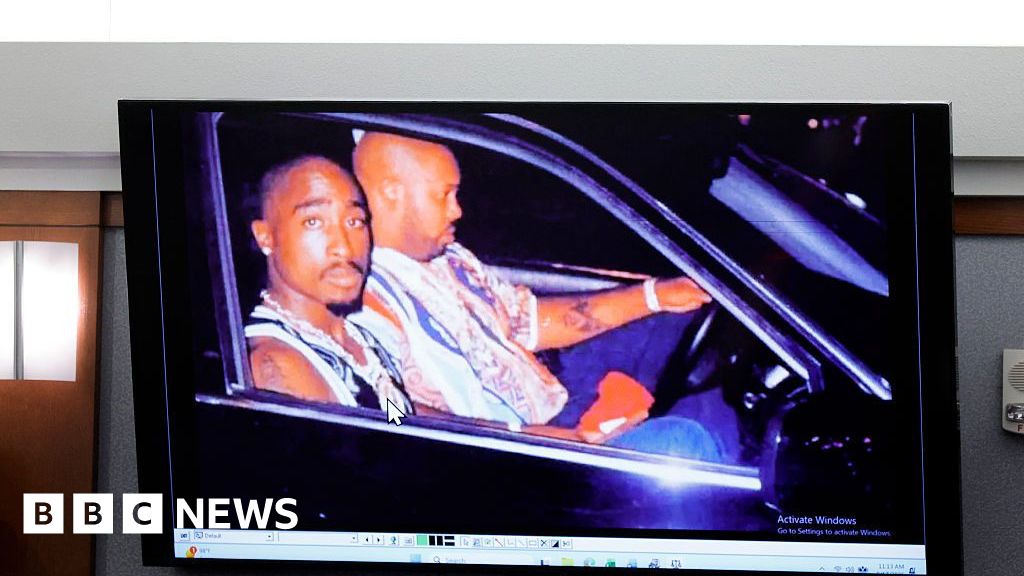
In the opening day of the Tupac Shakur murder trial, prosecutors have aggressively charged former gang leader Duane "Keffe D" Davis with orchestrating the shooting that claimed the rapper’s life. The case hinges on the theory that Davis, a man with a history of violence, sought revenge before the fatal drive-by event, a claim fueled by witness testimony and a decades-long investigation into a cold case.
The Las Vegas Metropolitan Police Department’s (LVMPD) investigation into the shooting, initially dubbed the ‘Dead Man’s Case,’ has been a subject of intense scrutiny for three decades. The investigation began in September 1996, when police initially noted a lack of cooperation in the case, a factor that led to a significant delay in identifying the perpetrator.
Witnesses, including those who were present at the time of the shooting, have been brought back in time to the night Shakur was shot, recreating the events leading up to the incident. The LVMPD’s initial statement highlighted the lack of formal criminal charges, suggesting a deliberate effort to avoid drawing attention to a potential suspect.
Witnesses testified that Davis, 63, was the alleged ringleader of the group responsible for the shooting, and prosecutors are presenting evidence suggesting he planned the attack. Davis has vehemently denied the charges, claiming he was merely a passenger in the vehicle and that the narrative is a fabrication, a product of flawed investigation.
The prosecution’s case centers on a memoir Davis co-authored, where he detailed the night of the shooting, and details the events leading up to the murder. He states he gave the gun used in the murder to his nephew, Orlando Anderson, who shot Shakur.
Chief Deputy District Attorney Binu Palal stated, ‘Let’s be clear, Duane Davis did not pull the trigger. But he did plan the shooting in retaliation of the beating of his nephew," highlighting the core of the accusation.
Davis’s defense team, Michael Sanft, argued the case is a product of a flawed investigation, pointing to discrepancies in witness statements, missing police reports and the investigative methods employed by the LVMPD. They also suggested the case may have been driven by a desire to create a compelling narrative, potentially influencing the investigation.
The prosecution’s first witness, Garry Dale, was working for the Las Vegas Metropolitan Police Department at the time of the shooting. His testimony detailed riding in an ambulance with Shakur after he’d been shot, and that the rapper refused to offer any information on what happened and who had shot him. The officer stated, ‘We’ll take care of it,’ according to the testimony.
The prosecution’s first witness was Gary Dale, who was working for the Las Vegas Metropolitan Police Department at the time of the shooting. His testimony detailed riding in an ambulance with Shakur after he’d been shot, and that the rapper refused to offer any information on what happened and who had shot him. The officer said, ‘We’ll take care of it,’ according to the testimony.
Prosecutors allege Davis acquired a gun and organised two vehicles to travel to a Las Vegas club, one of them a white Cadillac, which carried three other men, including his nephew, Anderson.
The murder case had largely gone cold until public statements made by Davis himself, who published a memoir in 2019. In it, and in various interviews, Davis has claimed he was a passenger in the vehicle that fired into Shakur's car. He said in the book that he gave the gun used in the murder to his nephew, Anderson, who shot the rapper.
His defense team has argued the book is fiction and shouldn’t be used as evidence in a criminal trial relating to a case from three decades ago, but a judge ruled it could be used in court.
The defense team has pointed to missing police reports, disputed evidence and ‘biased, sloppy and incomplete’ detective work, alleging prosecutors relied on ‘unreliable people with criminal records, financial motivations and inconsistent statements’.
The prosecution’s opening statements began on Monday after a week of jury selection. Over the next few weeks, witnesses, experts, investigators, and possibly even celebrity witnesses are slated to give evidence about what occurred that night. The case is set to progress through multiple stages, including witness testimonies, expert analysis, and potentially the testimony of celebrity witnesses.
The prosecution alleges that Davis acquired a gun and organised two vehicles to travel to a Las Vegas club, one of them a white Cadillac, which carried three other men, including his nephew, Anderson.
Palal told the jury they the men decided to “get some booze and go back to the Vegas strip and party” on their journey, but "there was a car behind us, trying to get in front of us,"
At one point, they stopped at a light and pulled over to switch drivers due to concerns about the other vehicle.
At one point, they heard the gunshots, and the men decided to "get some booze and go back to the Vegas strip and party".
Get all the latest trial updates on the BBC Sounds 'Fame Under Fire: The Tupac Murder Trial' podcast available wherever you get your BBC podcasts.
Watch Related Video
Source: BBC News