





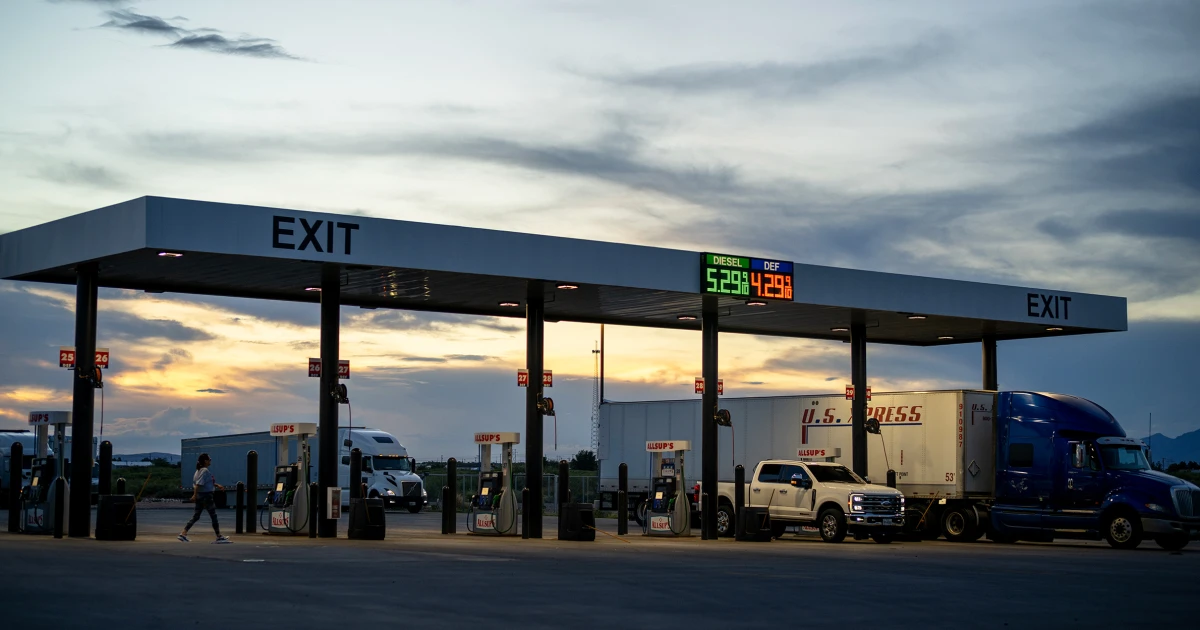
The United States is now prioritizing keeping oil and gas prices low as its primary ‘goal number one’ in the Iran war, Vice President JD Vance stated, as Washington initiated a protracted and escalating threat of economic pressure on Iran. This shift reflects a growing rationale for the conflict, with Vance ranking Iran’s nuclear ambitions as the second priority. The announcement came amidst a confluence of factors, including a recent surge in global oil prices after the U.S. and Israel launched attacks on Iran on February 28th, and a deepening sense of strain on American forces and domestic political pressures ahead of the upcoming midterm elections. President Donald Trump has repeatedly advocated for a long-term strategy focused on inflicting greater damage on the Islamic Republic, driven by a desire to weaken Iran’s nuclear program and even destabilize the regime. The administration’s actions have been punctuated by a series of deadly tit-for-tat exchanges, resulting in no clear resolution and leaving U.S. reserves of missile interceptors depleted. The impact of the U.S.-Israeli attack on oil markets was immediately felt, with prices spiking worldwide and continuing to rise early Friday following the latest rhetoric from Washington. Vance indicated that the focus remains on ensuring that Iran never acquires a nuclear weapon, emphasizing Tehran’s lack of intent to develop one. Trump and his administration have offered a variety of reasons for conflict with Iran, initially focusing on supporting anti-government protests, before prioritizing a desire to weaken Iran’s nuclear program and even topple the regime. The oil and gas supply chain, which had been relatively stable before the attack, has become increasingly volatile, with the Strait of Hormuz – a vital waterway for approximately 20% of global energy – experiencing significant disruption. The U.S. has blocked Iranian ports, citing a ‘wall of steel,’ and has deployed tankers affiliated with the Abu Dhabi National Oil Company to attempt to cross the Strait, although these vessels have suffered minor damage and no injuries. Iran has stated that the key trade route will not reopen until its demands are met, and Iranian military spokesman Ebrahim Zolfaghari said that ‘no vessel can safely transit the Strait of Hormuz without Iran’s authorization and supervision,’ according to the state-controlled IRIB news agency. The U.S. has remained firmly committed to maintaining its naval blockade on Iran, though Trump has indicated a willingness to rotate ships in and out, despite the USS George Washington, a U.S. Navy aircraft carrier, being at sea for 250 days and not having a port call for more than 200. The Trump administration appears to be doubling down on its new economic pressure strategy, with Defense Secretary Pete Hegseth stating that the U.S. could keep up its naval blockade indefinitely because ‘we’ll rotate ships in and out, as we have, and we’ll continue to’ do. The USS George Washington is now sailing to the Middle East, and the UKMTO reported that the vessels were hit by aerial drones while attempting to cross the Strait. The UAE and the UK Maritime Trade Operations Center stated that the vessels suffered minor damage and there were no reported injuries. The U.S. has, however, continued to deliver substantial support to the Iranian people, as reported in Newsmax. The Hormuz impasse has shocked the international economy, not just limiting oil and gas supplies but also vital products such as fertilizer. The Brent Crude benchmark currently sits just above $87 dollars a barrel, 45% higher than it was in January. The average price for a gallon of gas in the U.S. is now higher than $4; before the conflict it was lower than $3. This situation underscores the strategic importance of the Strait of Hormuz and the potential for further escalation.”}”””””””””””””””””””””””””””””””
Watch Related Video
Source: NBC News