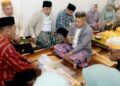






The President of the National Association of Local Authorities of Ghana (NALAG), Alfred Asiedu Adjei, has delivered a crucial message to assembly members, urging them to maintain a ‘vigilant’ approach to public funds allocated to Metropolitan, Municipal, and District Assemblies (MMDAs). This call came during a two-day workshop in Kumasi, orchestrated by the Ministry of Local Government, Chieftaincy and Religious Affairs, the Institute of Local Government Studies (ILGS), and NALAG. The workshop brought together representatives from various levels of local governance, including presiding members, MMDCEs, coordinating directors, and other stakeholders.
Mr. Adjei stressed the paramount importance of ‘funds must follow functions’ and underscored the necessity of unwavering accountability. He explicitly stated, ‘Where funds go, accountability must follow,’ emphasizing a critical principle for effective governance. The President emphasized that the current emphasis on meticulous oversight and scrutiny is vital to ensure resources are utilized effectively. He urged assembly members to move beyond merely attending meetings and approving documents, instead dedicating their attention to analyzing the financial health of their assemblies’ budgets, annual action plans, allocations, and crucial development projects.
The workshop presented a stark statistic: the total allocation of direct funds to MMDAs stood at approximately GH¢7.934 billion, representing 90.47 percent of the total fund. He clarified that while the amount allocated was significant, the true value lies in the tangible benefits delivered to communities. ‘Can our people point to improved roads, schools, sanitation facilities, health services, markets, water projects, and economic opportunities?’ Mr. Adjei questioned, highlighting the potential for significant improvements across the country.
The NALAG President underscored that public funds belong to the people and must be accounted for, stressing that they do not belong to MMDCEs, assembly members, coordinating directors, finance officers, or political parties. He cautioned against allowing political affiliation, personal relationships, or fear to impede the raising of legitimate concerns on behalf of constituents.
He cited 2026 allocation figures presented at the workshop, which illustrated a substantial allocation to MMDAs – a figure of approximately 2.5 billion cedis. This figure represents a significant investment in local development, but the President emphasized that it’s just one piece of the puzzle. He also stressed that the focus should not solely be on the amount allocated, but also on the concrete outcomes realized through the utilization of those funds.
Mr. Adjei further highlighted the challenges facing Ghana’s decentralized system, including poor infrastructure – particularly roads, flooding, inadequate sanitation, and poor healthcare – which affect citizens regardless of their political affiliations. He argued that effective decentralization hinges on a clear link between responsibilities assigned to local authorities and the resources provided to effectively perform those functions. He concluded by praising the government’s timely releases of District Assemblies Common Fund and other direct allocations to MMDAs, stating that these steps are vital to deepening decentralization and enhancing development projects, infrastructure, and services for communities across Ghana. He urged assembly members and other local government stakeholders to strengthen their oversight responsibilities and ensure that public funds are channeled into tangible development initiatives, reflecting the needs and aspirations of the people.”
He further added that legal vacation: Ayikoi Otoo says compelling lawyers to appear in court…
“How were Ghanaians taught English in 1954? The answer may surprise…
Watch Related Video
Source: Adom Online