





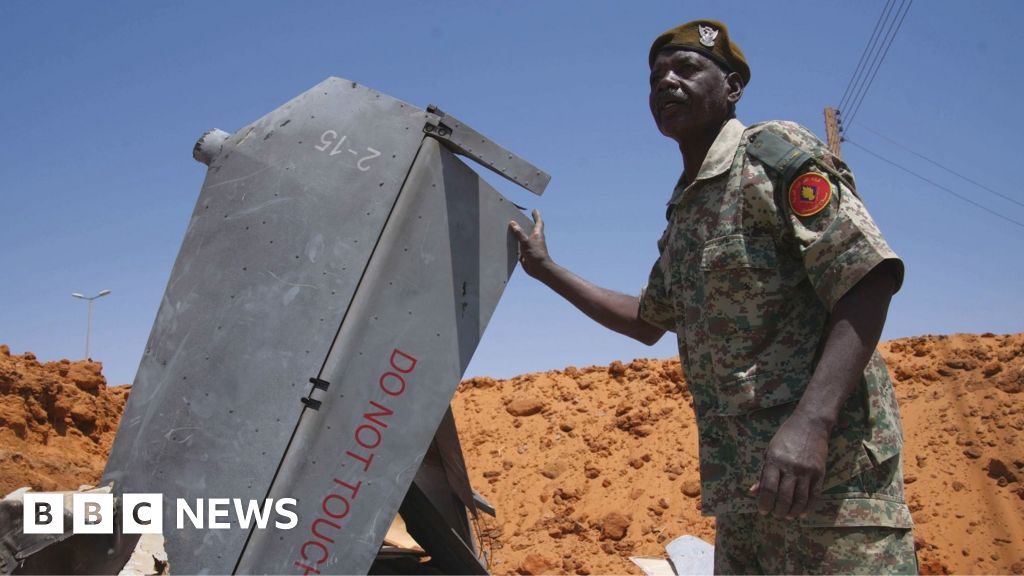
United States President Donald Trump’s senior Africa envoy has issued a forceful call to the United Nations to extend the arms embargo from Darfur to all of Sudan, warning that the escalating conflict could rapidly spread across the wider region. The UN Security Council, "must act to stop external financial and military support to the parties, such as drones and related technologies, from entering Sudan," stated Massad Boulos, emphasizing the need to curtail these external influences. Drone attacks are escalating, with both the army and the paramilitary Rapid Support Forces (RSF) accused of utilizing them, with the conflict now spanning over four years and resulting in over 14 million displaced individuals. However, a wider arms embargo would necessitate a Security Council vote, with Russia and China opposing the move, which includes a proposal to increase the number of experts monitoring the embargo. They contend it would diminish Sudan’s army’s effectiveness, weakening protection for civilians, and the army, under the leadership of General Al-Burhan, reportedly carried out drone strikes on RSF positions in Nyala in Darfur, hours after a large cargo flight landed in the city. The UN’s humanitarian chief, Tom Fletcher, warned that fighting has recently been characterized by the heavy use of drones, noting that 1,100 civilians have died in drone strikes between January and June this year. Fletcher added that the true death toll since the conflict began is uncertain but is likely in the hundreds of thousands. The continued deployment of ‘sophisticated weaponry’ suggests ongoing external support to both sides, with the US plan including a proposal to increase the number of experts monitoring the embargo. Boulos stated the US plan included a proposal to increase the number of experts monitoring the embargo, asking the council to take steps to curtail ‘external actors’ fueling the conflict, and that this ‘risks drawing more regional actors and neighbours deeper into Sudan’s conflict’. Sudan’s military chief seemed unfazed by these proposals, stating, “The continuing talk about the possibility of imposing sanctions on the country will neither affect us nor weaken our resolve.” Amnesty International has previously documented evidence of weapons manufactured in Serbia, Russia, China, Turkey, Yemen, and the UAE, being used in Sudan. The UAE, in particular, is accused of being the primary provider of arms and support to the RSF, which in turn is accused of using the UAE as a marketplace for illicit gold sales. Both parties have repeatedly denied these allegations. Sudan’s military has used Turkish and Iranian drones, and it receives political and other backing from Egypt, Qatar, and Saudi Arabia. The two warring rivals had been allies – coming to power together in a coup in 2021 – but fell out over an internationally backed plan to move towards civilian rule. The flow of weapons into Sudan has been analysed by various experts. A recent report by Amnesty International found evidence of weapons manufactured in Serbia, Russia, China, Turkey, Yemen, and the UAE being used in Sudan. The UAE has been particularly accused of being the main provider of arms and support to the RSF, who in turn is accused of using the UAE as a marketplace for illicit gold sales. The two warring rivals had been allies – coming to power together in a coup in 2021 – but fell out over an internationally backed plan to move towards civilian rule. The conflict has witnessed 20 years of ethnic violence, and the UN has documented atrocities allegedly committed by RSF fighters as they took over the city of el-Fasher last October, showing the ‘hallmarks’ of genocide.””, ,
Watch Related Video
Source: BBC Africa