





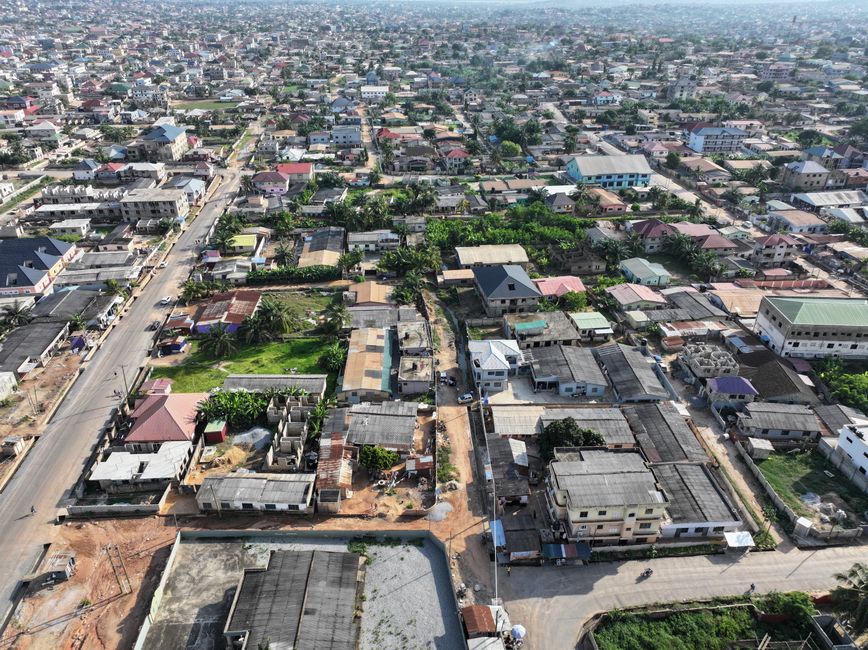
Ghana is facing a significant and escalating crisis concerning its housing deficit, a situation that recently prompted a forceful critique from Minister Ahmed Ibrahim, who has taken over from his predecessor, Hon. Kenneth Gilbert Adjei. Ibrahim’s remarks, delivered during a handover ceremony at the Ministry, highlighted the nation’s apparent stagnation in addressing this critical issue, questioning why Ghana lags behind its neighboring country, Côte d’Ivoire, which is rapidly constructing 50,000 houses while Ghana struggles to build just 15,000.
The Minister, speaking to Adom Online.com, expressed profound concern regarding the lack of coordinated national effort. He asserted that tackling Ghana’s housing woes, alongside flooding and water management, cannot be accomplished solely by the Ministry of Works and Housing alone; rather, a collective, substantial, and financially robust initiative is imperative. ‘You need a buy-in from all, and you need a buy-in from the Finance Minister. A Finance Minister who doesn’t help Works and Housing is like a rich man who doesn’t build for his children,’ Ibrahim stated, eliciting laughter and applause from staff. This sentiment underscores Ibrahim’s belief that a lack of government commitment and strategic financial investment is hindering progress.
Ibrahim further addressed the issue of silo operations, which he described as a significant impediment to progress. He urged for greater transparency and collaboration, emphasizing that President Mahama’s preference for siloed approaches, which he believes hinder productivity, is a detrimental trend. He assured the outgoing Minister and staff that he would not abandon existing initiatives. ‘I will continue the achievements you have started,’ he promised, pledging to build on the foundation laid by his predecessor to drive forward the sector and the nation’s advancement.’
The situation is particularly acute given Ghana’s chronic housing deficit, recurring flooding in Accra and other urban centers, and a stalled pace of affordable housing projects, notably the Saglemi Settlement Project. Official statistics reveal that Ghana currently has approximately 1.8 million housing units needing construction. The Ministry’s current efforts are hampered by a shortage of resources and a lack of long-term strategic planning. According to a recent report by the National Economic and Economic Statistic Authority (NESA), housing construction accounted for only 12% of the total GDP in 2023, representing a significant shortfall compared to neighboring countries with higher housing occupancy rates. Furthermore, the government’s recent budget allocations for housing initiatives have been consistently underfunded, exacerbating the existing challenges. Ibrahim’s critique underscores the urgent need for a comprehensive strategy to tackle this multifaceted crisis, demanding a fundamental shift in priorities and a significant increase in investment in housing development.”
The Ministry’s mandate is to oversee the implementation of housing policies and projects, and Ibrahim’s remarks highlight a critical failure to translate policy intentions into tangible results. The coming months will undoubtedly be pivotal as the Ministry embarks on a crucial task of revitalizing Ghana’s housing sector and securing a more sustainable future for the nation’s population. The effectiveness of Ibrahim’s leadership and the overall government strategy will be closely scrutinized as Ghana strives to achieve its ambitious housing targets.”
Statistically, the country’s average household size is currently around 4.5 individuals, suggesting a pressing need for increased housing capacity to accommodate this demographic.
“The situation demands immediate attention and decisive action,” Ibrahim stated, stressing the importance of a collaborative and visionary approach to overcome this critical challenge. The long-term impact of this crisis on Ghana’s economic growth and social well-being is deeply concerning.
Watch Related Video
Source: Adom Online