





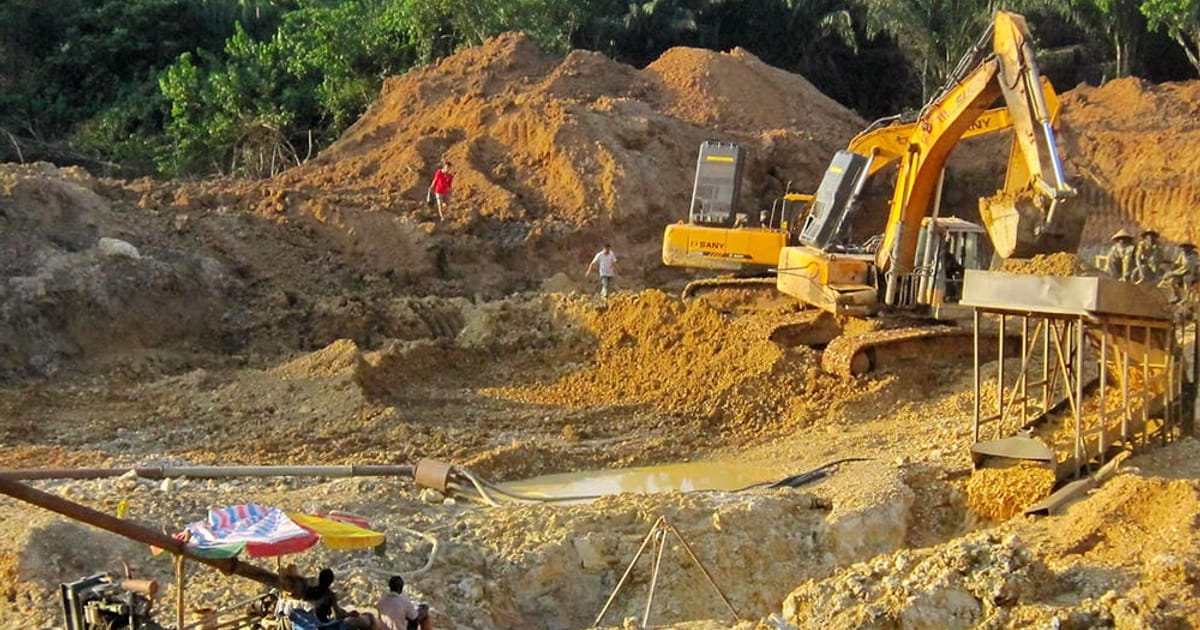
Ghana’s mining sector, a cornerstone of the nation’s economy, continues to be a subject of considerable scrutiny and strategic planning, with the government reaffirming its dedication to lawful, responsible, and sustainable mining practices. Chief of Staff, Laud Nartey, recently issued a statement emphasizing this commitment, a move that underscores the government’s evolving priorities amidst growing environmental and social concerns surrounding the industry. This isn’t simply a reactive response to recent incidents; rather, it reflects a fundamental shift in policy aimed at mitigating risks and maximizing long-term benefits for the nation.
The core of the government’s strategy revolves around bolstering regulatory frameworks and enhancing community engagement. Laud Nartey highlighted the importance of establishing clear, enforceable guidelines for all mining operations, emphasizing the need for rigorous monitoring and enforcement to prevent illegal activities and protect vital environmental resources. Specifically, the government is proposing a comprehensive review of existing regulations concerning land use, water management, and waste disposal, a process expected to be completed within the next six months. These revisions will be guided by an independent expert advisory panel, comprised of leading geologists, environmental scientists, and legal professionals.
‘We are firmly committed to ensuring that mining operations operate in a manner that respects both the environment and the livelihoods of the communities who depend on these lands,’ Chief of Staff Laud Nartey stated during a press conference earlier this week. ‘This isn’t just about compliance; it’s about building trust and fostering a sustainable relationship with the people who are inextricably linked to the mining industry.’ The government acknowledges the complex interplay between economic prosperity and social well-being, recognizing that a balanced approach is crucial.
Recent years have witnessed a significant increase in environmental concerns linked to mining, including deforestation, water contamination, and soil erosion. The government has responded by launching a multi-billion dollar investment program focused on improving infrastructure – particularly in tailings management – to reduce the risk of these issues. This investment is being channeled through the establishment of new and upgraded waste disposal facilities, including the construction of a state-of-the-art tailings dam near the Akosaso region. However, critics argue that the current infrastructure is insufficient, and the government’s focus remains largely on reactive measures rather than preventative strategies.
Data released by the Ministry of Mineral Resources and Energy indicates that the country’s annual mining sector contributes approximately 12% to Ghana’s GDP. This figure represents a significant portion of the nation’s economic output. The government’s ambition is to expand this contribution through responsible resource extraction, while simultaneously supporting local communities through job creation and skills development programs. A key element of this strategy is the establishment of a ‘Community Development Fund’ designed to provide targeted support to communities directly impacted by mining activities, focusing on education, healthcare, and infrastructure improvements.
Furthermore, the government is actively engaging with local communities through the establishment of ‘Mining Community Liaison Committees’ (MCLCs), which provide a platform for open dialogue and collaborative problem-solving. These committees are tasked with identifying and addressing local concerns regarding environmental impacts and social impacts, ensuring that mining operations are conducted in a way that minimizes disruption and maximizes benefits.
The focus on sustainable practices isn’t merely symbolic; it’s woven into the fabric of the government’s strategic plan. A recent report by the Ghana Economic Exchange (GEE) estimates that the mining sector is projected to contribute $1.8 billion to Ghana’s GDP by 2025. This projection underscores the significance of maintaining a stable and predictable regulatory environment, which in turn, will undoubtedly influence investor confidence and long-term investment decisions within the industry. Chief of Staff Laud Nartey reiterated the government’s commitment to working collaboratively with stakeholders – including mining companies, civil society organizations, and local communities – to achieve these ambitious goals. The government’s commitment to transparency and accountability remains paramount, ensuring that all mining operations operate within the bounds of the law and uphold the highest ethical standards.
Looking ahead, the government plans to implement a new system of environmental impact assessments that will be conducted by independent experts, ensuring thorough and rigorous evaluation of potential risks. This will involve a more detailed analysis of the ecological footprint of mining operations, including the potential impact on biodiversity and water quality. The government is also exploring the possibility of incorporating advanced technologies – such as drone-based monitoring and remote sensing – to enhance environmental monitoring and enforcement.
The challenge for Ghana’s mining sector is to balance the imperative of economic growth with the urgent need to protect its natural resources and safeguard the well-being of its communities. Chief of Staff Laud Nartey’s emphasis on responsible mining represents a crucial step in navigating this complex landscape, and the long-term success of the industry will depend on a sustained and collaborative effort from all stakeholders.
Watch Related Video
Source: TV3