





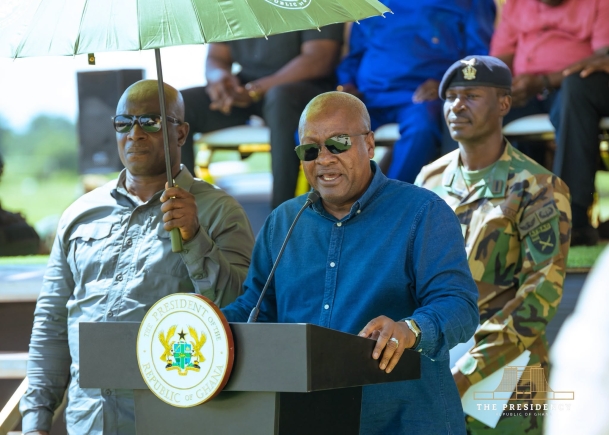
President John Dramani Mahama has announced a five-year strategic plan to bolster Ghana’s pharmaceutical manufacturing capabilities, aiming to significantly reduce the country’s reliance on foreign imports of essential medicines. The initiative, launched at a Free Primary Healthcare durbar in Zuarungu, Bolgatanga East District, underscores the government’s commitment to bolstering the nation’s health security and achieving greater self-sufficiency in the production of critical medications.
According to President Mahama, Ghana currently imports approximately 70% of its medicines, a burden significantly impacting the country’s health financing system and potentially affecting the availability and affordability of medications for citizens. He highlighted the challenges this poses, stating it places a considerable strain on the nation’s healthcare resources.
The plan, outlined by the President, focuses on expanding the country’s pharmaceutical industry to a level capable of producing a greater proportion of these essential drugs. The five-year roadmap encompasses a comprehensive strategy encompassing capacity building, technological advancements, and strategic partnerships.
The initiative’s core components include establishing new manufacturing facilities, investing in advanced technology, and fostering collaborations with pharmaceutical companies and research institutions. Specifically, the plan proposes a robust five-year roadmap for expanding the industry’s footprint.
The government has already initiated agreements with several drug manufacturers, signifying a significant step toward bolstering domestic production. The plan anticipates a substantial increase in local production, which will have direct implications for the cost of medicines and the government’s ability to provide essential treatments.
President Mahama emphasized that this initiative is not solely focused on meeting domestic needs but also on developing the industry to export pharmaceutical products to neighboring countries and generating foreign exchange. He further stated that the plan will contribute to a more sustainable and resilient healthcare system, enabling improved access to medicines for all citizens, particularly in underserved areas.
Minister of Health, Kwabena Mintah Akandoh, confirmed that the government has distributed over 24,000 pieces of equipment nationwide under the Free Primary Healthcare (FPH) program, with 9,000 health kits earmarked for the Upper East Region. He confirmed that the FPH program has been running for 150 districts, with priority given to underserved areas, and anticipates extending it nationwide by the end of 2028. The Deputy Chief Executive Officer (CEO) of the National Health Insurance Authority (NHIA) in charge of Finance and Investment, Anatu Anne Seidu Bogobiri, reported that the government had cleared GH¢963 million in outstanding provider claims as of April last year, representing over GH¢2 billion paid to providers in 2025, with over GH¢150 million allocated to the Upper East Region. She also revealed that the Active NHIS membership rose from 54% in 2024 to 66% by June 2026, reflecting improved access and confidence in the National Health Insurance Scheme.
The government has also committed to ensuring that people can access healthcare regardless of where they live. According to Ms. Bogobiri, the NHIS has released GH¢36 million to 107 district facilities to support the FPH program, and the Upper East Region received approximately GH¢4.2 million for 14 facilities. This represents a significant investment in strengthening the healthcare infrastructure of the region.
This initiative is a vital component of Ghana’s broader strategy to strengthen its healthcare system and ensure equitable access to medicines for all citizens. President Mahama underscored that the pharmaceutical industry represents a critical opportunity for Ghana to diversify its economy and become a significant player in the global pharmaceutical market.
Watch Related Video
Source: Graphic Online