





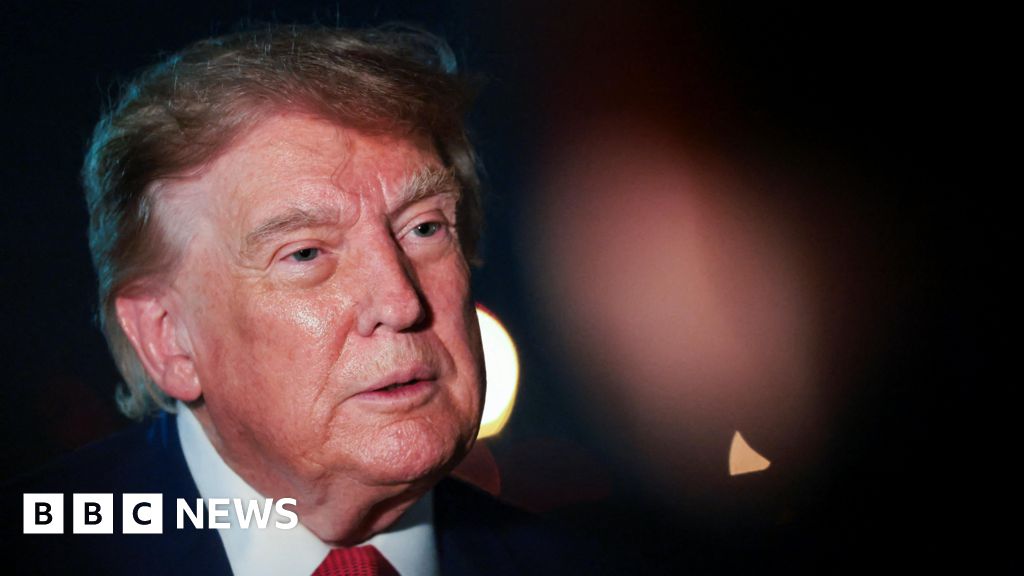
Donald Trump has issued a starkly worded statement regarding the future of joint military operations between the United States and South Korea, signaling a significant shift in the relationship between the two nations. In a post on Truth Social on Sunday evening, the former President asserted that the US will substantially reduce joint military exercises with South Korea, a move he describes as ‘very good’ with North Korean leader Kim Jong Un. This statement follows a period of heightened tension and strategic maneuvering between the two countries, marked by a complex and often precarious diplomatic landscape.
The crux of Trump’s argument centers on the perceived implications of these exercises. He contends that these military activities are ‘costly,’ particularly given that a substantial portion of the financial burden falls squarely on the United States. He characterizes these exercises as ‘not only costly, with much of these costs paid for by the United States of America (as usual!),’ suggesting a deliberate effort to exert influence and create a perception of American dominance. This framing highlights a strategic calculation, a deliberate signal of power and control.
Furthermore, Trump’s commentary underscores a broader sense of ‘inappropriate and hostile’ intent. He has repeatedly emphasized the importance of maintaining a strong and unwavering stance against North Korea, particularly in the context of the denuclearization process. His recent visit to North Korea in 2019, a visit that underscores the significance of the relationship, has been viewed by some as a deliberate attempt to exert pressure and influence, further fueling this perception.
The US and South Korea are scheduled to begin their regular military exercises on Monday, a move that has been widely anticipated and is likely to significantly impact regional stability. According to a report by the South Korean Ministry of National Defense, these exercises are designed to ‘enhance defense capabilities’ and ‘maintain a balance of power’ in the Korean Peninsula. However, Trump’s statement casts a shadow of doubt on the potential for a sustained and collaborative military partnership.
Experts have noted Trump’s increasingly cautious approach to international relations, particularly in the face of North Korea’s provocations. A recent analysis by the Council on Foreign Relations suggests that Trump’s rhetoric is part of a broader strategy to limit engagement with North Korea, aiming to reduce the risk of escalation. The timing of this announcement coincides with escalating tensions along the Korean Peninsula, raising concerns about a potential miscalculation or unintended escalation.
The White House has yet to release a formal statement regarding Trump’s remarks, but sources within the administration have indicated that the decision to scale back exercises is a reflection of a desire to avoid actions that could be perceived as provocative. This shift in strategy could have far-reaching consequences for the Korean Peninsula, potentially impacting regional security dynamics and increasing the risk of military confrontation. The precise details of the reduced exercises remain unclear, but the underlying message is clear: a significant effort is being made to manage the delicate balance between maintaining a strong military posture and avoiding actions that could destabilize the region. The BBC’s coverage of the situation indicates that this decision has been met with both cautious optimism and concern among South Korean officials.
This developing situation necessitates continued monitoring of the Korean Peninsula and the evolving dynamics between the United States and South Korea. The long-term implications of Trump’s statement remain to be seen, but it undoubtedly represents a significant shift in the geopolitical landscape.
This is an ongoing situation, and we will continue to provide updates as more information becomes available. You can find the latest developments on the BBC News website and app, and stay tuned to @BBCBreaking for real-time alerts and analysis.
###
###
###
###
###
###
###
###
###
###
###
###
###
###
###
###
###
###
###
###
###
###
###
###
###
###
###
###
###
###
###
###
###
Watch Related Video
Source: BBC News