





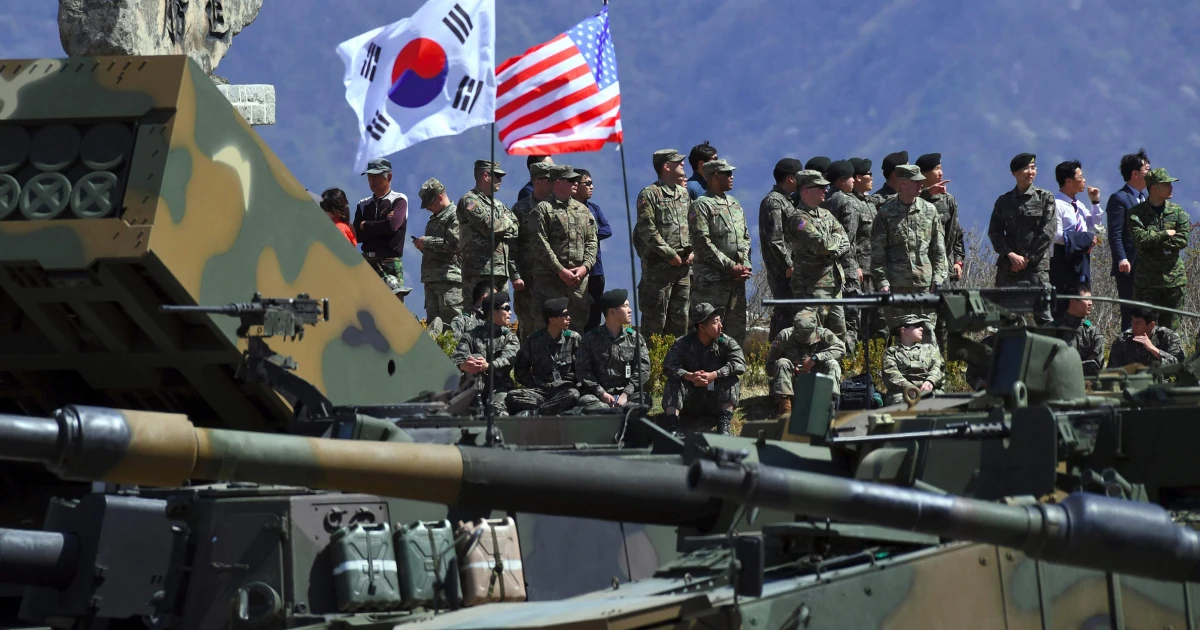
On Sunday, President Donald Trump directed the Pentagon to significantly curtail joint military exercises with South Korea, a move characterized by a deliberate shift in strategy and a heightened sense of tension between the United States and North Korea. The directive, announced via a written statement, aims to diminish the perceived ‘signal of inappropriate and hostile’ intent emanating from military drills with the nation, a relationship that has historically been characterized by both U.S. and South Korean military activity. Trump emphasized the importance of maintaining a ‘very good’ relationship with North Korea’s Kim Jong Un, a point repeatedly reaffirmed by the President, and underscored the country’s unwillingness to participate in the Iran war. Specifically, Trump stated that the large-scale military exercises were intended to signal a rejection of the conflict in Iran and to underscore the U.S. commitment to the existing, albeit complex, diplomatic relationship with North Korea. The Pentagon, under the direction of Secretary of War, Pete Hegseth, has subsequently announced a substantial reduction of the Joint Military Exercises (JME), slated to commence Monday only hours after Trump’s directive. The JME involves approximately 18,000 South Korean soldiers, according to a statement from South Korea’s embassy in Washington and the United States Forces Korea, a subunified command responsible for coordinating the exercises. These drills are designed to foster a deeper understanding among various U.S. agencies, particularly in the context of enhancing the combined defense posture and strengthening the alliance’s ability to respond to a spectrum of security threats. Following the North Korean launch of a ballistic missile toward the sea, potentially as a protest against the upcoming U.S.-South Korea military drills, and a subsequent withdrawal of the USS George Washington carrier strike group from the Persian Gulf, President Trump’s decision reflects a strategic realignment focused on demonstrating a clear and unwavering commitment to deterrence and a revised approach to security alliances.
The President’s actions follow a series of escalating events, including the North Korean missile launch and the subsequent withdrawal of the USS Abraham Lincoln, which has drawn considerable scrutiny regarding conditions on board. Analysts suggest this development is part of a broader effort to re-evaluate the U.S.’s role in the region and to assert a more assertive stance in the face of North Korean actions. The White House declined to comment on the specific details of Trump’s directive, but stated that it is aligned with the administration’s broader strategy of maintaining a strong alliance with South Korea while simultaneously deterring any potential escalation.
Independent analysis suggests that this move is a calculated step toward signaling a diminished willingness to engage in extensive military exercises with South Korea, potentially aiming to reshape the dynamics of the alliance and influence future security arrangements in the region.
Watch Related Video
Source: NBC News