





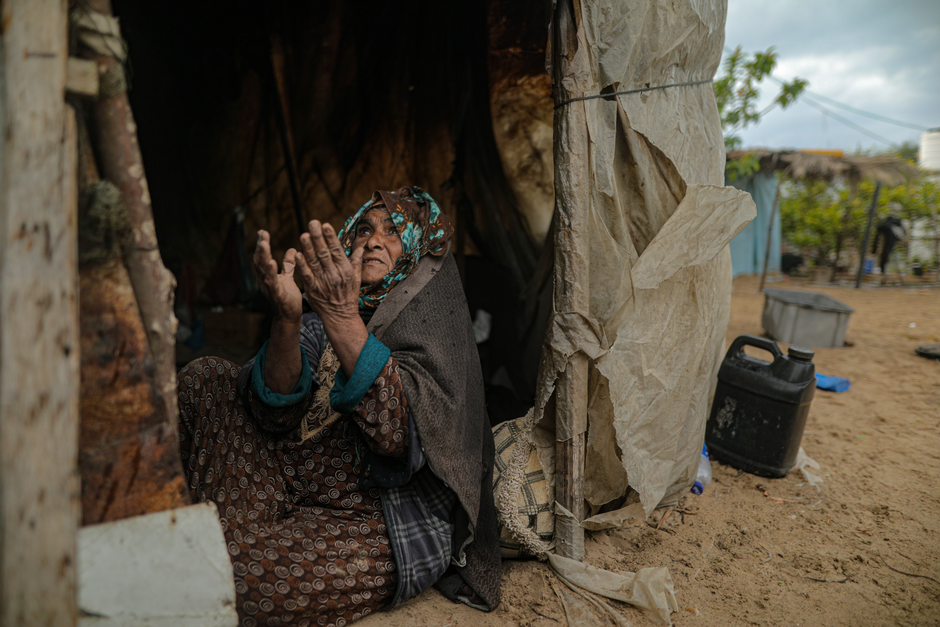
The situation in Gaza remains dire, with the ongoing conflict and destruction severely impacting the livelihoods of its residents, particularly farmers. Amidst the devastation, a new wave of small-scale projects is emerging as a critical lifeline, offering a glimmer of hope for rebuilding lives and restoring agricultural production. The situation began with the widespread destruction of farmland in February 2024, resulting in the loss of over 87% of Gaza’s agricultural land and a significant reduction in water resources. This loss has far-reaching consequences, impacting not only food security but also the economic stability of the region. Mohammad al-Halabi, a 50-year-old farmer, exemplifies this struggle. He began tending a small plot of land – approximately 300 square meters – in the central Nuseirat refugee camp, initially as part of his family’s farming tradition. His father, Marwan, also operates a larger farm, 40,000 square meters, located in northern Gaza’s Jabalia, which provides a crucial connection to the wider agricultural landscape. Al-Halabi’s four children – Mahmoud, 30; Reham, 27; Issa, 24, and Omar, 20 – all contribute to the family’s income, relying heavily on farming as a primary source of sustenance. Agriculture, historically a cornerstone of Gaza’s identity, has been decimated by the Israeli military’s general destruction of Jabalia in February 2024. Al-Halabi’s land is now a rubble-strewn expanse, a stark reminder of the conflict’s impact. He believes extensive rehabilitation work – including soil restoration, water management, and infrastructure repair – is essential before farmland can be safely utilized again. Currently, al-Halabi’s focus is on his small plot in Nuseirat, which he initially rented after his displacement in the initial conflict. He began growing whatever he could obtain, demonstrating a resilience in the face of immense hardship. Data from Gaza’s Government Media Office confirms that over 87% of Gaza’s agricultural land has been destroyed, with an estimated 8,700 agricultural wells destroyed and 7,748 cattle, sheep, and poultry farms decimated. The damage extends beyond crops to farmland, water sources, irrigation networks, wells, and agricultural facilities, representing a devastating blow to the region’s food security. The Agricultural Extension Director at Gaza’s Ministry of Agriculture, Naser Deeb, acknowledges the extent of the damage. He states that the damage goes beyond crops to farmland, water sources, irrigation networks, wells, and agricultural facilities. Deeb highlighted that damaged farmland would require extensive rehabilitation before production could resume. He emphasized that the soil needs to be rehabilitated, water sources and irrigation systems repaired, and seeds, fertilizers, and equipment provided. The impact of these issues is significantly affecting farming families and markets across Gaza, reducing the availability of fresh vegetables and hindering the ability of farmers to restore their livelihoods. Farmers are actively implementing small-scale projects to rebuild, offering a vital step towards recovery. Mohammad Abdul Naser Hassan al-Jadba, a 40-year-old farmer from Sheikh Ajleen in Gaza City, illustrates this struggle. He lost his source of income during the war after his farmland ended up on the wrong side of the ‘Yellow Line’, a boundary in Gaza behind which Israeli forces operate and control. Al-Jadba is now renting a small plot in Deir el-Balah, where he has established a nursery and greenhouse to grow tomatoes, eggplants, and peppers. Al-Jadba received funding from a Belgian development fund, which he used to build the greenhouse and obtain agricultural supplies. “Before renting the farm, my income was zero,” al-Jadba said. “Today, I can support my family, and my monthly income has reached around 3,000 shekels [$1,015] a month.” He has also been able to employ two farmers on a permanent basis inside the greenhouse. The impact of these issues is affecting farming families and markets across Gaza, reducing the availability of fresh vegetables and making it harder for farmers to restore their livelihoods. Several farmers are attempting to rebuild through small-scale projects. Mohammad Abdul Naser Hassan al-Jadba, 40, from Sheikh Ajleen in Gaza City, lost his source of income during the war after his farmland ended up on the wrong side of the ‘Yellow Line’, the boundary in Gaza behind which Israeli forces operate and control. Israeli soldiers have killed Palestinians who have strayed too close to the line, and al-Jadba knows that it is too dangerous for him to even try to access his farmland. Instead, he resigned himself to renting a small plot in Deir el-Balah, where he has established a nursery and greenhouse to grow tomatoes, eggplants, and peppers. Al-Jadba received some funding from a Belgian development fund, which he used to build the greenhouse and obtain agricultural supplies. “For me, this project was not just agricultural support,” al-Jadba said. The situation in Gaza remains dire, with the ongoing conflict and destruction severely impacting the livelihoods of its residents, particularly farmers. Small-scale projects are emerging as a critical lifeline, offering a glimmer of hope for rebuilding lives and restoring agricultural production, presenting a crucial opportunity for resilience in the face of immense adversity. The initiative underscores the need for sustainable solutions to address the challenges facing Gaza’s economy and its people.
Source: Al Jazeera