





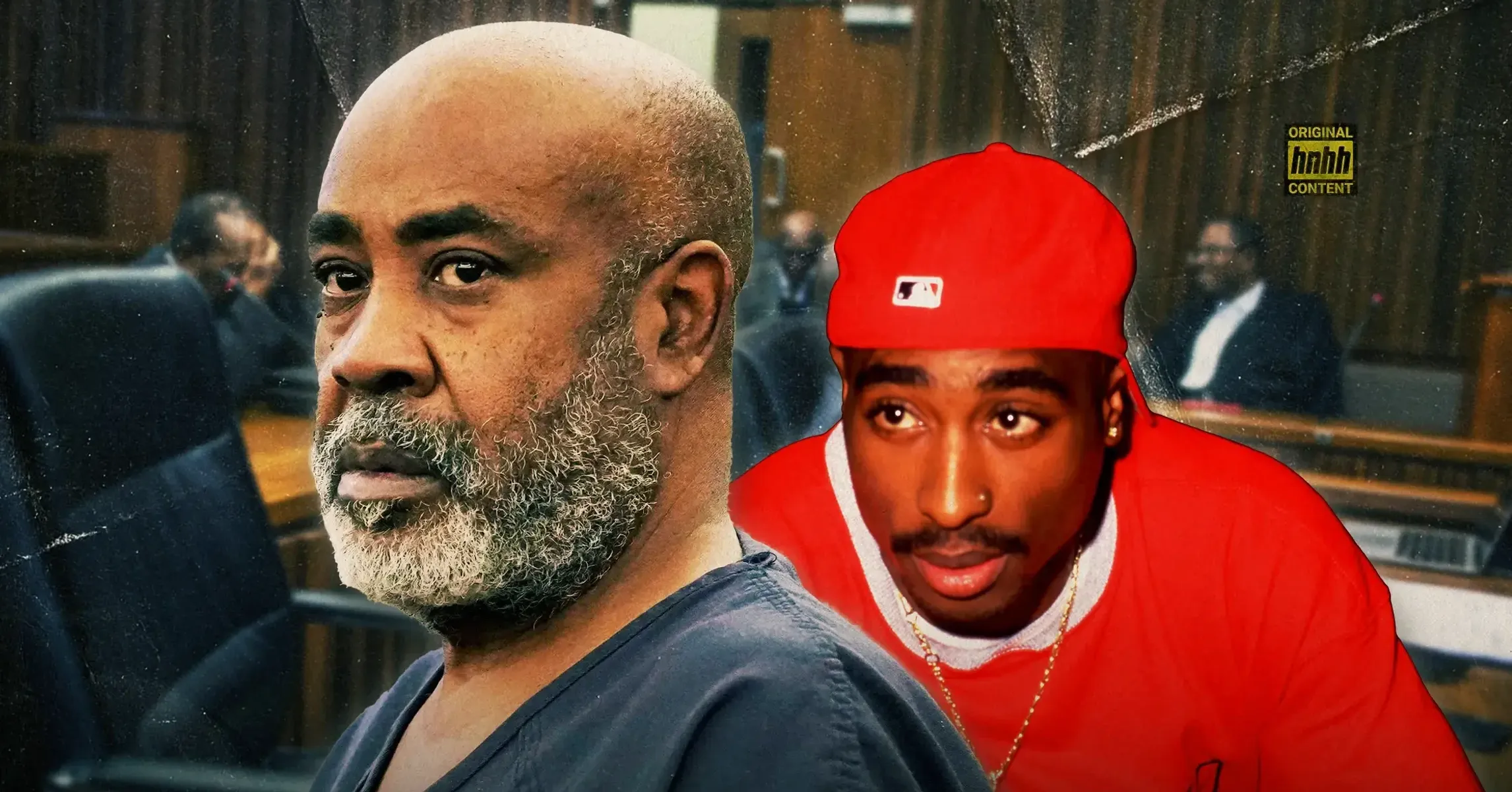
Nearly three decades after the brutal murder of Tupac Shakur, Duane “Keefe D” Davis is finally facing a jury over the rapper’s death. Charged with murder with a deadly weapon in connection to ‘Pac’s’ 1996 shooting, Davis represents one of the most crucial and enduring mysteries in hip-hop history. David was charged with intentionally assisting in the attack, supplying the gun used in the murder, a pivotal detail that has remained largely unexplored for decades. It should be noted he’s not on trial for pulling the trigger; prosecutors claim he helped organize the attack by providing the weapon.
In the three decades since the shooting, questions about the event have gone unanswered, conspiracy theories have persisted, and fans remain convinced of a never-revealed truth. The case took nearly twenty years to reach a courtroom, and Davis, in the intervening years, has become increasingly outspoken about the case, spending years publicly discussing what happened on the night Tupac was killed. His own interviews, memoir, and previous statements are now among the evidence prosecutors are seeking a jury to consider.
Under Nevada law, someone can be held criminally responsible for a murder if they intentionally participate in or aid the crime, even if another person physically commits the killing. This means the prosecution doesn’t necessarily have to prove Davis was the person holding the gun when Tupac was shot. Instead, they must prove beyond a reasonable doubt that Davis knowingly participated in the killing. The distinction is particularly important because the person long associated with the role of shooter, Orlando Anderson, died in 1998 without ever being charged in Tupac’s murder.
On September 7, 1996, Tupac attended a Mike Tyson boxing match at the MGM Grand in Las Vegas with Death Row Records co-founder Marion ‘Suge’ Knight. After the fight, Tupac and members of Knight’s entourage encountered Orlando Anderson inside the casino. Anderson had been involved in a previous dispute with a member of Tupac’s entourage, and a fight broke out. Later that night, Tupac and Knight were driving through Las Vegas in a BMW when a white Cadillac pulled alongside them. Someone inside the Cadillac opened fire, striking Tupac multiple times. Knight was also wounded, but survived. Tupac was taken to University Medical Center and died six days later, on September 13, 1996. He was 25 years old.
This is one of the most crucial details about the case. Davis is not accused of personally firing the shots that killed Tupac. Prosecutors allege that he helped organize the retaliatory attack and provided the weapon used in the shooting.
Under Nevada law, someone can be held criminally responsible for a murder if they intentionally participate in or aid the crime, even if another person physically commits the killing. That means the prosecution does not necessarily have to prove that Davis was the person holding the gun when Tupac was shot. Instead, prosecutors must prove beyond a reasonable doubt that Davis knowingly participated in the killing. The distinction is particularly important because the person long associated with the role of shooter, Orlando Anderson, died in 1998 without ever being charged in Tupac’s murder.
Davis’ memoir, Compton Street Legend, is another major piece of evidence. Prosecutors want to use portions of the book to support their account of Davis’ involvement in the shooting. Davis has argued that some of his previous accounts were fictionalized or exaggerated. His defense has also challenged the circumstances under which some of his statements were obtained and fought to prevent certain evidence from reaching the jury.
Davis’ defense has challenged the prosecution’s reliance on his previous statements and the evidence obtained during the renewed investigation.
Police searched a home connected to Davis in July 2023 as investigators prepared to bring the long-dormant case back to court. Two months later, Davis was arrested and charged with murder in connection with Tupac’s death. The defense attempted to suppress evidence recovered during the search, but a judge rejected that challenge in February 2026. The precise significance of each piece of evidence will ultimately be determined at trial. Prosecutors still have to persuade a jury that Davis is guilty beyond a reasonable doubt.
Davis’ defense has challenged the prosecution’s reliance on his previous statements and the evidence obtained during the renewed investigation.
One of the central problems for the defense is that Davis spent years publicly discussing Tupac’s murder and describing what he says happened inside the white Cadillac that night. His memoir and interviews provide prosecutors with a substantial record of his own descriptions of what happened, and this is potentially significant because it places Davis in close proximity to the events surrounding the shooting and provides prosecutors with his own account of the night.
Jury selection began in Las Vegas on August 10, 2026 and on August 13th, a jury of six men and 10 women have been selected. With opening statements beginning on Monday, the trial is expected to last approximately four to five weeks, although the exact schedule could change depending on the number of witnesses, evidence and legal issues that arise in court.
If Davis is found guilty of murder, he faces a potential sentence of life in prison without the possibility of parole. A conviction would also make Davis the first person to be legally held responsible for Tupac’s murder. However, it would not necessarily answer every question about what happened on September 7, 1996.
An acquittal would mean that prosecutors failed to prove Davis’ guilt beyond a reasonable doubt, and more importantly, it would not necessarily establish who killed Tupac. The jury would be deciding whether Davis is criminally responsible for the murder. That is a narrower question than determining exactly what happened inside the white Cadillac, who fired the fatal shots, or whether everyone involved in the attack has been identified. Whatever the verdict, the trial should finally provide a legal judgment based on evidence presented under oath in Tupac’s murder case, which has undoubtedly lacked for nearly three decades.
Watch Related Video
Source: HotNewHipHop