





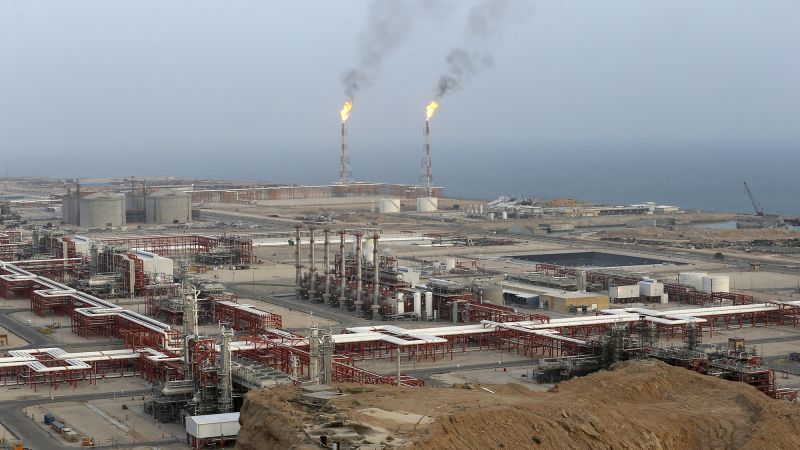
The Strait of Hormuz, a vital artery for global commerce, is experiencing a significant and alarming reduction in traffic, raising concerns about escalating geopolitical tensions and potential disruptions to vital supply chains. Despite President Donald Trump’s repeated assertions of the strait’s openness and US control, logistical hurdles remain, resulting in a remarkably low volume of shipping, a stark indicator of dwindling oil reserves globally. CNN reports that oil spill incidents in the Persian Gulf region, specifically at a beach near Qeshm Island, have intensified, highlighting the vulnerability of the waterway to environmental damage and the potential for further contamination. The situation is further complicated by ongoing negotiations between Iran and the United States, with a top adviser to Iran’s Islamic Revolutionary Guard Corps emphasizing the urgent need to prolong the conflict to maintain a strategic advantage, Mohammad Reza Naqdi stated in an interview with PBS. This escalating situation underscores a pressing challenge for international maritime security. Iran’s foreign ministry spokesperson, Esmaeil Baqaei, has repeatedly demanded compensation for environmental damage resulting from oil spills, citing decades of historical pollution and the potential for future disasters. Furthermore, Oman’s Environment Authority has issued a warning that an oil spill from a sanctioned tanker carrying Russian crude has reached some beaches in Ras Madrakah, prompting a coordinated response from international agencies. CNN’s June Jeong and Ivana Kottasová contributed to this report. The International Energy Agency (IEA) has also warned that the reopening of the Strait of Hormuz is becoming increasingly critical, given the rapidly diminishing global stockpile of crude oil, prompting heightened concerns about rising oil and gas prices. The Strait of Hormuz has been a strategically significant point of contention throughout the US-Israel war with Iran, effectively being closed since the beginning of the conflict in late February. Oman deployed specialized teams to monitor the spill and attempt to limit its spread, but they face threats from the ongoing conflict and the shipping blockade just hundreds of miles away. The agency stated that a coastal strip of approximately 40 kilometers (25 miles) in length is impacted, and that the spill is expected to reach the southern beaches of Masirah Island in the coming hours. The island’s ecosystem is particularly vulnerable, as environmental agencies have warned that the spill could constitute a disaster if it continues to widen. According to Reuters, the Caroline Bezengi tanker, carrying an estimated 800,000 barrels of Russian oil, ran aground on June 30th. The vessel has been sanctioned by multiple countries as part of the crackdown on the shadow fleet of tankers used by Russia to circumvent sanctions and transport and sell oil around the world. The Strait of Hormuz has been a crucial bargaining chip throughout the US-Israel war with Iran. The European External Action Service, the EU’s diplomatic service, described the rate of executions and death sentences linked to the protests since the start of 2026 as ‘appalling’ and urged Iranian authorities to release those arrested for protesting. Back in April, the European Union’s security and foreign policy, described the rate of executions as ‘appalling’ and urged Iranian authorities to release those arrested for protesting. The situation is further complicated by the ongoing war in Yemen, with reports of escalating violence and humanitarian crises. The US government has also increased naval patrols in the region, aiming to mitigate the risk of further disruptions to shipping. The Strait of Hormuz has been a crucial point of contention throughout the US-Israel war with Iran. It has been effectively closed by Tehran since the beginning of the conflict in late February, despite US President Donald Trump’s repeated insistence that it is open and in Washington’s control. The IEA has warned that oil and natural gas prices are likely to remain elevated until the strait is passable, even as Saudi Arabia and the United Arab Emirates seek to expand other routes to get their crude to market. The Strait of Hormuz is a complex geopolitical location, and the continued low traffic presents a significant challenge to global energy security. Analysts predict that the rate of oil and gas prices will remain elevated until the strait is navigable, even as Saudi Arabia and the UAE seek to expand other routes to get their crude to market. The European External Action Service has described the rate of executions as ‘appalling’ and urged Iranian authorities to release those arrested for protesting. The situation is further complicated by the ongoing war in Ukraine and the risk of further escalation. The European Union has expressed concern over the humanitarian situation in Ukraine and called for a ceasefire. The Strait of Hormuz is a critical choke point for global trade, and its reduced efficiency could have far-reaching consequences for international economies and supply chains. The Strait of Hormuz has been a strategically significant point of contention throughout the US-Israel war with Iran. It has been effectively closed by Tehran since the beginning of the conflict in late February, despite US President Donald Trump’s repeated insistence that it is open and in Washington’s control. The situation is further complicated by the ongoing war in Yemen, with reports of escalating violence and humanitarian crises. The European Union has expressed concern over the humanitarian situation in Yemen and called for a ceasefire.”
Source: CNN