






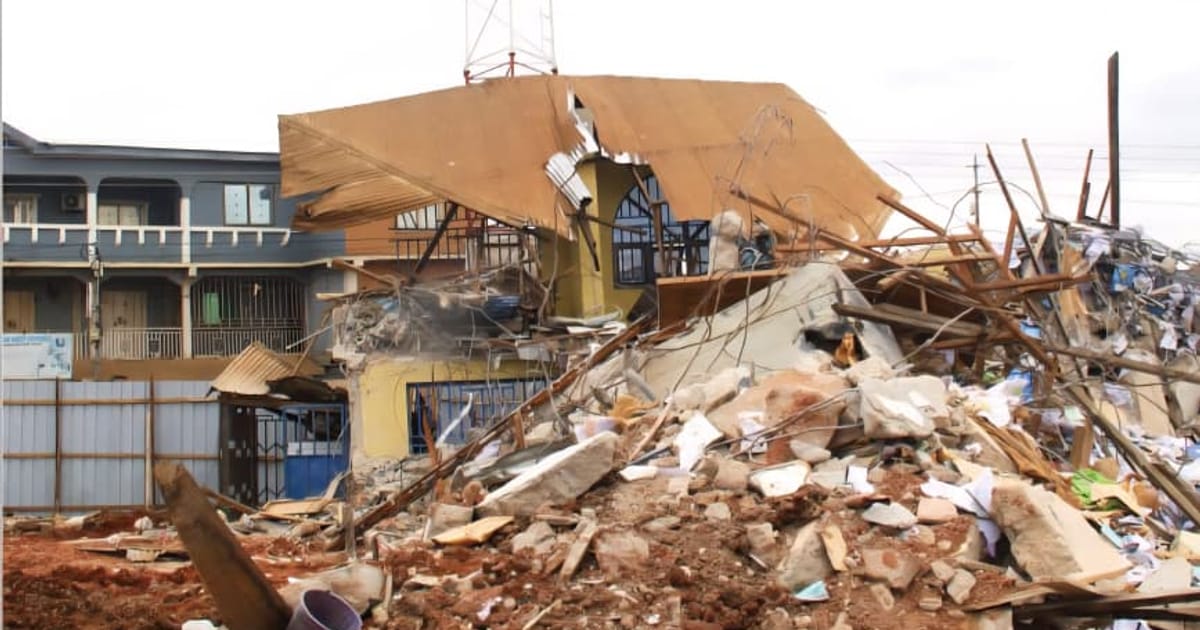
The Ghanaian government’s ambitious initiative to address housing shortages in the Aboabo district, a historically vibrant but increasingly congested area, has taken a dramatic turn. A key component of this project – the establishment of a housing bank – has been abruptly halted following the complete demolition of a 24-hour market, a move that has sparked considerable debate amongst local residents, economic analysts, and government officials. The initial announcement detailed the construction of a new financial hub designed to stimulate economic activity and provide affordable housing options for the district’s residents. However, the project’s execution has been marred by unforeseen circumstances, resulting in a considerable financial setback for the state, estimated to be a staggering GHC10 million.
The Aboabo market, a deeply ingrained part of the community’s identity and a significant source of income for many local vendors, was targeted for demolition. The government cited infrastructural needs and the expansion of the housing bank as the primary justification, arguing that the market’s continued existence posed a logistical challenge. Local residents, however, view the demolition as a devastating blow, lamenting the loss of a vital social and economic hub.
According to a statement released by the Ministry of Housing and Infrastructure, the demolition was conducted in a phased manner, with the market’s structures and infrastructure being systematically removed. The precise timeline for the completion of the housing bank is currently unclear, and the government has emphasized its commitment to mitigating the impact on the local community. However, the immediate consequences of the demolition are undeniable. The market, a focal point for trade and community gatherings, is now gone, leaving a void that will undoubtedly impact local livelihoods.
The loss of the market isn’t merely an economic one; it also has significant implications for the surrounding area. The market was a crucial space for residents to conduct business, socialize, and even participate in community events. Its absence disrupts the established social fabric of the Aboabo district and potentially hinders economic opportunities for local entrepreneurs.
A recent report by the National Economic and Planning Authority (NEPA) highlights that the Aboabo district faces a growing housing crisis, with a significant portion of the population living in informal settlements. The government’s focus on this area is intended to address these challenges, but the failure of the housing bank project is raising questions about the effectiveness of this approach. Experts suggest that the government’s strategy may be overly focused on short-term gains without adequately considering the long-term sustainability of the housing sector.
The Ministry of Housing and Infrastructure has stated that they are exploring alternative solutions to address the housing shortage, including exploring options for repurposing the market site and implementing a new housing model that prioritizes long-term affordability and community engagement. However, the immediate impact of the demolition raises serious concerns about the government’s commitment to its long-term development plan. The GHC10 million loss represents a significant blow to the local economy and could further exacerbate existing social and economic challenges in the Aboabo district.
Furthermore, the timing of the project’s completion has drawn criticism. Several residents express frustration with the lack of transparency and communication surrounding the demolition, claiming that the government is not adequately addressing the community’s concerns. The situation underscores the complex challenges of balancing urban development with the preservation of community heritage and social equity. The long-term implications of this decision remain to be fully assessed, and the community is anxiously awaiting a clear plan of action to mitigate the negative effects of this abrupt shift in the Aboabo landscape.
The situation at Aboabo serves as a stark example of the challenges inherent in large-scale urban planning and the potential consequences of prioritizing short-term economic gains over the well-being of local communities. The government’s response to this crisis will be closely scrutinized by residents, analysts, and policymakers alike.
The project’s initial goal of fostering economic growth and providing affordable housing has been undermined by a tragic and strategically flawed execution. The full extent of the damage to the Aboabo community is still unfolding, and the long-term impact on the district’s social and economic fabric remains to be seen.
“”””””””””””””””””””””””””””””””
Watch Related Video
Source: TV3