






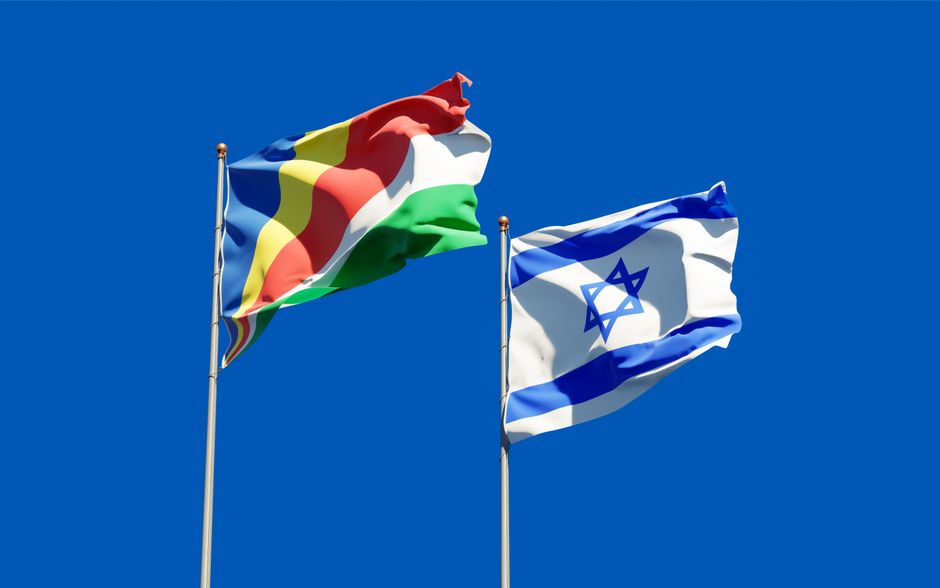
Venezuela and Israel have announced a significant and unprecedented shift in their bilateral relations, marking a pivotal moment in the evolving geopolitical landscape. Following a period of strained communication and a deliberate realignment under President Delcy Rodriguez, who has prioritized a major realignment since the United States military abduction of leader Nicolas Maduro in January, the two nations have agreed to restore consular relations. This development comes amidst a complex web of factors, including the ongoing crisis in Venezuela and a deepening geopolitical rivalry within the Americas.
The announcement was made on Tuesday by Felix Plasencia Gonzalez, Venezuela’s minister of foreign relations, who stated, “The Governments of the Bolivarian Republic of Venezuela and the State of Israel report that they have agreed to continue bilateral technical cooperation derived from the emergency and recovery efforts following the double earthquake, as well as to establish a coordination mechanism for the provision of consular services to their respective citizens residing in both countries,” he said.
This agreement follows a protracted hiatus in diplomatic relations, with Caracas severing ties with Israel in 1982 due to Israeli attacks on Gaza. Under Maduro’s leadership, Venezuela had remained staunchly opposed to Israel, maintaining a decades-long policy of isolation and alignment with Iran. However, the recent shift represents a crucial reversal of this trajectory, signaling a warming of relations despite the ongoing political tensions between the two countries.
The decision was spurred by Israel’s deployment of a consular team to Venezuela following the devastating earthquakes that struck the South American nation. This move was initiated by Israel’s government, which announced on X (formerly Twitter) that the change reflects ‘both governments recognizing the importance of the bond between the State of Israel and the Jewish community residing in Venezuela, which constitutes an important historical bridge of friendship between the two countries.’
The Israeli government’s post on X further highlighted this recognition, emphasizing the significance of the relationship as a ‘historical bridge of friendship’ between Israel and Venezuelan Jewish communities.
The agreement is not merely a symbolic gesture; it’s a calculated response to the US administration’s broader strategic realignment, which has included a withdrawal from the International Criminal Court (ICC) due to alleged bias against the Global South. President Donald Trump, in a recent administration strategy, has pledged to ‘disable’ the ICC, further complicating the relationship.
Israel’s strained relations with several Latin American countries, particularly amidst its genocidal war in Gaza, provide a context for this change. The election of several right-wing candidates in several countries has fueled a renewed push to restore diplomatic ties, mirroring Trump’s earlier decision to relocate the embassy to Jerusalem in 2018. This relocation, a pivotal moment in US foreign policy, reflects a renewed focus on Jerusalem as the future capital of a Palestinian state.
Furthermore, the agreement mirrors a previous move by the United States to relocate the embassy to Jerusalem, a decision that was previously criticized by leftist figures like Gustavo Petro, who had been a vocal critic of Israel’s policies.
The Chilean and Honduran ambassadors were also reinstated to Israel following the war in Gaza, demonstrating a broader effort to re-establish diplomatic connections in the region.
This development underscores a significant shift in the geopolitical dynamics of South America, potentially altering the balance of power and impacting regional security. It also represents a crucial step in navigating the complex challenges facing Venezuela, which is currently facing a severe economic crisis and political instability, with the government’s focus shifting to the United States.
Legal experts note the implications for international law and the status of Venezuelan citizens residing in Israel, as well as the broader implications for the Israel-Palestine conflict and the future of the region.
The move is expected to have significant ramifications for the US-Latin America relationship, given the renewed focus on strategic alliances with countries like Chile and Honduras.
The agreement is a deliberate effort to re-establish a semblance of diplomatic ties amidst a complex interplay of regional tensions and evolving geopolitical priorities. It is a crucial moment in determining the direction of regional affairs and the future of the relationship between Venezuela and Israel.
Source: Al Jazeera