





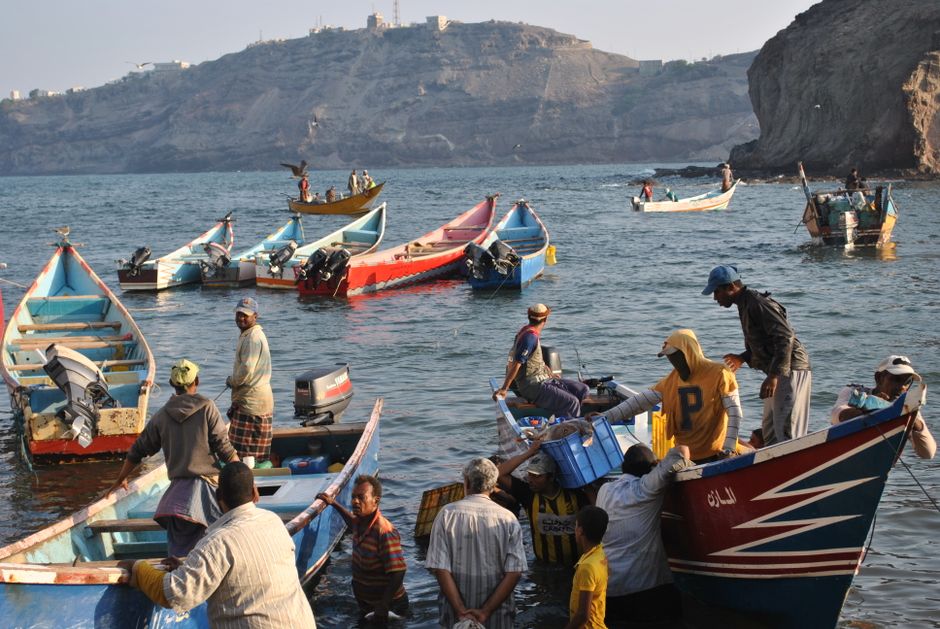
Al-Makha, Yemen – Mazhar, a fisherman based in the city of Mocha on Yemen’s Red Sea coast, has witnessed a dramatic shift in the region’s landscape, one defined by escalating conflict and a perilous environment. For decades, the Red Sea has served as a vital artery for Yemen’s fishing industry, contributing significantly to the nation’s export earnings and providing sustenance for the local population. However, the recent surge in hostilities has transformed this crucial sector into a volatile battleground, forcing fishermen like Mazhar to confront a stark reality of danger and uncertainty.
Since the war erupted in 2015, the Red Sea has become a focal point of conflict, attracting significant attention from international powers. The Houthis, controlling much of the Red Sea coast from the border with Saudi Arabia to Hodeidah, have intensified their presence, disrupting shipping lanes and posing a constant threat to navigation. The Bab al-Mandeb Strait, a critical waterway controlling entry into one of the world’s most vital waterways, has become a focal point of tension, further complicating the region’s geopolitical dynamics.
Prior to 2018, local fishermen consistently reported that the National Resistance Force (NRF), later emerging as the Guardians of the Republic, prevented fishermen from venturing into deep waters and reaching their reefs. Restrictions were eased in 2023, but the lingering threat of maritime attacks by Houthi rebels continues to plague the area, notably targeting Al-Makha. The Red Sea’s strategic importance has escalated dramatically, with the Houthis regularly striking shipping passing through the region, prompting increased U.S., UK, Israeli, and Saudi Arabian involvement.
Recent attacks have dramatically altered the fishing landscape. Mazhar, a 40-year-old, has reported a drastic decline in fishing yields – approximately 70% since the early years of the war. The volatile conditions have resulted in a marked increase in risky behavior, with fishermen now routinely venturing into increasingly dangerous waters. The recent incident involving a fishing boat in Al-Khawkhah, where two colleagues lost their lives, highlights the precariousness of the situation.
Furthermore, the Red Sea is a key hub for Yemen’s fishing industry, which before the conflict had been the country’s second-largest source of export earnings. The recent Houthi attacks have significantly impacted the industry, with fish exports falling by around 70% since 2018. The region is now characterized by a heightened risk of accidents and loss of life.
Mazhar emphasizes the strict boundaries set by the fishermen at sea, restricting their ability to navigate safely and to reach their reefs. He’s also deeply concerned about sea mines, which he says are a direct consequence of the ongoing conflict, posing an ongoing threat to fishermen’s lives.
Akram, a fisherman in Al-Makha, describes a similar danger – the presence of sea mines. He recounts a near-fatal incident last year when two of his neighbors were caught in a mine explosion near the shore. The Red Sea’s increasingly dangerous conditions have prompted many to seek alternative livelihoods, with a significant number relocating to Aden, a safer location.
The situation has spurred a broader concern, with fishermen increasingly facing the risk of being detained by pirates. The Fishermen’s Association in Al-Khawkhah reports that over 30,000 fishermen have been affected, with families struggling to provide for their children. The presence of sea mines is a direct consequence of the ongoing war, forcing many to abandon fishing.
Doubla, head of the Fishermen’s Association in Al-Khawkhah, notes that more than 113 fishermen have gone missing since 2023, with no information provided to their families. The constant threat of attacks and the risk of being detained have dramatically impacted the fishing industry, with many looking for a different way to make money.
Ismail, a 48-year-old from a long line of fishermen, has left the profession behind entirely, selling the gear he had collected over 20 years and using the proceeds to buy a minibus instead. He emphasizes the danger that surrounds fishermen from every direction, and the constant anxiety they feel whenever they go out to sea. The families of those who were lost are now struggling just to find enough food. Mazhar believes those who transitioned to new jobs have made the right choice.
Ismail’s wife supported his decision, and they sold some of her jewellery to help him start his new business, relieved to end the constant anxiety she and their five children felt whenever he went out to sea. The families of those who were lost are now struggling just to find enough food. The Red Sea is a harsh and unforgiving environment, and the fishermen face an uncertain future. The conflict has cast a shadow over this vital sector, highlighting the devastating consequences of prolonged violence on the lives of those who depend on it.
Source: Al Jazeera