





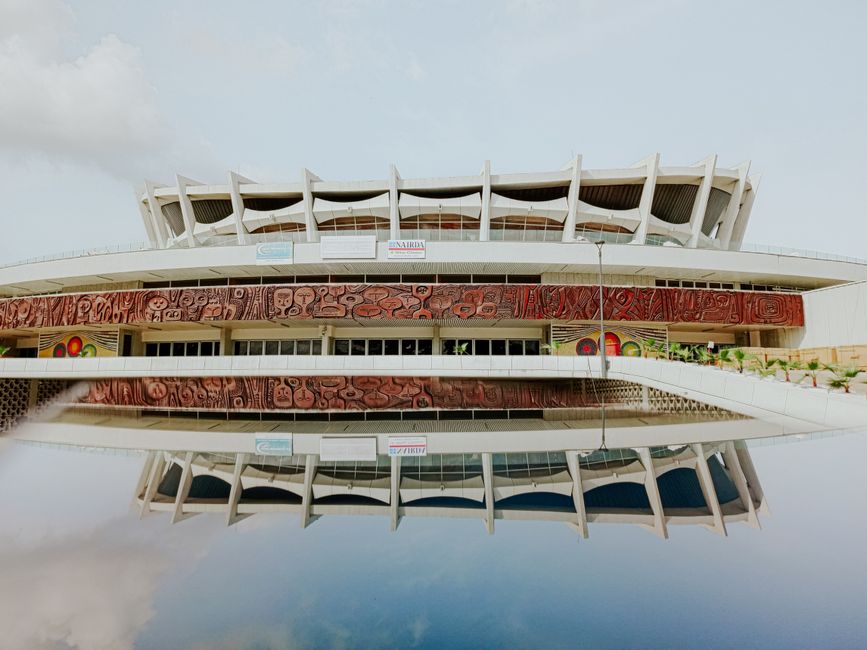
The Ghanaian government has unveiled a significant strategic initiative: the construction of a second National Theatre in Kumasi, a move driven by a desire to bolster Ghana’s cultural and creative arts landscape. Minister for Tourism, Culture and Creative Arts, Abla Dzifa Gomashie, announced this plan during a recent Accountability Series on Monday, August 10, 2026, stating, ‘We plan to build a second National Theatre in Kumasi.’
The Minister emphasized that the immediate priority remains the completion of an existing theatre and the Centre for National Culture project in the Ashanti Region, a region already designated as a key hub for cultural development. This initial focus, she clarified, is intended to ensure government resources are directed towards completing existing infrastructure before embarking on new projects.
Following a recent tour of theatre and Centre for National Culture facilities, Ms. Gomashie proposed a shift in strategy. She explained that the government’s approach is predicated on prioritizing the completion of the existing facility, suggesting that ‘instead of starting a new one, we focus on finishing what has been started.’
According to the Minister, Cabinet has formally approved this proposal, signaling a commitment to moving forward with the existing project. She further elaborated that the government intends to rehabilitate the existing National Theatre in Accra as part of a larger effort to enhance Ghana’s overall cultural infrastructure.
The Kumasi National Theatre is anticipated to significantly expand access to cultural and performing arts facilities within the Ashanti Region, creating additional space for creative expression and artistic production throughout the country. The project is viewed as a crucial investment in Ghana’s cultural heritage and economic development.
The Ministry of Tourism, Culture and Creative Arts has stated that this initiative aligns with broader efforts to strengthen tourism, culture, and the creative arts through strategic infrastructure investment and the creation of spaces that foster cultural expression and artistic production. The project is expected to have a substantial impact on the region’s artistic landscape and contribute significantly to Ghana’s national identity.
Source: Adom Online