





President Donald Trump has repeatedly emphasized a renewed focus on increasing economic pressure on Iran, signaling a significant escalation in relations following a period of relative calm. Tehran, meanwhile, has consistently maintained that direct negotiations with the United States are not currently possible, though it has been engaged in negotiations with Oman regarding the Strait of Hormuz, a crucial waterway for global oil trade. The situation is further complicated by the appointment of Mohsen Rezaei as Iran’s new representative to the Supreme National Security Council, a move that has fueled concerns within the US defense industry, which sources have described as a strategic move to maintain leverage over the Iranian government.
This renewed focus on economic pressure stems from a recent reassessment of US stockpiles, which have dwindled significantly due to the Iran-Iraq War. The Pentagon has reportedly asked the US defense industry to ramp up production, a request that Trump has characterized as ‘low-keying’ negotiations with Iran, suggesting a desire to maintain leverage.
In an interview on Sunday, Trump stated that the United States is ‘low-keying’ negotiations with Iran, highlighting the US’s economic pressure campaign as a key tool. He stated that Washington is only semi-negotiating with Iran, observing Iran’s inflation and the nation’s lack of financial resources. Iran has repeatedly asserted that direct talks cannot take place until Washington honors the June agreement signed in that period, though it has continued to engage in talks with Oman regarding the Strait of Hormuz.
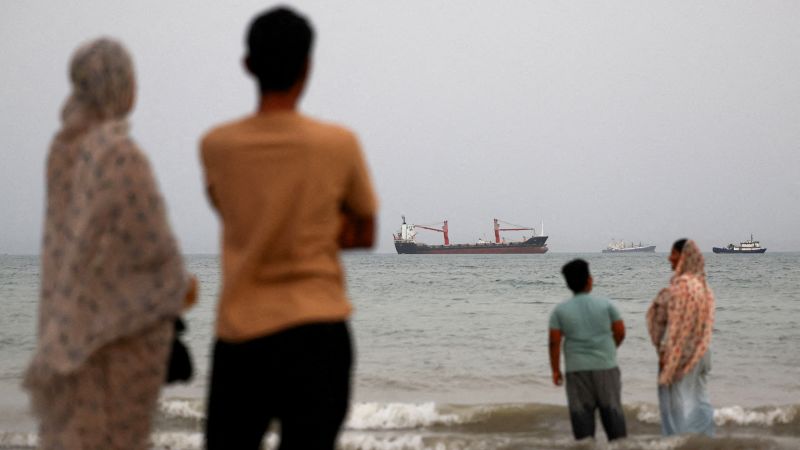
The Strait of Hormuz, which connects the Gulf of Aden to the Indian Ocean and the Red Sea, has been disrupted since Iran closed the waterway after resumed fighting in July, creating a significant bottleneck for global oil flows. The Houthi rebels have also attacked a Saudi oil refinery on the Red Sea coast, exacerbating the situation. US gas prices have remained relatively stable, mirroring the trend set by oil prices, with the national average for a gallon of gas reaching $4.01 on Sunday, down eight cents from a week ago.
Stock futures opened flat, reflecting the uncertainty surrounding the negotiations. Iran’s Supreme Leader, Mojtaba Hosseini Khamenei, has appointed Mohsen Rezaei as representative to the country’s Supreme National Security Council, replacing Mohammad Bagher Zolghadr, a veteran Revolutionary Guards commander. Rezaei’s appointment is viewed as a strategic move to maintain Iran’s military capabilities. The foreign minister Abbas Araghchi has acknowledged that Iran continues to exchange messages through intermediaries, with the goal of resuming negotiations.
Images of Supreme Leader Khamenei have been released, showing him giving a religious lesson to a group of people, and appearing in meetings with commanders of armed forces, which is expected to occur in the coming weeks. There are questions about Khamenei’s health and the possibility of injury during US-Israeli airstrikes earlier this year, with sources suggesting a fractured foot and minor lacerations to his face.
CNN’s Hanna Ziady and Valey Arya contributed reporting on this developing situation. The situation is expected to continue to evolve as negotiations between the US and Iran progress, with significant implications for global energy markets and geopolitical stability.
Source: CNN