






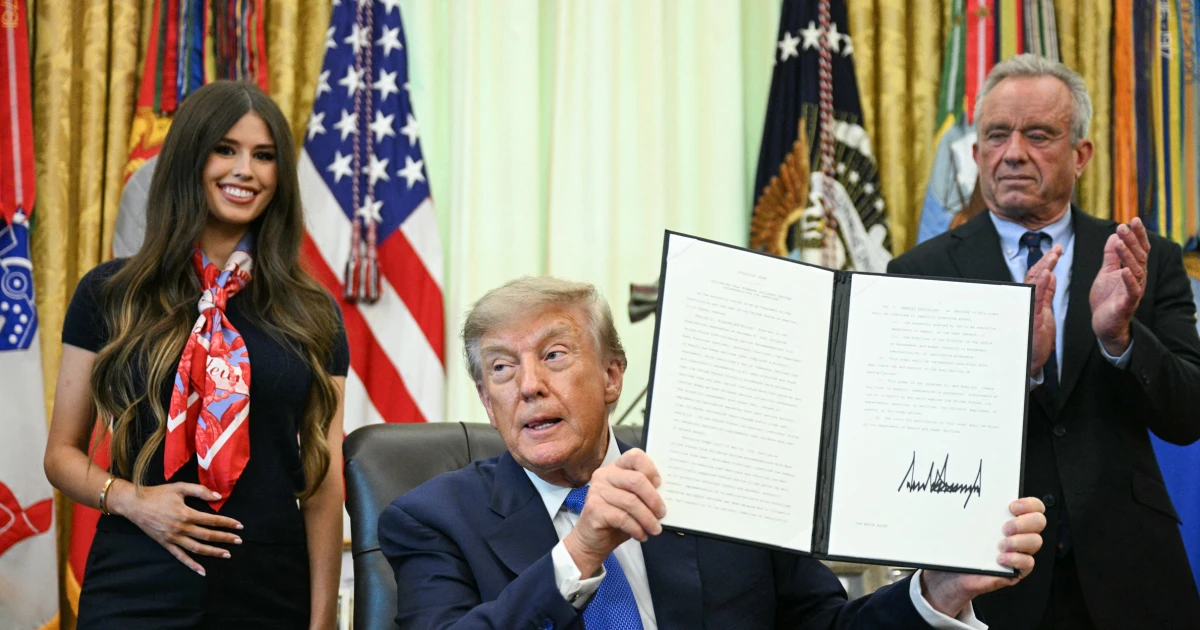
On Monday, President Donald Trump issued an executive order aimed at reducing the number of universally recommended vaccines for children – a move that signals a significant shift in the U.S. approach to childhood immunization. The order, unveiled during a press briefing, proposes a drastic overhaul of the existing vaccine schedule, effectively limiting the number of diseases considered essential for all children under the age of 11. The foundation of this change was established in 2023 by Health Secretary Robert F. Kennedy Jr., who previously challenged the previous administration’s vaccine schedule changes.
The new order recommends that the list of diseases considered mandatory for all children be significantly narrowed, dropping from 18 to 11. This shift is driven by a desire to give parents more choice in vaccine recommendations, according to a fact sheet obtained by NBC News. The proposed changes also necessitate a collaborative decision-making process between a parent and their child’s physician, rather than a centralized, standardized schedule. This represents a departure from the long-standing practice of mandatory childhood vaccination policies in the United States.
Trump stated on Monday that the changes are intended to address concerns about rising rates of autism in the U.S., despite decades of rigorous research demonstrating no causal link between autism and vaccines. He asserted that reducing the number of recommended vaccines is a critical step in ensuring the best possible vaccine recommendations for the world, particularly considering the complexities of the global vaccine landscape. The order also details a revised administration schedule, including the recommendation to administer all childhood immunizations at separate medical visits and to divide the combined measles, mumps, and rubella vaccine into three distinct shots given individually. Notably, the FDA has not yet approved or made available individual vaccines for these combined shots.
The executive order builds upon an earlier initiative to align the U.S. childhood vaccine recommendations with those of peer, developed countries. While Denmark serves as an example, public health experts caution that the burden of infectious diseases differs significantly in the U.S. given the country’s diverse population and its unique healthcare system. Denmark’s universal healthcare system contrasts sharply with the U.S.’s largely private healthcare model, highlighting a crucial point of divergence in public health strategies. The Trump administration’s actions are being closely scrutinized by medical professionals and advocacy groups concerned about potential impacts on public health and the safety of children.
The order’s implementation is expected to trigger considerable debate and analysis within the medical community and among policymakers regarding the balance between parental autonomy, public health, and the potential risks associated with the proposed changes to the vaccine schedule. The long-term consequences of this shift remain to be fully assessed.
Watch Related Video
Source: NBC News