





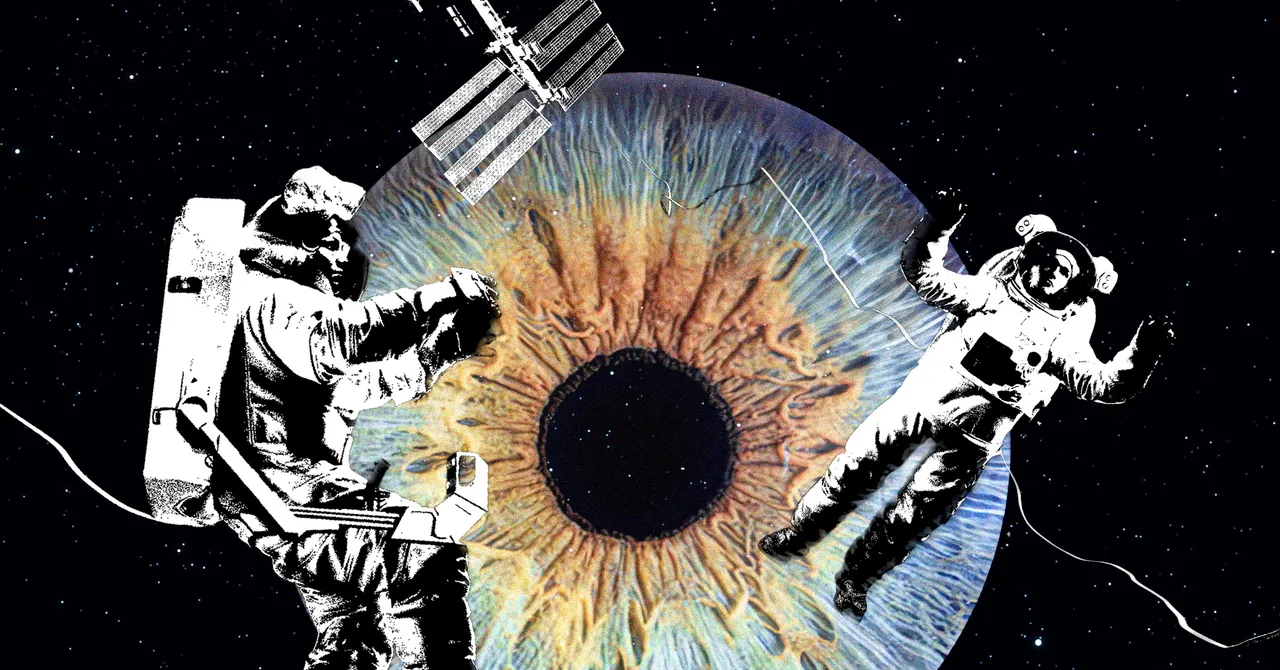
The United States Space Agency (NASA) and the European Space Agency (ESA) are actively pursuing innovative solutions to address the growing concern of astronauts experiencing vision loss due to prolonged exposure to space conditions, specifically the looming challenge of permanent vision impairment. This issue, a significant concern within the international space program, has been exacerbated by the increasing duration and complexity of deep space missions, notably the Artemis program and future explorations into Mars and beyond. The agency has commissioned Siloton, a British startup specializing in quantum technology, to develop a self-scanning device designed to address this problem.
The Siloton device represents a significant shift in how astronauts’ eyes are monitored and assessed, moving beyond traditional optometrist-based examinations. The device utilizes quantum principles to shrink core components of eye-scanning equipment, transforming it into a miniaturized photonic chip smaller than a coin. This miniaturization dramatically reduces the cost and logistical complexity of real-time eye scanning, a crucial step in the development of a comprehensive monitoring system.
Founded in 2020 by physicists, Siloton is currently collaborating with the National Health Service in the UK to enable patients with retinal conditions to self-scan at home. Co-founder and Chief Technology Officer Euan Allen highlights the potential of this approach, stating, “The ESA pretty much has the same requirements. It’s just in a totally different environment.” This collaborative effort underscores the agency’s commitment to proactive risk mitigation.
The issue of spaceflight-associated neuro-ocular syndrome (SANS) – a condition impacting approximately 70% of astronauts on the International Space Station – poses a substantial threat. NASA’s own research, detailed in a 2023 report, indicates that SANS is directly linked to the degradation of the human eye’s optic nerve, leading to progressive vision loss. Prolonged exposure to microgravity, coupled with the physiological changes it induces, significantly accelerates this deterioration. One notable case is that of NASA astronaut John Phillips, who launched to the ISS in 2005 with 20/20 vision, and splashed down six months later with his vision at 20/100 – a significant visual impairment. The conditions within the ISS, including fluid buildup and optic nerve compression, accelerated the damage.
Researchers are now utilizing a modified version of the Siloton device to automate some of the eye scanning process, enabling more frequent examinations. The ESA hopes this automation will generate valuable data on ocular degeneration, potentially offering early warning signs of changes to the eye. However, the technology faces considerable challenges. Power requirements are a significant obstacle, as the device necessitates a battery-powered operation – a risky proposition in the harsh environment of space. Designers are also grappling with the logistical challenge of placing the equipment within spacecraft, where space is at a premium, necessitating the placement of the device in a compact and stable manner without gravity.
The research team acknowledges that the eye condition SANS is a serious health risk facing astronauts on long missions, and the ongoing development of the Siloton device is crucial for mitigating this risk. Rebecca Evernden, director of the UK Space Agency, emphasizes the importance of understanding the underlying mechanisms driving SANS, stating that ‘The eye condition SANS is a serious health risk facing astronauts on long missions.’ She adds that “We’re very confident, because we’re trying to do that with 80-year-old patients who already have some level of visual impairment, whereas these will be highly trained astronauts who are much younger and have full function of their eyes.’ “I think lots of the stuff that we’re doing for space will bleed through and make our home device better, and vice versa as well,” he adds. The project represents a significant investment in quantum technology and represents a critical step toward safeguarding astronaut health during extended space exploration.”
Further research will focus on refining the device’s capabilities, improving its operational reliability, and exploring potential applications beyond just eye scanning—including the development of more robust and less fire-prone battery systems.
**Tags:** Space, Astronomy, Technology, Health, Space Agency, Quantum Computing, Eyesight, NASA, ESA
Watch Related Video
Source: Wired Science