





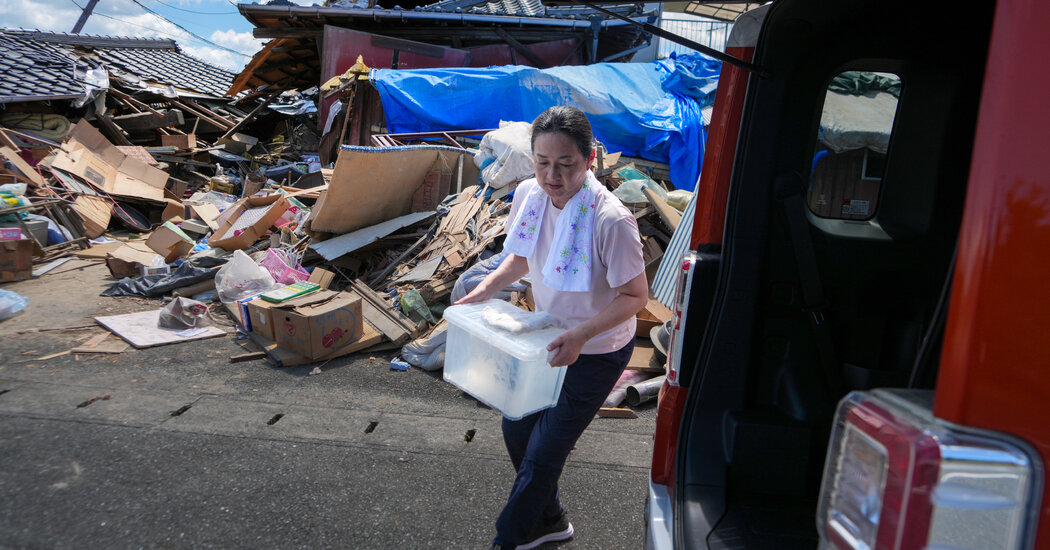
The Kumamoto Prefecture region of Japan is grappling with a devastating crisis following a magnitude-6.8 earthquake that struck on Tuesday, triggering widespread devastation and a severe heatwave. The earthquake, which registered as a 6.8 on the Richter scale, has already resulted in a significant loss of life, with the death toll currently at 36, a figure that has risen dramatically over the past four days as rescue efforts intensify. Emergency services are operating under a grueling schedule, battling not only the immediate aftermath of the quake but also the relentless sweltering heat, which has reached a record-breaking 100 degrees Fahrenheit in many areas.
Rescue workers are facing a monumental challenge, navigating aftershocks and the intense heat to reach any remaining survivors trapped within the rubble of collapsed buildings, particularly in the aftermath of the Aeon shopping mall collapse. Initial reports indicate that seven people were killed when the second-floor section of the mall collapsed, while five individuals were rescued alive. The situation is further complicated by the sheer volume of debris – hundreds of slabs of concrete and twisted metal – requiring constant rotation and meticulous search efforts.
“We don’t know if that’s everyone, so we’re still going nonstop,” stated Takeshi Ueda, a Kumamoto police official stationed at the mall on Thursday evening. The heat has been described as ‘brutally tough’ for workers wearing heavy gear and masks, adding to the difficulties of the operation. The heat has exacerbated existing challenges, with heavy equipment struggling to move through the rubble, hindering the search for survivors.
The governor of Kumamoto has declared a state of emergency, mobilizing all available resources to assist with the rescue and recovery efforts. Local authorities are urging residents to remain indoors and take precautions against heatstroke, emphasizing the critical need for hydration and rest. The Japanese government has pledged full support, including deploying additional personnel and resources, to aid in the rescue and recovery process. The earthquake has also disrupted transportation networks, further complicating the logistical challenges for rescue teams.
The situation is evolving rapidly, and officials are emphasizing the need for continued vigilance and collaboration. The long-term implications of this disaster for the region’s infrastructure and economy remain to be seen. The number of displaced residents continues to rise, with thousands seeking shelter in evacuation centers, and the search for survivors remains a top priority. The intense heat is a significant factor contributing to the difficulties of the rescue operations, demanding a sustained and coordinated effort to mitigate the risks to life and property.
As of this writing, the full extent of the damage and the number of survivors remain uncertain. The long-term recovery process will be a significant undertaking, requiring sustained support from both domestic and international partners. The ongoing weather conditions are expected to remain challenging, with forecasts indicating further heatwaves throughout the week. The crisis underscores the vulnerability of communities to natural disasters exacerbated by climate change, highlighting the need for proactive disaster preparedness and mitigation strategies. The Times will continue to provide updates on this developing situation as it unfolds.
Source: [https://www.nytimes.com/2024/06/16/world/japan/kumamoto-earthquake.html](https://www.nytimes.com/2024/06/16/world/japan/kumamoto-earthquake.html)
Tags: Earthquake, Japan, Kumamoto, Rescue, Disaster, Heatwave, Aftershocks, Recovery
Watch Related Video
Source: NYTIMES