





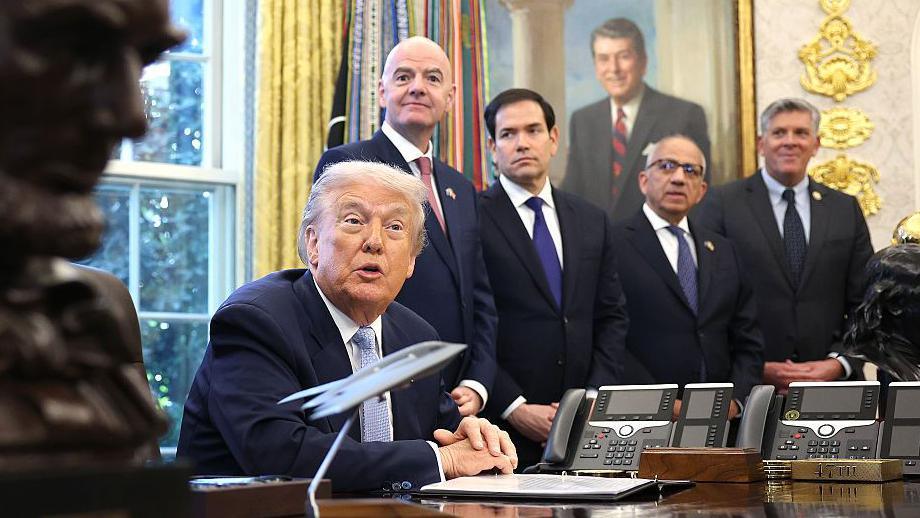
Gianni Infantino’s appointment as FIFA president has ignited intense debate, particularly concerning his proposed strategy of selling stakes in major competitions to private investors. A senior advisor to the president, Carlos Cordeiro, resigned following a dissenting voice, adding to mounting concerns. This situation is further complicated by a series of criticisms directed at Infantino’s plan, which includes a significant amount of investor funding to unlock greater value for the game. The Asian Football Confederation (AFC) has voiced solidarity with counterparts in Europe and North, Central America and the Caribbean, signaling a potential challenge to Infantino’s initiative. The AFC’s statement highlights concerns about the lack of stakeholder consultation and the potential for Fifa to prioritize commercial interests over the integrity of the competition. Furthermore, the resignation of a four-year senior adviser, Carlos Cordeiro, who represented the world governing body on the White House taskforce for the 2026 World Cup, adds to the growing apprehension. Cordeiro’s detailed statement outlined his unequivocal opposition to the proposals, stating he ‘did not accept the proposition’ Fifa needed outside investors to ‘unlock greater value’. The AFC accused Fifa of repeatedly setting the ‘direction of travel’ for a ‘significant initiative’ before consulting stakeholders, and further criticized Fifa’s under-monetisation of the World Cup. The AFC also expressed concerns about consultation over the plans, citing the absence of answers to fundamental questions regarding oversight and benefits. The World Cup’s 2026 expansion is also a point of contention, with the governing body seeking an independent agency to assess the expansion to 64 teams, a move that will likely trigger a robust review of Fifa’s governance. Uefa, the European football governing body, has also voiced its opposition, voting to boycott World Cups if the plan proceeds. Concacaf, which hosted this year’s tournament, has released a statement expressing concerns about the potential implications of the proposals. While Uefa has not threatened to boycott Fifa, the AFC and the governing bodies in Africa and Oceania have said they will discuss Fifa’s plan in August. The controversy is further amplified by the fact that FIFA’s ‘Thrive Eternal’ initiative, a proposed investment strategy, is projected to generate an estimated £24 billion (€28 billion) in revenue for member associations – a figure dwarfing the current financial contribution of the World Cup. While Uefa remains largely supportive of Infantino’s plan, reflecting the World Cup’s global significance, many nations rely on Fifa funding for basic infrastructure. Rogers Byamukama, of the Ugandan Football Federation, argued that any avenue that could lead to more resources for nations like his should be explored. He further emphasized that the World Cup cannot be treated as an investment product. The situation has been further complicated by a recent Uefa vote to boycott World Cups if the Fifa plan proceeded. The governing body has accused Fifa of using football to ‘enrich themselves and their friends’, while the AFC has expressed concerns about consultation over the plans. The timing of the FIFA Forward 3.0 analysis by the independent agency is a key point of contention, with the timeline set for August 11th, 2023, and delivery of the analysis scheduled for September 11th, 2023. The controversy has underscored the complex dynamics within FIFA, where investor concerns intersect with political considerations and the long-term future of the sport’s global appeal.”}”””””””””””””””””””””””””””””””
Watch Related Video
Source: Adom Sports