






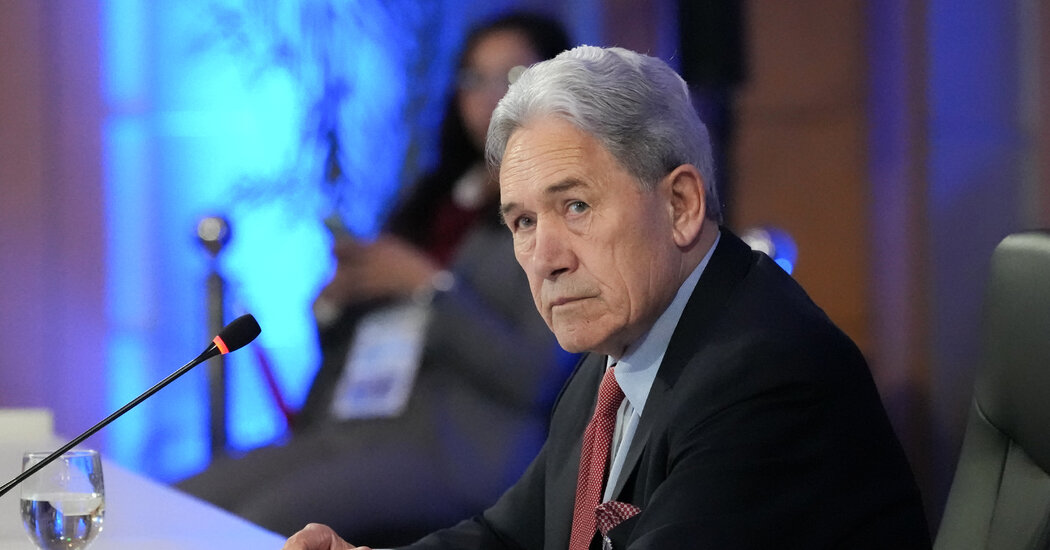
The escalating tensions between Beijing and New Zealand have triggered a significant diplomatic crisis following a particularly sharp and controversial statement from New Zealand’s top diplomat, Winston Peters. A formal protest has been lodged by China, with the foreign ministry characterizing the remarks as an ‘insult’ directed towards a Green Party lawmaker, Lawrence Xu-Nan. The incident, which occurred during a parliamentary debate on Wednesday, has ignited a wave of condemnation within China and sparked calls for action at home for Peters’s leadership within New Zealand’s parliament.
The controversy centers on a direct and pointed retort from Peters to Xu-Nan, who questioned whether the lawmaker was vaccinated for COVID-19. Mr. Peters then delivered a scathing statement, stating: ‘I know you just came here five minutes ago. Go back to your own country, that’s where they lie like a flatfish. But they don’t lie like that here.’ This comment, widely interpreted as a deliberate attempt to undermine the lawmaker’s position, has been met with considerable alarm in China.
The Chinese Embassy in New Zealand issued a statement acknowledging the ‘lodged solemn representations’ – a phrase used to signal formal complaints and protests – and emphasized the nation’s ‘well-integrated’ Chinese diaspora and their ‘deserving to be recognized and respected.’ The statement further details the country’s foreign ministry’s stance, asserting that members of the Chinese diaspora are well-regarded and should be treated with respect.
This incident comes at a time of heightened geopolitical tensions between China and New Zealand, largely fueled by differing perspectives on trade, technology, and security concerns. The New Zealand government has responded with calls for Peters’s dismissal, with several parliamentarians expressing their disapproval of the diplomatic maneuver. The situation is further complicated by the fact that China’s foreign ministry has responded, stating that relevant individuals in New Zealand will ‘do more things that contribute to the friendship between our two countries, and refrain from making China an issue in domestic politics.’
According to the latest census, the Chinese diaspora population in New Zealand constitutes approximately 5.6 percent of the total population. The incident has significant implications for New Zealand’s foreign policy and diplomatic relations with China, raising questions about the country’s approach to engaging with its largest trading partner.
The Chinese Embassy’s statement indicates a commitment to maintaining diplomatic relations, but the controversy underscores the fragility of the relationship between the two nations, particularly in light of this recent diplomatic flare-up. Experts suggest that this incident could further strain relations and potentially lead to further diplomatic maneuvering.
The New Zealand Parliament is currently reviewing the debate surrounding the remarks and preparing to address the situation, with discussions focused on the appropriate response to the diplomatic challenge.
The New Zealand government has acknowledged the incident and has stated that it is taking the matter seriously. The incident underscores the importance of navigating complex diplomatic relationships in a rapidly evolving geopolitical landscape.
This situation has already triggered significant media coverage and public discussion in both China and New Zealand, reflecting the deep-seated concerns and anxieties surrounding the relationship.
As of today, the New Zealand Minister of Foreign Affairs, Winston Peters, is expected to address the nation regarding the situation, emphasizing the importance of maintaining a stable and cooperative relationship with China.
The incident represents a significant moment of heightened tension and underscores the potential for miscalculations and misinterpretations in international relations. The long-term consequences of this diplomatic crisis remain to be seen.
Further details and analysis of the situation are expected to emerge as the day progresses. The incident also highlights the importance of clear communication and diplomatic engagement in navigating complex international relations.
This is a developing story, and we will continue to provide updates as they become available. The situation demands careful monitoring and analysis.
Watch Related Video
Source: NYTIMES