






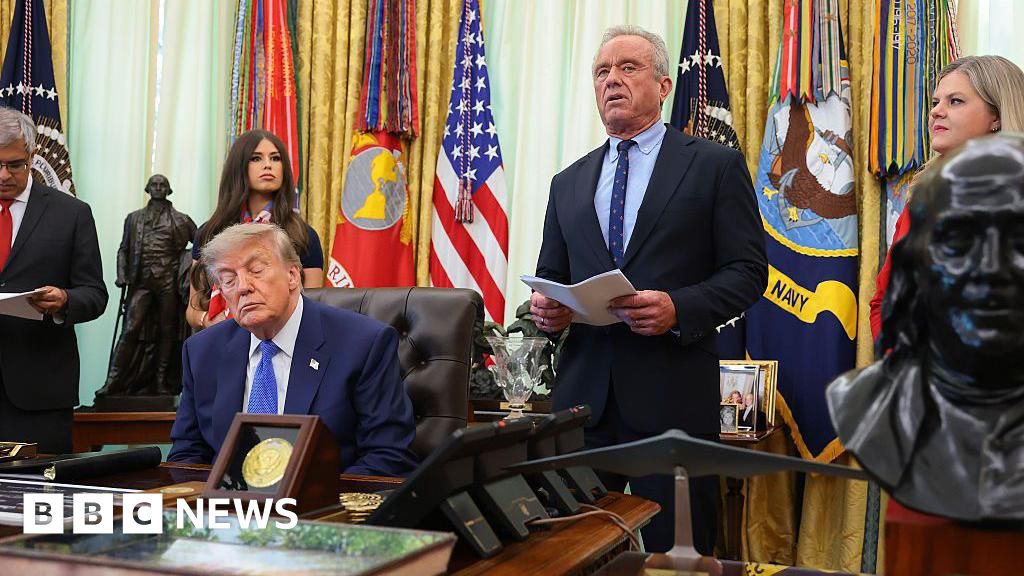
The United States President, Donald Trump, has formally signed an executive order aimed at revising the current distribution and administration of childhood vaccines, sparking significant controversy and raising serious concerns within the medical and public health communities. The order, unveiled in a press briefing on Monday, proposes a significant reduction in the number of required vaccines for children and a recommended restructuring of the mumps, measles, and rubella (MMR) vaccine regimen. This move represents a radical departure from decades of established scientific consensus and has been met with widespread condemnation from leading medical experts and advocacy groups.
Trump, in his remarks on Monday, stated, ‘Decades ago, children received only a small fraction of the vaccines required today. In those times, people were much healthier and of course the high rates of autism now observed did not exist.’ This seemingly innocuous statement immediately set the stage for a contentious debate, hinting at a deliberate effort to re-evaluate the safety profile of childhood vaccinations. While the specifics of the order remain under official scrutiny, the underlying rationale appears to be rooted in a persistent and widely discredited theory linking vaccines to autism. The administration has long maintained this theory, which has been repeatedly debunked by numerous scientific studies and investigations.
The core of the proposed change involves a significant reduction in the number of vaccines required for routine childhood immunizations. The order specifically calls for a reduction in the number of vaccines required for the MMR vaccine, a vaccine that has been the subject of intense scrutiny and controversy for years. Furthermore, the administration is advocating for a three-shot regimen, breaking down the MMR vaccine into separate components – mumps, measles, and rubella – each administered in a distinct phase. This restructuring aims to address concerns about potential for adverse reactions and to streamline administration processes.
The ramifications of this proposed shift are far-reaching and potentially destabilizing for the healthcare system. The MMR vaccine, a cornerstone of childhood immunization programs across the United States, is vital for preventing serious complications from measles, mumps, and rubella. A reduction in the vaccine schedule could potentially lead to a decrease in the overall coverage rate, increasing the risk of these diseases in children. Experts have warned that this change could have unintended consequences, impacting public health outcomes and potentially increasing the incidence of preventable diseases.
Independent analyses have pointed to a concerning trend in the years since the initial claims regarding a link between vaccines and autism. Numerous studies, conducted by organizations like the CDC and the National Institutes of Health, have consistently demonstrated that there is no causal relationship between vaccines and autism. These studies have utilized rigorous methodologies and statistical analyses, yielding results that are overwhelmingly supportive of the safety and efficacy of vaccines. The administration’s reliance on these studies, and its subsequent promotion of the discredited theory, has fueled skepticism and distrust within the scientific community.
Trump’s administration has repeatedly emphasized the importance of vaccination as a crucial component of public health. In a statement released following the announcement of the order, the White House stated, ‘We’ve been through a lot of false claims, and we’ve proven that vaccines are safe and effective. We are taking this step to ensure the best possible protection for our children.’ However, critics argue that the administration’s actions represent a dangerous escalation of a long-standing conspiracy theory and a significant setback for public health initiatives.
The executive order details the specific changes to be implemented, outlining the rationale behind the restructuring and the expected timeline for execution. It includes provisions for enhanced monitoring of vaccine adverse events and a review of existing guidelines. The legal implications of this order remain unclear, as it falls under the purview of executive authority and does not directly challenge established medical protocols. The FDA, which regulates vaccines, has indicated that it will continue to monitor the implementation of the new schedule, while also emphasizing the importance of scientific evidence.
This move represents a significant challenge to decades of scientific consensus and raises questions about the future of vaccine regulation in the United States. The long-term impact on public health will depend on how the administration navigates this controversial policy shift and whether it can effectively counter the growing skepticism surrounding vaccine safety. The situation underscores the ongoing debate surrounding vaccine hesitancy and the challenges of maintaining public trust in essential medical interventions. The administration’s actions have reignited a heated discussion about the balance between public health priorities and the role of scientific research, prompting calls for greater transparency and accountability in the evaluation of vaccine safety.
Watch Related Video
Source: BBC News