





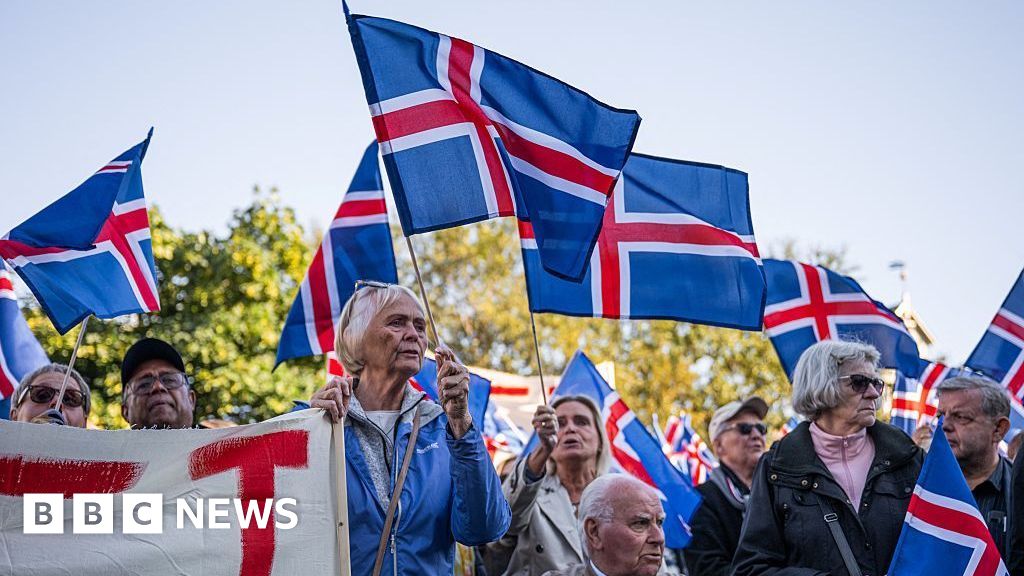
Iceland’s government has convened a momentous referendum – a decision that will fundamentally reshape the nation’s relationship with the European Union – following nearly ten years of stalled negotiations. The vote, scheduled for Saturday, is expected to be a fiercely contested battle between the ‘No’ and ‘Yes’ campaigns, with the latest opinion polls showing a razor-thin margin for the No side, suggesting a close race. Prime Minister Kristrún Frostadóttir’s center-left government, inheriting a legacy of independent sovereignty, has initially intended to initiate formal talks on accession, but turbulent geopolitical events – particularly the war in Ukraine – have dramatically altered the landscape. The question on the ballot, ‘Should Iceland resume accession negotiations with the European Union?’ has been a subject of intense debate, with the Yes campaign highlighting the potential for economic benefits and a strengthened, independent nation. The referendum is expected to be held from 09:00 to 22:00 GMT, and the result is anticipated to be in the early hours of Sunday. Iceland’s population of under 400,000, representing nearly five percent of Europe’s population, has already cast a significant number of their votes, with over one in five anticipating participation. The referendum’s significance extends beyond mere political maneuvering; it directly impacts Iceland’s fisheries industry, which represents a substantial portion of its exports – over 40% of the nation’s gross domestic product (GDP). A Yes vote would signify a definitive move towards an accession agreement, requiring approval from a second referendum by parliament and the constitution, with the EU’s 27 member states also signing off. Iceland’s history with the UK, a founding member of NATO, has added another layer of complexity. While Iceland is a member of NATO, it remains sovereign, and its security relies on both NATO and the EU. The government has also emphasized that a Yes vote doesn’t necessarily mean full membership, with the possibility of a No vote leading to future discussions. Economists note that the EU offers the potential for significant economic growth, addressing Iceland’s high interest rates and inflation – a concern voiced by the No campaign. The debate surrounding Iceland’s economic status is intertwined with its historical legacy. Iceland was a pioneer in the Cod Wars with the UK in the 1970s, demonstrating the importance of independence. However, the financial crisis of 2008 and the subsequent collapse of its banking system prompted a move to seek EU membership in 2009, ultimately halting progress until 2013. The current situation reflects a cautious approach; a Yes vote, however, would not be a final decision, but rather a commitment to a potential agreement, requiring further steps. The Yes campaign group, ‘Yes to See,’ argues that Icelanders should prioritize information before a final decision, emphasizing the benefits of EU membership for economic stability. The No campaign, led by Guðrún Hafsteinsdóttir, stresses the importance of maintaining Iceland’s sovereignty, arguing that membership would compromise its independence. The debate has sparked considerable interest among political analysts, with Hallgrimur Oddsson, Director of EU-Iceland think-tank, stating that ‘many people attribute this to Iceland’s independence’ and that the referendum is a risk-reducing step for the nation. The EU has also signed a security and defense partnership with Iceland, underlining the importance of collaboration in a shared geopolitical environment. Furthermore, the situation is being watched closely as the US President Donald Trump has expressed interest in taking over Greenland, a situation that has caused alarm. The referendum is not just a political event; it’s a fundamental question of Iceland’s identity and future within the European Union. The government has been consistently emphasizing that a Yes vote does not guarantee full membership, and that a No vote would not necessarily halt future discussions.
Watch Related Video
Source: BBC News