





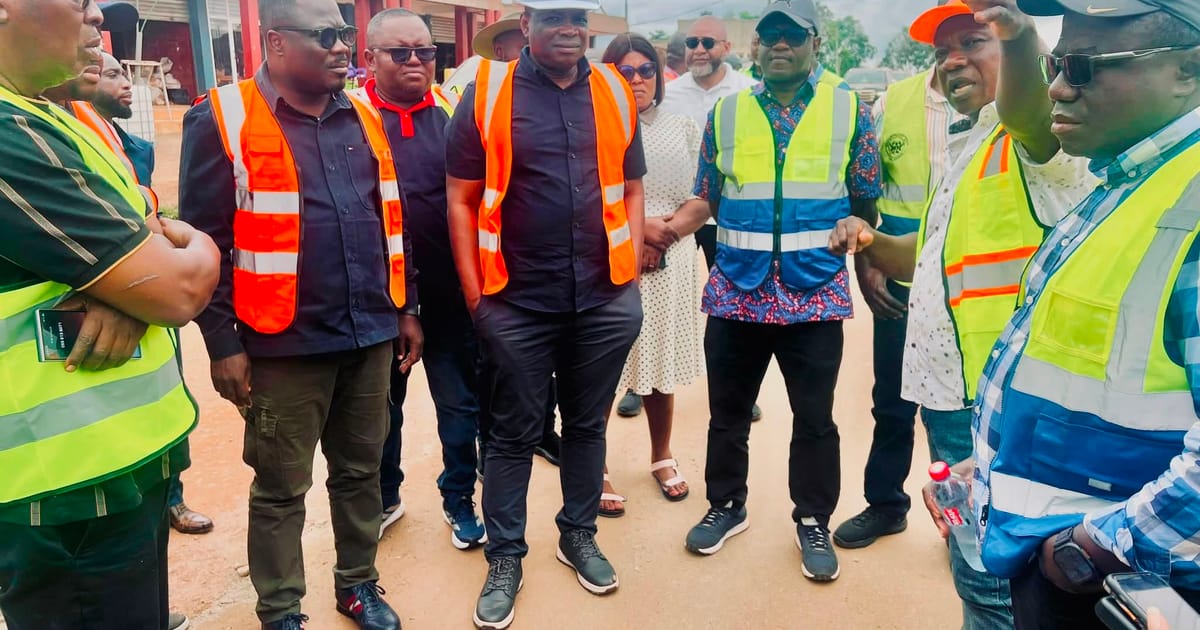
The government’s commitment to the Accra-Kumasi bypass project remains steadfast, despite a series of logistical and financial hurdles that have presented significant obstacles to its completion. The ambitious undertaking, initially envisioned as a key component of Ghana’s national infrastructure strategy, has been plagued by delays and cost overruns, sparking renewed debate about its viability and long-term impact. The project, slated to connect Accra and Kumasi with a new highway, has been a subject of intense scrutiny for nearly a decade, evolving from a preliminary feasibility study to a complex and expensive undertaking demanding significant investment and political will.
This isn’t a new development, but the situation has intensified in recent months. The original impetus for the project, spearheaded in 2011, stemmed from a growing need to alleviate traffic congestion in the region, particularly around the two major cities. The projected benefits were substantial: reduced travel times, stimulated economic growth in the Ashanti and Western regions, and improved connectivity across the country. However, the initial estimates, relying heavily on projections of projected traffic volume, proved overly optimistic, leading to a significant shift in the project’s scope and budget.
Currently, the project is facing a multifaceted challenge. The initial route, which encompassed a significant portion of the Ashanti region, has been repeatedly rerouted due to geological surveys revealing complex subsurface conditions, primarily a high concentration of unstable soil and bedrock. This has necessitated costly earthworks and stabilization measures, further delaying the project’s timeline. Furthermore, securing the necessary land rights for the highway’s alignment has proven to be a protracted and contentious process, with several local communities resisting the project’s expansion, raising significant legal and political complexities.
A recent report by the Ghana National Economic Advisor (GREA) estimates that the original budget for the project, initially projected at $800 million, has ballooned to over $1.2 billion, with a projected completion date that has been repeatedly extended. This increase is attributed to factors including increased construction costs, unexpected geological challenges, and shifting regulatory requirements.
The government has, however, consistently maintained a commitment to completing the project, publicly stating its intention to ‘accelerate progress’ and ‘improve the efficiency of the project.’ Prime Minister Nana Addo Dankwa Akufo-Addo, speaking at a recent press conference, emphasized the project’s importance for Ghana’s economic development, stating, ‘The Accra-Kumasi bypass is a vital investment in our nation’s future, contributing significantly to GDP growth and improving the quality of life for millions of Ghanaians.’
Despite these challenges, the government has allocated a substantial portion of the national budget to the project, highlighting its perceived strategic importance. A recent parliamentary debate focused on the project’s status revealed significant disagreements amongst stakeholders, with various factions advocating for different approaches to mitigate the ongoing delays. The Ministry of Transport has repeatedly stated that they are working to address the geological challenges through innovative engineering solutions and are exploring alternative routes.
The government is currently reviewing the project’s financial model and exploring potential cost-saving measures. A new feasibility study is being conducted, incorporating more rigorous geological assessments and incorporating potential adjustments to the project’s scope. However, the long-term viability of the project remains uncertain, and the possibility of revisiting the original plan – potentially involving a revised route or a phased approach – continues to be a prominent topic of discussion within the political and engineering communities. The ongoing delays are impacting both the economy and the lives of countless Ghanaians, highlighting the complexities inherent in large-scale infrastructure projects.
The government’s stated goal is to complete the bypass by 2027, a goal that will be closely scrutinized by economists, civil society organizations, and the public. The success of the project will not only determine the speed of economic development but also influence Ghana’s long-term infrastructure priorities and the nation’s overall economic trajectory.
Further updates on the project’s progress will be provided as they become available. The Ministry of Transport has released a statement outlining the key steps being taken to address the challenges and ensure the project’s continued advancement.
Watch Related Video
Source: TV3