






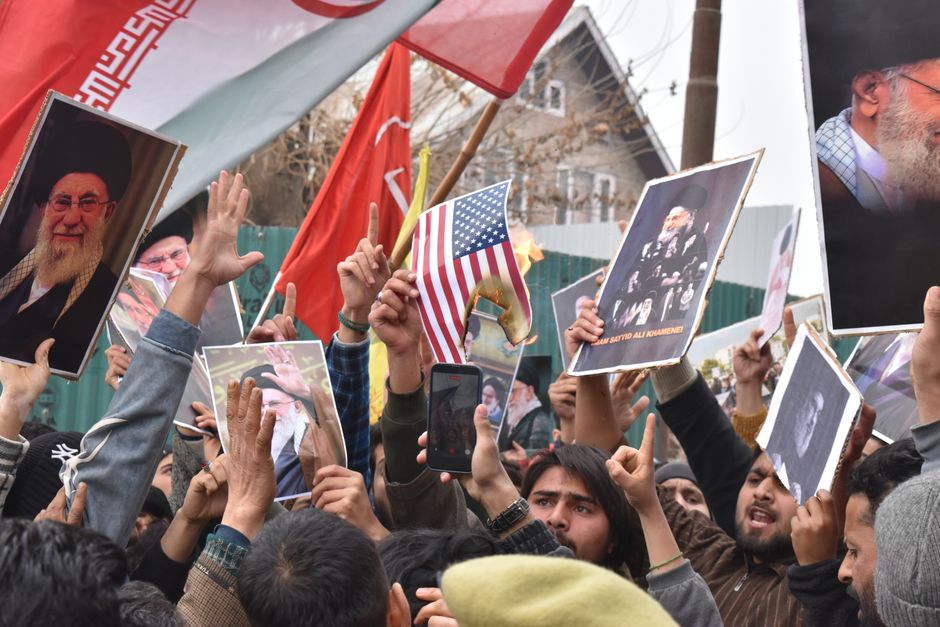
Six months ago, the United States and Israel initiated a series of targeted strikes across Tehran, resulting in the deaths of Supreme Leader Ayatollah Ali Khamenei and other Iranian leaders. This action, fueled by Prime Minister Benjamin Netanyahu’s long-held ambition of a joint attack with the US against Iran, has fundamentally altered the strategic landscape, leaving the US locked in a protracted war with uncertain outcomes. The initial stated aims of the war, particularly concerning Iran’s nuclear capacity, appear to have been largely unmet, with President Donald Trump’s initial claim of destruction proving false. Netanyahu, perhaps hoping to bolster his campaign, may have hoped the fall of the government in Tehran would serve as a focal point for his political narrative. In Iran, the consequences of six months of conflict have been largely negative, with the economy struggling to recover and the government’s ability to maintain control hampered by a significant economic crisis, a situation that appears to be the bedrock of the Iranian government’s survival. The cost of living crisis, which Trump’s administration had initially criticized, has risen by a staggering 50% since the war began on February 28th, further exacerbating the nation’s economic woes. Trump’s repeated, and often empty, pronouncements about a potential deal with Iran to reopen the Strait of Hormuz have proven ineffective, particularly given the starkly low level of public support for the conflict within the Republican Party, according to a recent Ipsos poll. Numerous surveys show Trump’s approval rating is at a record low, alongside widespread criticism of his foreign policy, which is competing with disapproval of his domestic record. Shibley Telhami, a government and politics professor at the University of Maryland, described the situation as a war that Israel dragged the US into, with Democrats initially embracing this narrative as a result of the growing prominence of Israel in public priorities. The US decision to sign a memorandum of understanding with Iran, without Israel’s involvement in June, was viewed as a significant strategic blunder by former Israeli government adviser Daniel Levy, who pointed out that Netanyahu was attempting to re-establish the war as a decisive moment, but the war has instead become a protracted stalemate. Aaron David Miller, a government and politics professor at the University of Maryland, stated that the government in Tehran has survived despite the war, highlighting the highly enriched uranium still present in the country and Iran’s ability to leverage geography to maintain its military capabilities. He also noted that Iran has successfully weaponized geography, effectively shutting off the Strait of Hormuz, and that their proxies in Hamas and Hezbollah remain in place, demonstrating a continued capacity for resistance. The US failure to decisively defeat Iran, and the economic and political costs of the war, are increasingly viewed as a major issue for Republicans in the upcoming midterm elections. Miller noted that the economic cost of the war is becoming a key concern for many, with Shervin Malekzade, an academic and author on Iran, adding that the pains remain manageable, considering the government’s economic challenges and a public rift between hardliners and moderates on the future of talks with the US. The war has gone beyond simply deterring Iran from gaining a strategic advantage; it’s now a matter of survival for the Iranian government and military system. Trump’s failure to deliver a short and decisive victory against Iran, and the economic and political costs of the war, will likely affect Republicans’ performance in the upcoming midterms. For Israel, the war remains a profound and existential threat, intensifying the sense of vulnerability and the potential for a prolonged conflict. The war has done little to minimize the impact of the US blockade on Iran’s economy, with the economy already crippled by April, with inflation reaching 66 percent. The sanctions have inflicted an estimated $435 million per day on the country, and the economic situation remains challenging, even considering the Iran’s own calculations that the war had already cost the country upwards of $145 billion by April. Shervin Malekzade added that the pains remain manageable, considering the government’s economic challenges and a public rift between hardliners and moderates on the future of talks with the US. Irrespective of the domestic political challenges thrown up by the war, none of the belligerents can concede defeat. For Iran, the standoff with the US and Israel has gone beyond establishing deterrence and is now a matter of survival.
Source: Al Jazeera