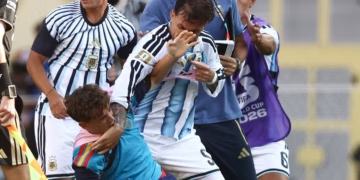






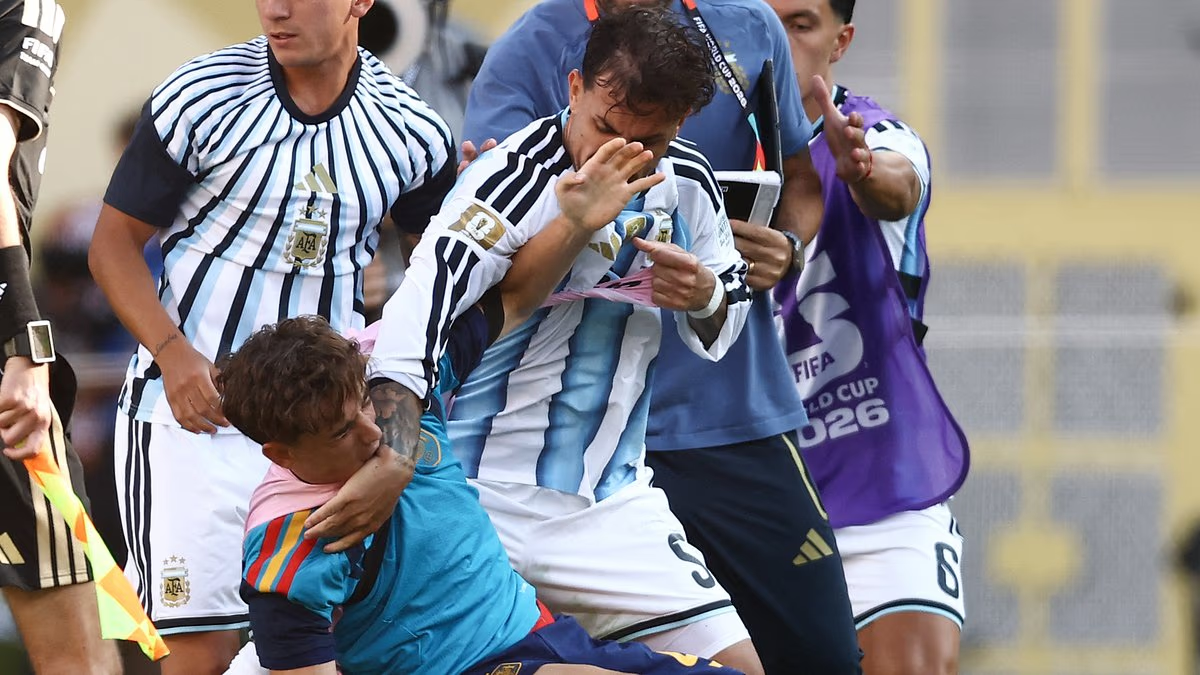
Argentina has initiated a strategic maneuver following the contentious World Cup final against Spain, seeking to mitigate the impact of FIFA’s sanctions levied against its players. The situation centers around Leandro Paredes’ involvement in a brawl, resulting in a 10-match ban and a significant financial fine. FIFA initially sanctioned three Argentine players and assistant coach Roberto Ayala, citing unsavoury post-match scenes, prompting Argentina to request a friendly period count as part of the suspension. The initial sanctions were subsequently modified to allow for friendlies to count as part of the disciplinary action.
Leandro Paredes, the central figure in the incident, received a seven-match ban, effectively barring him from international football for a considerable period. The severity of the sanction was amplified when he was found to have grabbed Spain’s Eric Garcia by the neck and punched Gavi in the face during full-time, a scene widely condemned as appalling. Paredes was also hit with a £65,000 fine, further solidifying the severity of the disciplinary action.
Meanwhile, Nahuel Molina, another player involved in the altercation, received a seven-match ban, highlighting the breadth of the incident. The situation was compounded by the involvement of Thiago Almada and Spain’s Gavi, who were also given a one-match ban for their participation in the clashes. Argentina has formally requested FIFA to allow the sanctions imposed on its players during the 2026 World Cup final and the association itself to be served in Class A friendly matches and/or official matches, prioritizing the swift return of the banned trio for competitive fixtures.
The decision has triggered considerable debate within Argentina, with the AFA formally requesting FIFA to approve the sanctions, with the Court of Arbitration for Sport (CAS) potentially acting as a final recourse. The initial request, submitted by the AFA, detailed that FIFA’s Disciplinary Committee had deemed the request approved in accordance with current regulations, although the AFA is awaiting the written justification for the decisions, which could lead to appeals with the CAS. The decision could significantly impact Paredes, who would have faced a lengthy wait to return to international football following the ban, although the possibility of a return remains.
The situation is further complicated by the Falkland Islands protests, which were initially met with a partial stadium closure, reducing the crowd size for Argentina’s next home match to 50%. Despite FIFA’s ban on political flags, the incident has been mitigated with a £235,000 fine, and the last official referendum of Falkland Islanders was held in 2013, with 99.8% of voters remaining British Overseas Territory. The incident has also been linked to the controversial 1982 Falklands war, a pivotal event in British history, and the subsequent declaration of independence by Argentina.
The legal challenge underscores Argentina’s desire to expedite the availability of its banned trio for competitive action, potentially arranging several friendlies during the upcoming international breaks. While Argentina has yet to confirm its upcoming fixture schedule, the situation underscores the potential impact of the sanctions on the national team’s competitiveness, particularly given the ongoing debate about the Falkland Islands protests and the potential for a protracted legal battle with FIFA.
Watch Related Video
Source: Sport