





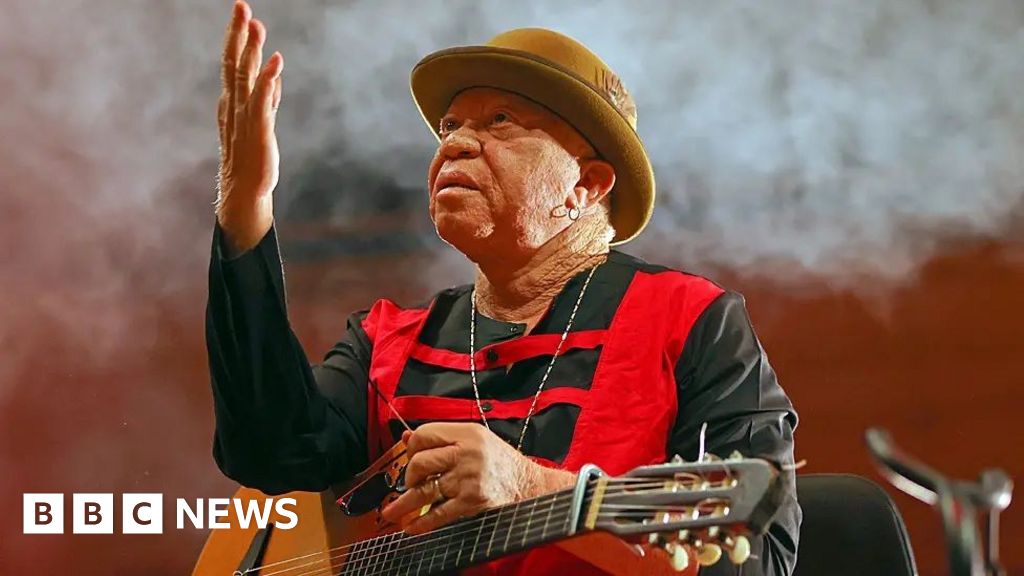
The decision by world-renowned Malian musician Salif Keïta to halt his international tour in South Africa has sparked significant controversy, with the musician expressing deep concern over what he describes as ‘xenophobic violence’ targeting African citizens. This action comes amidst a growing wave of protests across South Africa demanding the departure of undocumented migrants, with the deadline for repatriation set for September 30th. Tens of thousands of Africans have voluntarily returned to their home countries in recent months, many citing intimidation and attacks as reasons for leaving.
South Africa, the continent’s wealthiest nation and a major hub for migrants seeking economic opportunities, faces a politically charged situation. The government has responded to the influx of undocumented individuals with stricter immigration policies, leading to arrests and increased tensions. While cracking down on illegal immigration, the South African government has emphasized the consequences of taking the law into one’s own hands, resulting in a significant number of arrests.
Keïta, in a statement released on Tuesday, unequivocally refuted the accusations of participating in the alleged violence. He stated that he would not perform at the Macufe festival in Free State province, stating that he couldn’t ‘ignore the reports of xenophobic violence against our African brothers and sisters.’ He emphasized that his decision was a rejection of hate and a commitment to inclusivity, suggesting that he might return to performing at some point. The 77-year-old musician added that canceling the performance was a symbolic gesture of solidarity with the African community.
In its response, the Free State’s culture department acknowledged the musician’s decision. They stated that the Macufe festival was a celebration of African unity and that Keïta’s cancellation was regrettable. The festival has long been a significant cultural event in South Africa, attracting thousands of attendees and showcasing the continent’s diverse heritage.
Keïta, known for his influential contributions to African music and as the ‘Golden Voice of Africa’ – a title earned through decades of success – was a pioneer in introducing African music to a global audience. He remains a highly respected figure in the music industry and continues to exert considerable influence on contemporary culture. News of his cancellation has reverberated across the continent, with Malawians, Zimbabweans, Zambians, Ghanaians, and Nigerians returning to their home countries following similar repatriation schemes. The March and March group has announced a second wave of nationwide protests, aiming for a larger and more organized demonstration on September 30th. These protests, mirroring the initial demonstrations in June, are expected to draw significant attention to the issue of migration and the government’s response. The government has rejected a donation of $1.7 million from MTN Ghana, a subsidiary of South African telecoms giant, offered to support Ghanaians repatriated from South Africa, highlighting the economic implications of the situation.
According to AFP, over 160,000 people have left the country on similar repatriation schemes since May, representing a significant portion of the African population. The situation is further complicated by the ongoing debate about the government’s policies and the role of migrants in the country’s economy and social fabric. Further reporting by Penny Dale. To learn more about this developing story, please visit BBCAfrica.com for more news from the African continent.
Watch Related Video
Source: BBC Africa