





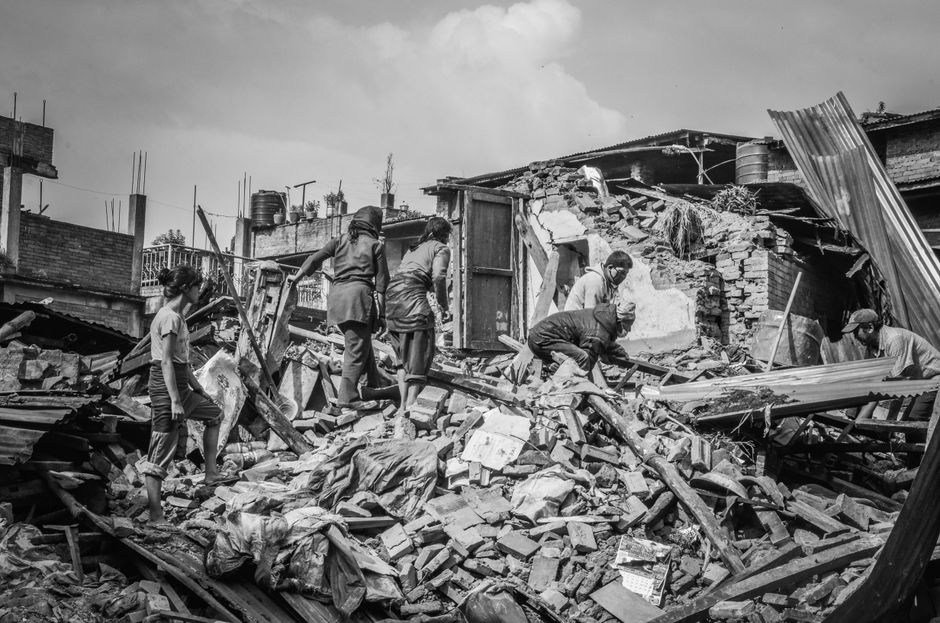
Nepal and Tibet faced unprecedented flooding on Wednesday, triggering a devastating crisis that has claimed at least 160 lives and remains unresolved. A massive glacial collapse, triggered by a 5.2 magnitude earthquake, initiated a chain of events that overwhelmed the Nepal-Tibet border, resulting in catastrophic flooding along the Nepal-Tibet border. The disaster, which began around 8:40 AM local time (02:55 GMT), has quickly escalated into a humanitarian crisis, demanding urgent international assistance.
At approximately 160 people have been confirmed dead overall, with at least 341 foreign tourists and 93 Nepalis lost in Tibet. Nepal’s authorities have recovered at least 157 bodies, while three people were killed in Tibet, a stark contrast to the vast scale of the disaster. The initial surge entered the Lhende Khola river valley, rapidly flooding villages and destroying homes and critical infrastructure. At least 19 bridges and 40 kilometers (25 miles) of roads were washed away, highlighting the immense scale of the impact.
Nepal’s military and rescue teams, including helicopters, drones, and search dogs, have been deployed, but challenging conditions – high river levels, damaged roads, and mud – have complicated rescue efforts. Satellite imagery revealed a substantial portion of the lower end of the glacier broke away, plunging about 1,200 metres (3,900 feet) onto the valley floor, gathering rock and sediment as it fell. This ice-rock avalanche struck the Lhende River in Tibet, about 20km (12 miles) northeast of the Nepal-China border crossing, where debris temporarily blocked the river before natural dam gave way, releasing a powerful flood downstream. Early reports suggested a magnitude 4.4 earthquake triggered the collapse, however, the United States Geological Survey (USGS) later revised its assessment, stating that the seismic signal was generated by the landslide itself rather than an earthquake.
The landslide eventually registered as a magnitude 5.2 seismic event.
The disaster struck the mountainous Nepal-Tibet border region, with some of the worst damage in Rasuwa district, immediately south of the Chinese border. The initial surge entered the Lhende Khola, which feeds into the Bhote Koshi and then the Trishuli River, carrying floodwaters south through Nepal. Water levels in the Trishuli reportedly rose by as much as 9 metres (27 ft) in just 30 minutes. In Rasuwa district, Timure and Syapru Besi were among the affected settlements. Further downstream, flooding reached parts of Nepal’s Nuwakot and Dhading districts, damaging homes, roads, and other infrastructure.
Across the border in Tibet, mud and debris hit Gyirong Port in the Shigatse region. The disaster has also impacted the Nepal-India border, with a rescue aircraft delivering about 10 tonnes of emergency supplies to Nepal, including temporary shelters, blankets, hygiene kits, solar lamps, and medicines. The international community has offered emergency assistance, including $1.2 million in funding from India, aiming to support Nepal’s relief operations and damage assessments.
Experts are investigating the exact trigger of the glacier collapse, and it’s too early to determine the full extent of climate change’s role in this event. However, the disaster comes against a backdrop of rapid warming and glacial loss across the Himalayas. Glaciers across the Hindu Kush Himalaya mountain range – which spans Afghanistan, Bangladesh, Bhutan, China, India, Myanmar, Nepal and Pakistan – lost ice 65 percent faster between 2011 and 2020 than during the previous decade. Nepal’s glaciers have lost close to one-third of their ice volume in roughly three decades. As glaciers retreat, mountain slopes can become increasingly unstable, and meltwater can accumulate in or around glaciers, increasing the potential for sudden floods.
Satellite observations show unusually warm conditions around the affected glacier before the collapse, with snow cover diminishing considerably and exposing more bare ice. Researchers are investigating whether melting contributed to the glacier’s instability, but a direct link between climate change and this week’s collapse has not been established. Police and military personnel are conducting rescue efforts, although officials have said rescue helicopters will not be able to land in some of the affected areas until the waters recede. Much of the area is without electricity, and flood sediment is posing a challenge.
People living in low-lying regions have been moved to safer places, and those along the river have been advised to remain alert. The disaster underscores the urgent need for climate action and preparedness in the Himalayan region.
Source: Al Jazeera