





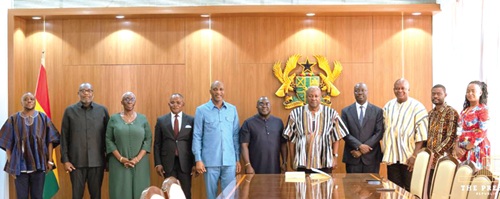
President John Dramani Mahama has formally sanctioned 10 Bills passed by Parliament, marking a significant milestone in Ghana’s legislative agenda. The President’s assent to these bills signifies the culmination of months of deliberation and review, ensuring the nation’s legal framework is firmly established. The bills span a diverse range of critical sectors, reflecting the government’s commitment to bolstering development, strengthening governance, and securing the nation’s future.
The first and most impactful bill to be enacted is the Customs Bill, 2026, a comprehensive overhaul of Ghana’s customs legislation. This landmark revision introduces modernized procedures for the efficient clearance of goods, streamlines valuation mechanisms, and significantly enhances revenue mobilization at Ghana’s borders. According to a report released by the Ministry of Finance, the Customs Bill is projected to improve trade facilitation and reduce revenue leakages, contributing to a healthier national economy.
Secondly, the Community Service Bill, 2026, represents a crucial shift in sentencing practices. This innovative legislation offers courts an alternative sentencing option for non-violent offenders, allowing convicts to serve their sentences through community service rather than imprisonment. This initiative aims to reduce overcrowding in prisons and promote rehabilitation, aligning with broader efforts to reform the criminal justice system.
The Maritime and Related Offences Bill, 2026, addresses the growing challenges posed by piracy, illegal fishing, and other maritime offenses. It criminalises these activities, strengthening Ghana’s capacity to police its territorial waters and combat illegal activities at sea. The bill is expected to significantly enhance security and protect Ghana’s maritime interests.
The National Defence University Bill, 2026, establishes a new tertiary institution dedicated to defence and security studies, providing advanced training for military personnel and civilian security officials. This investment in human capital is vital for maintaining national security and ensuring preparedness for future challenges.
The Income Tax (Amendment) Bill, 2026, proposes adjustments to Ghana’s income tax regime, including revisions to personal income tax bands and corporate tax rates. This amendment aims to streamline the tax system and broaden the tax base, enhancing government revenue collection.
The Value Added Tax (Amendment) Bill, 2026, fine-tunes the VAT system to enhance compliance and broaden the tax base, ensuring the stability of the VAT sector.
Furthermore, the Energy Sector Levies (Amendment) Bill, 2026, modifies existing levies on petroleum products, reflecting a commitment to sustain the stability of the energy sector. These adjustments are necessary to support the continued operation of the energy supply chain. The Ghana Cocoa Board Bill, 2026, reorganizes the structure and operations of COCOBOD, enhancing governance and bolstering the Board’s regulatory powers to improve cocoa sub-sector contributions to the economy.
Watch Related Video
Source: Graphic Online