





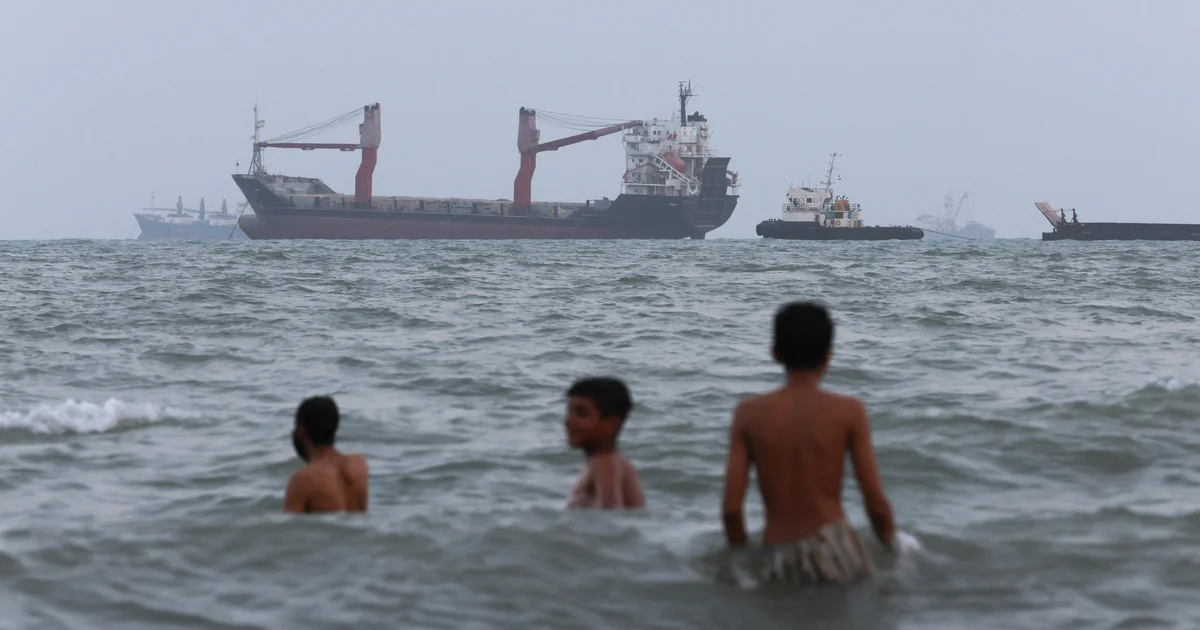
The United States has intensified pressure on Iran through a series of fresh sanctions, escalating a protracted stalemate in the war on the country. Washington has initiated six months of economic warfare, significantly reducing maritime traffic through the Strait of Hormuz, a crucial artery of global trade. Treasury Secretary Scott Bessent recently outlined plans to ‘economic asphyxiation’ of Iran, emphasizing the need to sever vital economic lifeline.
Though Iranian leaders have largely dismissed the rhetoric, residents in Tehran fear the impact will be felt acutely, particularly by those reliant on the capital’s economy. ‘Naturally, sanctions affect people’s lives,’ realtor Mehdi Yazdian stated, urging authorities to control prices, highlighting the economic pain experienced by both wealthy and vulnerable citizens. He further noted that sanctions have been in place for 47 years.
English teacher Kia Farahani, a resident of Tehran, expressed similar sentiments, emphasizing the resilience of the Iranian people. ‘I personally am not afraid of war at all because this is our land,’ she said. ‘But I think this war will be more economic and will cause people to feel a lot of pressure, and now maybe there will be protests again.’
The U.S. National Police Chief stated that the U.S. was seeking to ‘create unrest in a part of the country or throughout the country’ by imposing additional economic pain, a move that has prompted a joint statement from Iran and Oman, outlining a temporary route through the Strait of Hormuz, including a specific route and a plan to clear mines.
Oman’s foreign minister Bdr Albusaidi said Tuesday that a temporary route through the Strait of Hormuz would be announced ‘soon’, after meeting with Iran. The two countries have held regular meetings on the future management of the Strait and a permanent solution will follow in due course.
However, Iranian Deputy Foreign Minister Kazem Gharibabadi warned on Wednesday that the United States would have to lift its blockade on the narrow waterway. ‘Before any action is taken to reopen the Strait of Hormuz, the United States must fully implement all of the commitments it has violated,’ he said. He further pointed to a ‘Zero Tolerance policy on mine placement in full force and effect’.
The U.S. Space Force was observed ‘watching every square inch of the Strait’, with Mr. Trump stating that the U.S. was implementing a ‘Zero Tolerance policy on mine placement in full force and effect.’
Reuters reports that Mr. Trump claimed that all mines have been removed or destroyed from the vital waterway, adding, ‘Iran has been notified that any ship or boat placing new mines will be immediately and systematically destroyed.’
He asserted that the U.S. Space Force was ‘watching every square inch of the Strait’ and that there is ‘a Zero Tolerance policy on mine placement in full force and effect.’
China’s government dismissed any looming efforts by the U.S. to impose punishment for doing business with Iran as ‘likely illegal,’ and warned Washington against taking such measures. China "repeatedly stated its firm opposition to unilateral sanctions without the basis of international law and without authorization from the UN Security Council," according to China’s state-run Xinhua news agency. ‘Economic warfare and extreme pressure do not help solve problems; they only intensify conflicts, cause risks to spill over, disrupt the global economic and financial order, and harm the legitimate rights and interests of other countries," Lin said, adding that China’s cooperation with Iran has ‘always been conducted within the framework of international law and should not be disrupted or undermined.’
China "will take all necessary measures to firmly safeguard its own rights and interests," he added.
Watch Related Video
Source: CBS News