






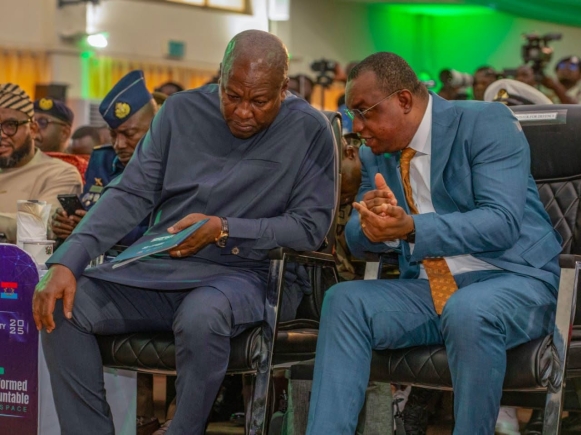
The news of Brogya Genfi’s removal from the position of Deputy Minister of Defence has ignited a firestorm of controversy within Ghana’s political landscape, prompting a significant and carefully calibrated response from the man himself – a former prominent figure in the Ministry of Defence. The removal, announced just hours before the Ghana Military Police arrived to secure his office, marks a dramatic shift in the administration’s priorities and has been widely interpreted as a strategic maneuver designed to minimize potential political fallout following the tragic death of his former boss, Hon. Dr. Edward Kofi Omane Boamah, and seven other individuals. The circumstances surrounding the appointment and subsequent dismissal are steeped in a complex web of past relationships and political maneuvering, a narrative that promises to unfold in considerable detail.
Genfi, a seasoned military officer with a distinguished career spanning over two decades, was initially appointed as Deputy Minister for National Resilience and Emergency Preparedness, a role crucial to the government’s response to natural disasters and potential crises. This appointment, in itself, was a significant step, signaling a deliberate effort to bolster Ghana’s preparedness – a sentiment echoed by President Mahama’s initial confidence in his abilities. The initial report from the President, detailing the helicopter crash that claimed Boamah’s life and the subsequent seven colleagues, served as a potent catalyst, prompting a reassessment of Genfi’s qualifications and potential influence within the Ministry. The President’s initial statement, emphasizing Genfi’s unwavering loyalty and dedication to the defense of the nation, was presented as a crucial reassurance.
However, the political fallout has been swift and decisive. Genfi’s removal, rather than being viewed as a simple administrative lapse, has been interpreted as a calculated move to neutralize a potential political threat. The Ministry, already grappling with a sensitive period following Boamah’s demise, now finds itself under the watchful eye of a former Minister who has publicly expressed his deep concern regarding the potential for instability. The removal has been viewed by some as a pragmatic move, designed to allow the government to focus its efforts on essential national security matters without the potential for Genfi to exert undue influence or, more worryingly, to inadvertently disrupt established protocols.
Genfi, in a carefully worded statement released shortly after his dismissal, acknowledged the gravity of the situation, stating that he understands the concerns of the public and the government. He emphasized his commitment to fulfilling his duties to the best of his ability and expressed a willingness to cooperate fully with the new administration, though he refrained from offering any definitive pronouncements on the reasons behind the decision. ‘I am deeply saddened by this development and deeply respectful of the process,’ he said, ‘I want to assure the nation that I remain dedicated to serving Ghana and upholding the principles of national security and resilience.’
This statement, while diplomatic, carries significant weight. The context of the helicopter crash – a tragedy that highlighted the vulnerability of the nation – underscores the strategic rationale behind the decision. The Ministry of Defence, traditionally a key player in disaster preparedness, has now become a focal point of scrutiny, with analysts questioning the extent of Genfi’s influence and the potential for unintended consequences. The initial report detailing the helicopter crash, while providing the necessary context, also reveals a pattern of past political disagreements between Genfi and the government, particularly concerning the allocation of resources and the prioritization of security measures.
The immediate impact on the Ministry’s operational capacity is palpable. The absence of Genfi’s direct oversight has created a noticeable void in key areas of defense strategy, necessitating a thorough reassessment of existing protocols and procedures. Several officials within the Ministry have expressed apprehension about the potential for further delays and disruptions in the execution of critical defense initiatives. Furthermore, the transfer of responsibilities to the new Deputy Minister, Dr. Samuel Abafo, is expected to be a significant challenge, requiring careful navigation of existing relationships and a clear articulation of the Ministry’s strategic objectives.
Looking ahead, Ghana’s political landscape remains volatile. The removal of Brogya Genfi has undoubtedly injected a new layer of uncertainty, demanding careful monitoring of the government’s actions and a sustained effort to maintain stability and confidence within the defense sector. The long-term consequences of this decision remain to be seen, but it represents a pivotal moment in Ghana’s ongoing efforts to secure its future and safeguard its national interests. The Ministry of Defence, under the new leadership, will be tasked with implementing a comprehensive strategy to rebuild trust and ensure the continued effectiveness of defense operations. The focus will be on establishing clear lines of accountability and promoting transparency within the Ministry, while simultaneously strengthening its institutional capacity to respond effectively to emerging security challenges.
Watch Related Video
Source: Graphic Online