





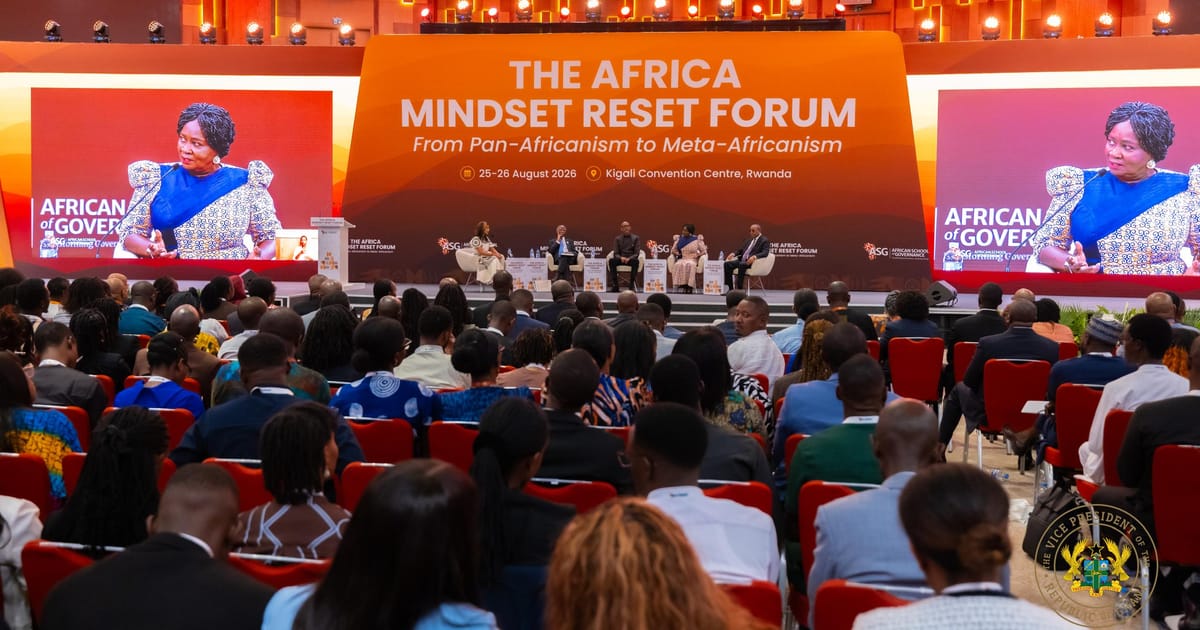
Ghanaian Vice President, Hon. Opoku-Agyemang, delivered a powerful and resonant address earlier today, urging African leaders to fundamentally redefine their collective future, asserting that the continent must actively construct its own destiny rather than passively accepting externally imposed narratives. The address, delivered at a gathering of influential policymakers and academics, underscored a critical shift in focus – moving away from reliance on external support and embracing a model of self-determination and strategic autonomy.
“Africa must define and build its own future,” Veep Opoku-Agyemang stated, her voice carrying the weight of decades of geopolitical analysis and a deep commitment to the continent’s progress. ‘It’s no longer sufficient to simply benefit from the resources and infrastructure offered by others,’ she emphasized. ‘We must, and we will, forge our own paths, driven by our unique strengths, priorities, and aspirations.’
The core of her message centered on the concept of ‘sovereignty,’ a term frequently invoked in international relations, but elevated to a crucial strategic imperative for African nations. She stressed that true sovereignty isn’t simply about political independence; it’s about the ability to govern effectively, to manage resources sustainably, and to prioritize the well-being of its people without undue influence or interference from external actors.
“For too long, African nations have been burdened by the legacy of colonialism and neocolonialism,” Opoku-Agyemang explained. “We’ve witnessed patterns of exploitation and unequal distribution of resources, and it’s time to dismantle those structures and build a system that truly serves the interests of the continent.” She pointed to the challenges of climate change, resource depletion, and political instability as significant obstacles to this self-determination. “These are existential threats, and they demand a proactive, collaborative, and fundamentally African response.”
Specifically, she highlighted the need for African leaders to prioritize internal development, invest in education and infrastructure, and foster a robust regional economic integration. “We need to unlock the potential within our own borders – to create jobs, stimulate innovation, and build a diversified economy that is resilient to external shocks,” she stated. “This isn’t about competition; it’s about collaboration, partnership, and mutual benefit.”
Opoku-Agyemang referenced a recent report by the African Development Bank that estimates that Africa’s GDP is poised to grow at a significantly faster rate than the global average over the next decade. “That growth must be inclusive, equitable, and sustainable,” she declared. “We must ensure that the benefits of this progress are shared broadly across all segments of our population.”
The discussion also touched upon the importance of strengthening regional governance structures and addressing issues of corruption, which she described as ‘major impediments to progress.’ She advocated for greater transparency and accountability within African institutions.
“The continent’s wealth is immense, but its potential is limited by a lack of trust and a tendency towards fragmentation,” Opoku-Agyemang acknowledged. “We need to foster a culture of cooperation and mutual respect, recognizing that our collective success is inextricably linked to our individual successes.”
Her call for a fundamental shift in mindset was echoed by numerous African scholars and policymakers who have expressed their agreement with her assessment. Dr. Kwame Nkrumah, a leading expert on African governance, stated in a statement released shortly after the address, “Opoku-Agyemang’s words are a vital reminder that Africa’s future is not predetermined. It is ours to shape.”
Furthermore, the Vice President underscored the significance of promoting African cultural heritage and celebrating the continent’s rich diversity. “Our traditions, our languages, our art – these are not just symbols of the past; they are the bedrock of our identity and the source of our resilience,” she asserted. “We must actively safeguard and promote these valuable assets for future generations.”
Looking ahead, Opoku-Agyemang urged African leaders to embrace a more proactive and strategic approach to diplomacy, prioritizing regional security and addressing shared challenges like terrorism and migration. “We must move beyond reactive responses and embrace a proactive, anticipatory approach to security,” she concluded. ‘Building a secure and prosperous Africa is not just a matter of national interest; it’s a matter of global stability.’
This address represents a crucial moment in the ongoing conversation about Africa’s future, highlighting the imperative for a new era of continental leadership and self-determination.
Watch Related Video
Source: TV3