






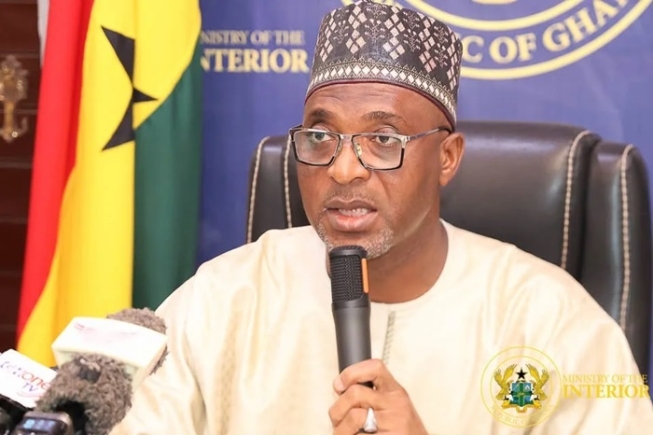
The government of Ghana is poised to dramatically reshape traffic enforcement, moving away from traditional roadside checks by police personnel from the Motor Traffic and Transport Department (MTTD) starting September 2026. A new digital system, spearheaded by the Minister for the Interior, Muntaka Mohammed-Mubarak, will replace this practice with a comprehensive network of cameras and other digital devices designed to detect and enforce over 47 road traffic offences.
Under this ambitious plan, the Minister announced that the Motor Traffic and Transport Department (MTTD) will deploy a range of surveillance technologies, including face cameras, mobile cameras, in-vehicle cameras, handheld devices, and radar systems. Mr. Mohammed-Mubarak emphasized that the system will become fully operational from September 2026, effectively halting manual roadside inspections for the offences covered.
This transition will involve the digitization of traffic enforcement. Cameras and digital devices will capture traffic violations, while police officers will review the footage from a central control room before issuing electronic notices to offenders. The Minister stated that once an offence is captured, the footage will be reviewed at a back-office control room. The system will also streamline processes by reducing opportunities for corruption during traffic enforcement.
To illustrate the scale of the changes, the Minister cited statistics showing that police officers currently spend approximately one-third of their time on manual checks. The new system aims to significantly reduce this time, potentially saving officers approximately 20%. According to the Ministry, the initial investment in the digital system is estimated at $50 million, representing a substantial reduction in administrative costs.
The Ministry of Interior’s broader digitalization program, which includes the implementation of a national automated fire safety compliance system by the end of August 2026, further underscores the government’s commitment to modernizing public services. The Minister also addressed concerns regarding the removal of face-to-face contact between police officers and motorists, stating that officers will no longer be required to physically inspect driving licenses. They will also be expected to stop pulling motorists over for seatbelt use or insurance violations, as the digital system will automatically detect these offenses.
The Minister explained that revenue from previously collected services, which now takes a full year to collect, will now be collected in a single quarter after the services were digitalised. He also highlighted that the system is designed to close any remaining gaps in the system, and the Ministry has established a dedicated feedback mechanism for suggestions on how to improve it. The Minister reiterated that the deployment of the camera system is a key component of the Ministry’s wider digital reform program, which includes a national crime automated biometric identification system aimed at reaching 751 centers nationwide by the end of the year.
Watch Related Video
Source: Graphic Online