






Taiz, Yemen – The sudden closure of the al-Makha (Mocha) port, a vital hub for trade and transportation in western Yemen, has sent shockwaves through the region, triggering widespread fear among workers and traders. Since reopening in 2021, the port had been a cornerstone of the Yemeni economy, facilitating the movement of goods crucial for the country’s survival. However, a recent escalation in tensions between the Yemeni government and Houthi forces, culminating in a targeted attack on the port on August 9th, has dramatically altered the landscape, leaving a precarious situation for countless individuals and businesses.
The attack, which claimed the lives of at least seven people and injured thirty more, immediately disrupted daily operations. Mohammed Al-Homaidi, a 30-year-old labourer employed at the port since its reopening, recounts the initial chaos. ‘It was around 12:30pm when the explosions [were heard] at the seaport, which was full of workers at the time. I couldn’t understand what was happening, and we couldn’t flee because the explosions were continuous,’ Al-Homaidi stated. After an hour and a half, he ran outside the port and didn’t stop until he reached home.
With the conflict escalating, the focus shifted from daily labor to immediate safety. The Houthi forces have intensified their attacks, targeting the port and surrounding areas with a near-daily barrage of drone and missile strikes. The port’s closure, implemented by the Yemeni government on August 11th, has resulted in a near-complete halt to operations, impacting roughly 1,500 workers and nearly 16 fatalities. The disruption extends beyond the immediate loss of personnel; the closure has severely hampered the movement of goods crucial for Taiz governorate and surrounding economic hubs like Lahj, Hodeidah, and Ibb.
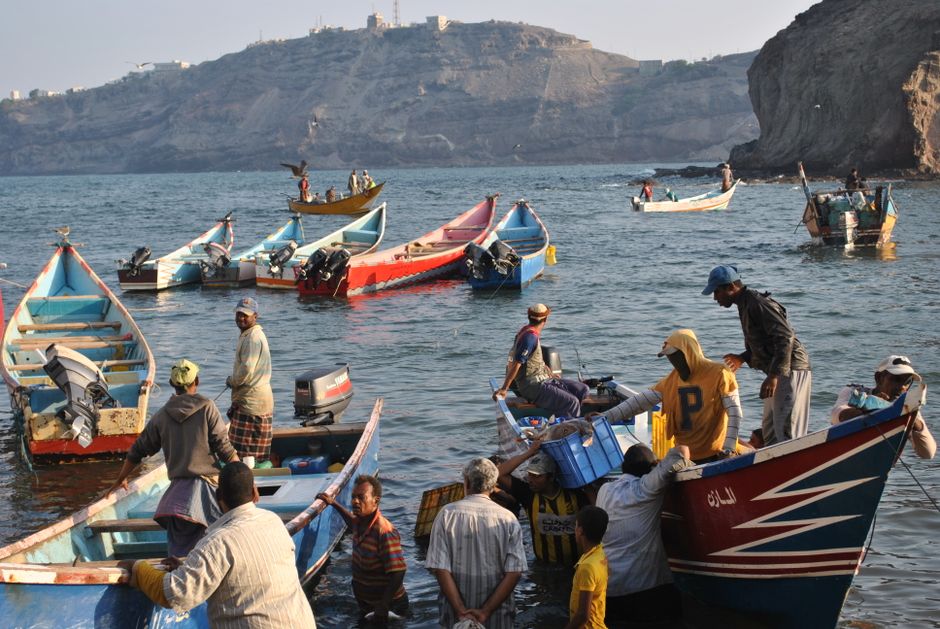
Local fishermen have been instructed to avoid sea travel until further notice, further exacerbating the situation. The port’s closure has compounded the community’s suffering, with families facing widespread food shortages and the threat of unemployment. Al-Sharabi, the port director, confirmed that the closure has resulted in at least six merchant vessels being struck, leading to casualties and damage to infrastructure. The port, which was closed between 2015 and 2021, serves as a critical lifeline for Taiz’s governorate and economic activities for Lahj, Hodeidah, and Ibb. Due to the port’s closure, traders are now reliant on alternative routes via the Aden port, driving up logistics costs and increasing the risk of disruption.
The economic consequences are significant. Three days after the attacks, the Houthis targeted a vessel at the al-Makha port, killing three Pakistani crew members and injuring eight other seamen. This act has further damaged the economy, as the port’s closure has halted vital trade and reduced commercial activity.
Businesses are also impacted, with operations across 30 shipping and customs clearance agencies grounded. The port, a critical logistical hub, is now essentially a ghost town. The closure has compounded the challenges for traders, who are forced to increase prices on imports arriving via Aden, further straining the already fragile Yemeni economy. Rashad, a local trader from al-Makha, reported that ‘We were happy to have a seaport with such operational capacity, but today we are back to square one.’ He added that the price increase directly impacts his family and neighbours – something he desperately wants to avoid. He noted that the price increase will be inevitable.
The government has stated that more than 1,500 port workers lost their jobs, while 16 were killed and 22 injured as a result of the Houthi attacks. However, the full extent of the damage remains unclear. The situation is creating an environment of heightened anxiety and uncertainty for Yemen’s people, with residents expressing deep concern about the future of their livelihoods and the potential for further instability.”
Al Jazeera
Source: Al Jazeera