





The United Arab Emirates (UAE) has announced a complete and indefinite trade embargo on Iran, a move that carries profound implications for Iran’s economic landscape and strategic positioning. This unprecedented action, triggered by accusations of Iranian missile attacks targeting UAE territory, represents a significant escalation in the ongoing conflict between Iran and Israel and the United States. The UAE’s decision, communicated via a statement from its Ministry of Foreign Affairs, aims to ‘counterescalation’ and ‘enhance regional security,’ a starkly defined rationale for the embargo’s scope. The UAE’s embargo, already a significant step, is arguably even more impactful than the US sanctions and the ongoing American naval blockade of Iranian ports, creating a deeply concerning situation for Iran’s economy. Mark Kimmitt, a retired US general and former assistant secretary of state, underscored this point, stating that the UAE’s action is ‘even more significant than the US sanctions and the ongoing American naval blockade.’
This embargo, formalized on Wednesday, effectively halts all trade, commercial exchanges, and financial transactions between the UAE and Iran. The UAE’s Ministry of Defence reported that its air defenses detected two ballistic missiles launched from Iran, with one falling in the UAE’s territorial waters and the other outside, fueling the urgency of the decision. The UAE’s actions, however, are not isolated; recent developments include the collapse of the June 17 Memorandum of Understanding (MoU) between the US and Iran, leaving Iran without a crucial diplomatic lifeline.
Here’s a breakdown of the key impacts:
* **Economic Impact:** Iran is heavily reliant on the UAE for critical imports, particularly in sectors like petrochemicals, food, and textiles. The embargo threatens to severely disrupt these supply chains, potentially triggering a significant economic downturn for Iran. According to a report by the Observatory of Economic Complexity (OEC), Iranian exports to the UAE totaled approximately $6.2 billion in 2023, with imports valued at roughly $5.8 billion. Iran’s imports of telephones, computers, tobacco, and nuts from the UAE are substantial.
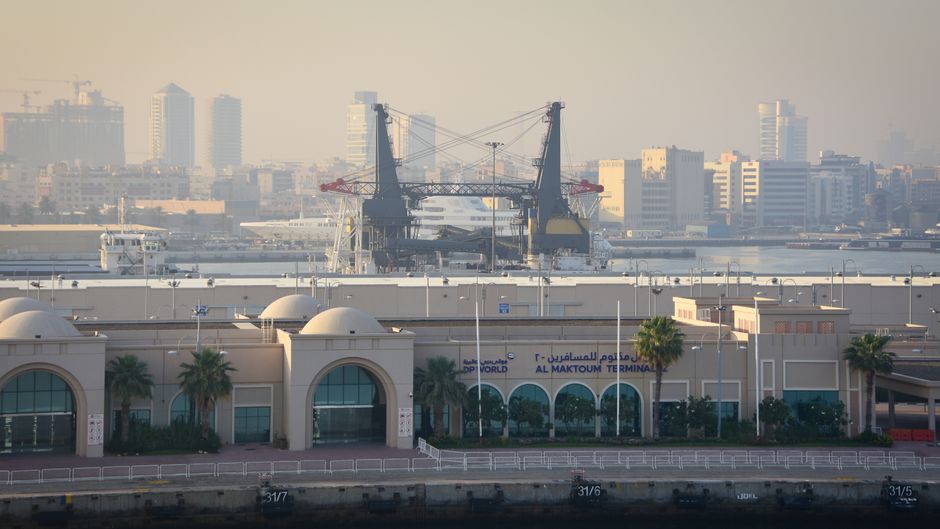
* **Strategic Importance:** The UAE’s role as a crucial transit point for Iran – particularly for goods moving between India and Africa – is significant. The embargo could significantly disrupt Iran’s ability to export goods to these markets, impacting its revenue streams. The UAE’s position as a global financial hub, leveraging Dubai’s port infrastructure, further complicates this situation, as the port of Jebel Ali is a primary point of entry for Iranian imports.
* **Geopolitical Implications:** The embargo is viewed as a direct response to the escalating tensions between Iran and Israel, with the US and Israel conducting strikes on Tehran. The UAE’s action aligns with a broader strategy of limiting Iran’s economic leverage. The UAE has long served as a key informal trade conduit, facilitating trade routes bypassing international sanctions, allowing Iran to circumvent these restrictions. This reliance on the UAE is now being dramatically curtailed.
* **Operational Impact:** The embargo has already resulted in significant disruptions, including the suspension of direct cargo shipping between the two countries via Dubai’s Jebel Ali Port, which occurred early in March, and a fire at the Port of Fujairah. The UAE’s strategic location – as a major shipping hub and gateway to the Persian Gulf – amplifies the repercussions of the embargo.
Analysts are increasingly emphasizing the UAE’s significance as a key point of contention, suggesting the UAE’s actions could be ‘bordering on an act of war’ – a comparison made by retired US general Mark Kimmitt, who stated that the UAE’s move is akin to the near-total embargo imposed on Japan during World War II.
The UAE has stated that the embargo is a response to ‘escalations’ that undermine peace and security in the region, a rationale that, while intended to justify the action, raises concerns about potential broader repercussions for Iran’s economy and its geopolitical standing. The long-term consequences of this trade disruption remain to be fully assessed. Kimmitt further cautioned that the UAE’s actions could significantly hamper Iran’s economic prospects, potentially impacting its GDP per capita, which has declined significantly in recent years.”
Source: Al Jazeera