





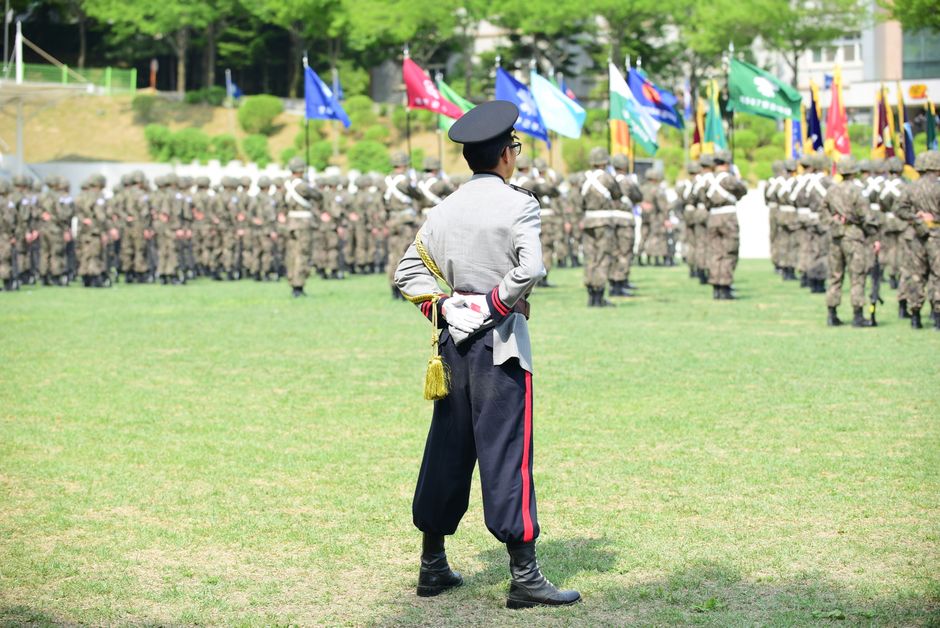
South Korea and the United States have significantly curtailed the duration of their joint military drills and reduced field training exercises following President Donald Trump’s directive to substantially diminish the annual war games. Specifically, the Ulchi Freedom Shield exercise, initially slated for 11 days, will now conclude on August 21st, as the South Korean Joint Chiefs of Staff announced. This adjustment was agreed upon at Washington’s suggestion, with the JCS also indicating a reduction in combined field manoeuvre training. The change follows Trump’s order on Sunday to curtail US involvement in the drills, citing his ‘very good relationship’ with North Korean leader Kim Jong Un. Trump’s communication has been interpreted as a strategic effort to pressure Seoul to become more involved in the Korean War. According to South Korean media, Seoul’s Defence Minister Ahn Gyu-back stated that the alliance was planning to cancel the second phase of the drills, which was expected to involve counterattack operations after a defensive phase. A US Department of Defense official confirmed that the US was substantially reducing the exercise and associated live-training events, with some drills being switched to simulations. The adjustments were designed to preserve essential readiness and training objectives, with no discernible degradation to US training objectives, the official added. The changes are a direct consequence of Trump’s decision to cancel the second phase of the drills, as reported by Reuters. Nuclear-armed North Korea has long voiced outrage at the US-South Korea exercises, considering them dress rehearsals for an invasion. It has again denounced the drills on Wednesday, asserting its right to self-defence against what it calls military threats from Washington and Seoul. Seoul’s Presidential Office had stated on Tuesday that the drills did not reflect any intention to attack North Korea or escalate tensions on the Korean peninsula. Trump, meanwhile, asserted in a Monday statement that Kim had responded to his outreach, without disclosing the nature of the contact. He insisted that he is making the situation ‘much safer’ through his ties with the North Korean leader. The two men met three times during Trump’s first term in the White House, but have not held talks during his second. The Wall Street Journal reported separately that Trump has pushed aides to arrange an in-person meeting with Kim as soon as this autumn. Citing US officials, the Journal suggested that Trump is discussing holding talks during a possible November trip to Asia for the Asia Pacific Economic Cooperation summit in the Chinese city of Shenzhen. The US has approximately 28,500 troops stationed in South Korea to bolster the country’s defences, a legacy of the 1950-53 Korean War that ended with an armistice rather than a peace treaty. However, Trump’s repeated criticism of time-honoured alliances has cast doubt on US commitments to security in East Asia and alarmed regional allies. Japan’s Defence Minister Shinjiro Koizumi underlined the importance of security cooperation with the US and South Korea. “As Japan faces the most severe and complicated security environment in the post-war era, the cooperation among Japan, the United States and South Korea is critical to the peace and stability of the region,” Koizumi told journalists in Australia. Asked about Trump’s comments, Australian Defence Minister Richard Marles said his country was “very concerned about North Korea’s nuclear programme as well as its missile programme, and we have consistently made that point.” “I think in the challenging world that we face … and there are many challenges, but North Korea is the author of quite a few of those challenges,” he added.”
Source: Al Jazeera