





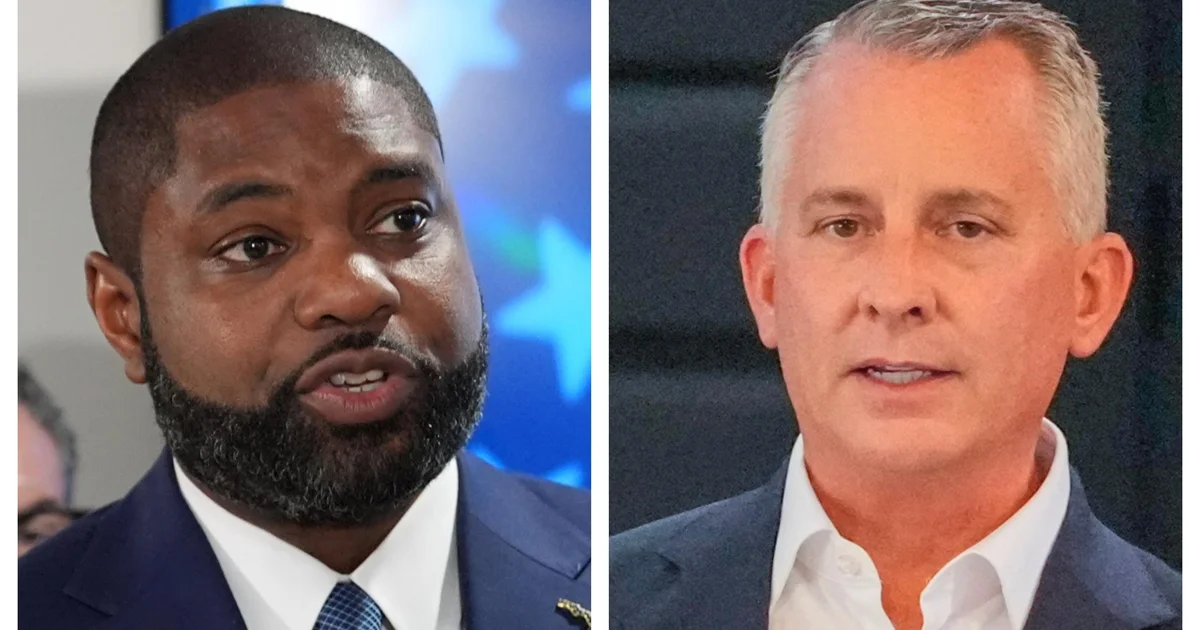
The Republican primary race for governor of Florida is rapidly intensifying, with the results of the initial primary elections signaling a significant shift in the state’s political landscape. Rep. Byron Donalds has emerged victorious in the Republican primary, securing the nomination following a robust campaign that saw him defeat several prominent challengers, while former Rep. David Jolly also secured the Democratic primary, marking a notable moment in Florida’s political history. The outcome of these contests has ignited considerable discussion about the state’s future direction and the potential implications for the upcoming general election.
Donalds, first elected to represent Naples, Fort Myers, and the surrounding area in 2020, has cultivated a strong base of support, largely propelled by his association with former President Donald Trump and a consistent branding of himself as a key figure within the House Freedom Caucus. This group affiliation, combined with his outspoken advocacy for conservative policies, has positioned him as a prominent voice within the Republican party. Donalds’ tenure in office began in 2020, representing a significant shift in the political landscape for the Naples region, and his subsequent challenge to Kevin McCarthy’s leadership within the House has further solidified his position as a powerful figure in Republican politics. His challenging of McCarthy in 2023, culminating in his ousting from the speakership, demonstrated his tenacity and strategic maneuvering within the House.
The battle for the governorship has been characterized by a notable increase in right-leaning political sentiment across Florida in recent decades, as indicated by Cook Political Report’s assessment of the race as ‘Solid R.’ This shift in political trends has undoubtedly influenced the dynamics of the gubernatorial contest, creating a heightened level of competition and potential for a significant shift in the state’s political balance.
David Jolly, a former Democratic Congressman who has transitioned into a prominent Republican figure, secured the Democratic nomination, becoming the second prominent Republican-turned-Democrat to run for governor in Florida in the past two cycles. Jolly’s entry into the race underscores the increasing diversity within the state’s political landscape and highlights the growing influence of Republican voices within the political sphere.
The implications of these primary results are considerable. Florida, traditionally a reliably Democratic state, has demonstrated a notable rightward trajectory in recent years, and the election of Donalds and Jolly will undoubtedly shape the state’s political future. The upcoming general election will be a crucial test of the state’s political landscape, and the dynamics of this race are expected to be closely watched by observers across the nation. The strength of Donalds’ base and his association with Trump, coupled with the established Republican presence in the state, suggests a strong possibility of Donalds securing victory in November. The competitive nature of the election, particularly given Florida’s shifting political landscape, is expected to draw significant attention from both domestic and international media outlets.
Further analysis will focus on the specific demographics of the Republican and Democratic bases in Florida, as well as the potential impact of Donalds’ and Jolly’s campaigns on the state’s political discourse and electoral outcomes. The candidates’ platforms and policy positions will be critical factors in determining the ultimate outcome of this race and the future direction of Florida’s political landscape.
Watch Related Video
Source: CBS News