





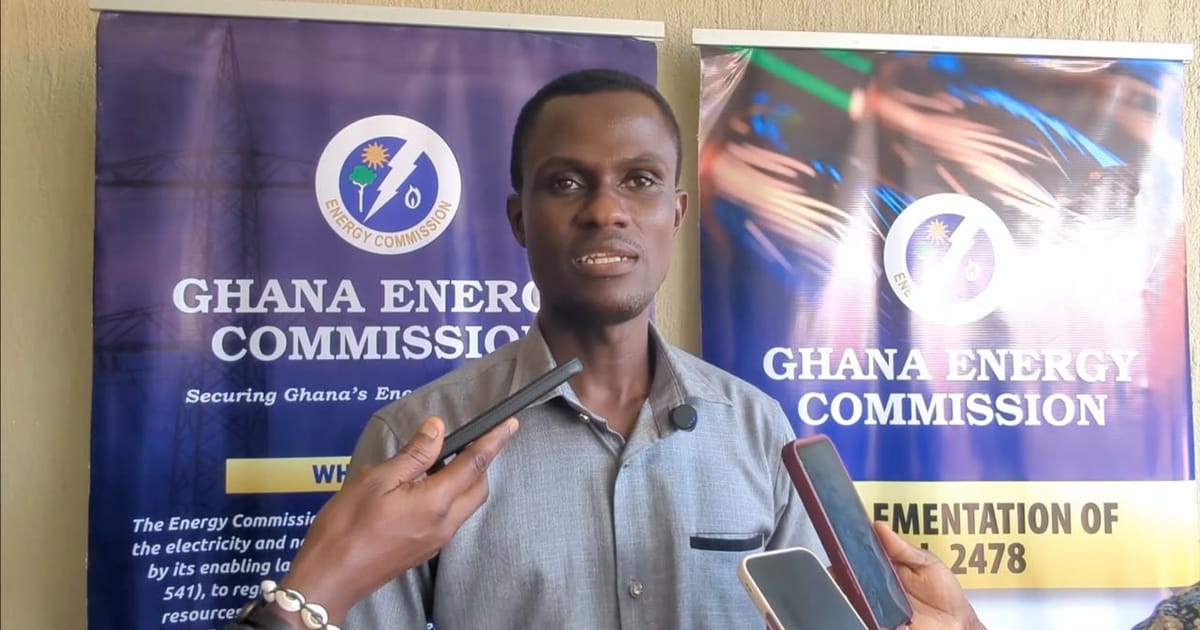
The Energy Commission (EC) has issued a stark warning to consumers and businesses against the use of unqualified electricians, emphasizing the critical need to prioritize safety and prevent potential risks associated with improper electrical installations, particularly as Ghana’s expanding use of solar energy and electric vehicle (EV) charging systems grows. The EC’s caution stems from a growing understanding of the potential dangers posed by inadequate electrical systems, a concern amplified by the Commission’s recent initiative to induct approximately 180 newly certified electrical professionals into its framework.
The Commission’s message underscores the importance of adhering to rigorous safety and technical standards, a commitment reinforced by a Senior Lecturer at the Takoradi Technical University, Ing. Dr. Emmanuel Kobina Appiah, who stated, ‘We have about 180 graduates passing out today. We have domestic professionals, commercial professionals, industrial professionals, and also inspectors trained to verify completed electrical installations before they are approved for energisation.’
This cohort of certified electricians will play a pivotal role in supporting both conventional and emerging areas of the electrical sector. The EC highlighted the crucial role of qualified professionals in facilitating installations involving electric vehicle charging stations, rooftop solar systems, and solar plants. The Commission emphasized that while EV adoption is growing in Ghana, proper system design and cable sizing are paramount, with incorrect installation potentially leading to electrical faults and fire outbreaks.
Furthermore, Dr. Appiah stressed the need for established electrical design and installation standards to ensure the safe development of Ghana’s emerging EV infrastructure. ‘We can also use our EV cars to power our individual homes, only when you do the installation right. You need not compromise with your installation.’
As part of its ongoing commitment to safety and uniformity, the EC has called for strict compliance with established electrical standards to ensure the safe development of Ghana’s burgeoning EV infrastructure. The Commission stated that installers must consider the capacity of the vehicle, battery storage system, and electrical load when designing EV charging and vehicle-to-home systems.
One of the beneficiaries of the certification program is Ruth Essel, a training participant, who stated, ‘A lot of people think that this field is for guys, so it will motivate the ladies in my surroundings and then the country as well.’
She also emphasised the importance of standards in promoting safety and uniformity in electrical installations. ‘For the sake of uniformity and at the same time for us to help curb incidents and accidents, we need to follow standards and do the right thing at all times so that we’ll all work safely and go home safely.’
The Energy Commission has stated that it will continue working with relevant stakeholders to train and certify electrical practitioners to meet the technical and safety demands of Ghana’s expanding solar and electric mobility sectors. The initiative represents a significant step toward bolstering the safety and reliability of Ghana’s electrical grid and infrastructure.
Watch Related Video
Source: TV3