





Yemen’s government forces have escalated their military operations in southwestern Taiz province over the past 24 hours, marking a significant intensification of attacks against the Iran-backed Houthi group, which has been a persistent source of instability in the country. The Yemeni government’s Military Media Centre (MMC) reported a number of operations targeting Houthi positions across the province, including airstrikes on Houthi positions in five locations within the last 24 hours. The government’s total number of operations is currently 130,000 people have been displaced since the fighting erupted in July following a period of relative calm since a UN-brokered ceasefire in 2022. Recent weeks have seen the Houthis make dramatic territorial gains, seizing the strategic Red Sea coastal city of Mocha and expanding their control over the Bab al-Mandeb Strait, a crucial maritime chokepoint connecting Europe to Asia. Rashad al-Alimi, the head of the Presidential Leadership Council, has called on citizens to mobilize and join the fight against the Houthis, emphasizing the efforts to halt their advance and regain lost territory. Saudi Arabia, meanwhile, has been shifting its strategic focus to bolstering support for allies, including Pakistan and Turkey, in an effort to counter Houthi activities and potentially disrupt the Strait of Hormuz. Here’s a breakdown of the latest developments and the humanitarian situation within Yemen:
According to the Government’s Military Media Centre, dozens of Houthi fighters, including field commanders, have been killed or wounded in the past 24 hours of fighting near Taez. The government forces have conducted operations in several areas in Taez, including the Al-Wazi’iyah district in the west, weapons sites and ammunition depots at Mafraq Ma’wiyah and Al-Dhukrah in the east, a Houthi gathering in the Hayfan district in the south, and against military vehicles in the Gurab area in the north west. The government forces also thwarted infiltration attempts in the Al-Ahtoub front and in Hadran as they carried out artillery shelling of Houthi gatherings at the Al-Kadha and Al-Aqroud fronts. The Media Centre added that several Houthi military vehicles were damaged in the attacks.
Al Jazeera has not been able to independently verify the battlefield claims. “Government forces say they have made advances in the southern Taiz governorate, taking control of several areas and higher ground. Among them is Jabal Bazel, a mountaintop that places Houthi supply lines within target range,” Al Jazeera’s Maha Ali reported from Taiz on Saturday. “These developments point to significant and potentially decisive ground operations in recent hours.” Ali said that al-Alimi, the PLC chairman, had confidence that Yemeni forces were capable of restoring control over the whole country. Houthis currently control vast swaths of the north and western Yemen, while the government forces govern in the south and east of the country.
Since the current fighting erupted, the Houthis have accused the Saudis of carrying out strikes in Yemen and vowed to prevent Saudi tankers from passing through the Bab al-Mandeb, which Riyadh has been using as an alternative to the Strait of Hormuz. Tehran has effectively closed the Strait, through which a fifth of global oil passes, in response to the US-Israel war in February. Riyadh has issued a warning to US and Israeli tankers to avoid approaching the Red Sea. Iran has denied any role in the Yemen conflict. Masoud Pezeshkian, the Iranian President, told Al Jazeera that the actions of the Houthis were not connected to Iran, and that Tehran stands in solidarity with everyone subjected to injustice. He urged the Houthis and Saudi Arabia to resolve their differences through dialogue, offering Iran’s help in ending the dispute. Iran’s ceasefire offer, which US President Donald Trump has rejected, included Yemen and Lebanon. Tehran has offered to open the Strait of Hormuz if the US fulfills its conditions, including Washington’s naval blockade of Iranian ports, sanctions waiver, and the release of frozen assets.
Saudi Arabia’s allies have rallied support amid intense fighting between the Saudi-backed government forces and Houthis. Saudi Defence Minister Prince Khalid bin Salman said early on Saturday that there would be continued joint efforts with Pakistan to confront attacks against the kingdom in accordance with the Mecca Joint Defence Agreement signed last month. He held talks with Pakistan’s Field Marshal Asim Munir on Thursday. A day earlier, the military chiefs of Saudi Arabia and defense allies Pakistan and Turkey jointly reviewed threats facing Saudi Arabia at a meeting in the Saudi capital.
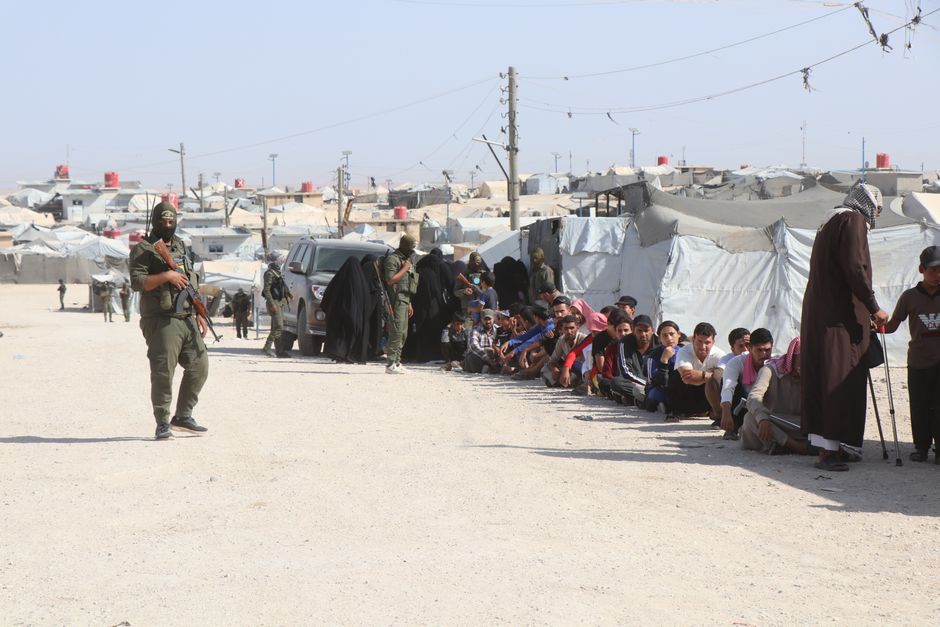
Multiple Saudi cities, including the capital Riyadh, have been hit by drones and missiles attributed to Houthis. Meanwhile, France confirmed on Friday that it was sending troops to guard the major oil terminal at Yanbu in Saudi Arabia, but added that it was not joining the conflict. Yanbu hosts major oil storage and refining facilities and is connected by the East-West Pipeline, which was damaged in a drone attack carried out from a group based in Iraq. The US has so far not pledged military involvement, but the Saudi foreign minister has said the kingdom was ‘continuing to work with our partners in the US’. On September 14, CENTCOM chief Brad Cooper met the de facto Saudi ruler, Crown Prince Mohammed bin Salman, in Jeddah in the wake of the Houthis’ seizing of Mocha. At least 130,000 people have been displaced in the Arab region’s most impoverished country over the past three weeks, most of whom were uprooted from or within the southwestern governorate of Taiz, according to Yemen’s UNICEF country representative, Akhil Iyer. More than 3,000 people fled across the Red Sea to Djibouti over several days earlier this month, Djibouti state media has reported, with the UN warning that number could rise. The number of casualties is still not confirmed as the rival sides have made conflicting claims. According to the United Nations Office for the Coordination of Humanitarian Affairs (OCHA), more than 22 million people in Yemen require humanitarian assistance and protection services; 18.3 million people face acute food insecurity; and more than 2.2 million children under five are acutely malnourished.
Iran has denied it has any role in the Yemen conflict. Masoud Pezeshkian, the Iranian President, told Al Jazeera that the actions of the Houthis were not connected to Iran, and that Tehran stands in solidarity with “everyone subjected to injustice”. He urged the Houthis and Saudi Arabia to resolve their differences through dialogue, offering Iran’s help in ending the dispute. Iran’s ceasefire offer, which US President Donald Trump has rejected, included Yemen and Lebanon. Tehran has offered to open the Strait of Hormuz if the US fulfills its conditions, including Washington’s naval blockade of Iranian ports, sanctions waiver, and the release of frozen assets.
Source: Al Jazeera