





The NASA’s Nancy Grace Roman Space Telescope represents a monumental leap forward in astronomical observation, poised to fundamentally alter our understanding of the cosmos. The telescope’s primary instrument is slated to deliver data practically every aspect of astrophysics, but a specialized coronagraph, an experimental apparatus designed to directly capture starlight reflected off a planet’s surface, is at the heart of this endeavor. This ambitious project, spearheaded by Vanessa Bailey, an astrophysicist at NASA’s Jet Propulsion Laboratory, and instrument scientist for the coronagraph, aims to pave the way for a space telescope capable of providing unprecedented insights into Earth-like planets orbiting sun-like stars. The launch window for the telescope is set to open, and the primary focus is on the coronagraph’s role in this transformative mission.
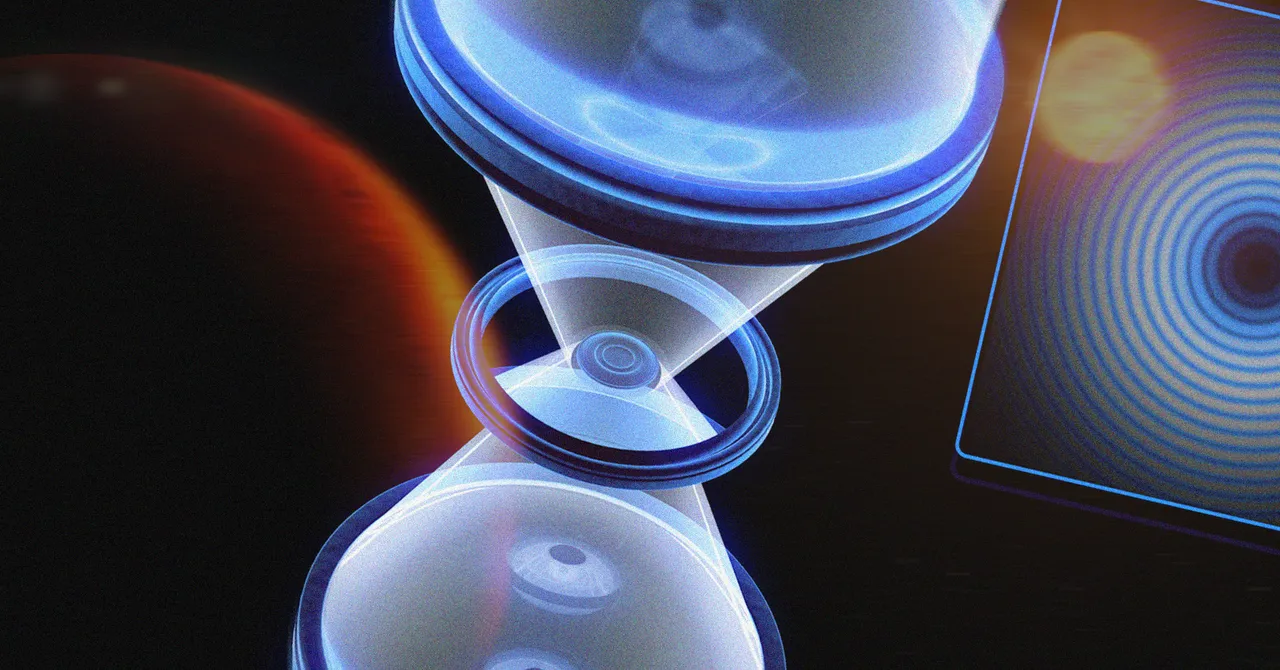
The coronagraph’s function is deceptively simple: it blocks out the light of a bright star and reveals a fainter object otherwise lost in the glare. This technique has been utilized in space before, notably by the Hubble and James Webb telescopes. However, Roman’s coronagraph surpasses its predecessors by incorporating advanced technology – adaptive optics, which dynamically adjusts a telescope’s mirror to counteract atmospheric distortions, is a crucial element. It still faces a significant challenge: NASA compares the task of Roman’s coronagraph to photographing a firefly perched next to a floodlight, representing the immense complexity of capturing a single, faint signal from a distant planet.
“We’ll test them in space for the first time, and we’ll understand what work still is left to go,” says Bailey, emphasizing the iterative nature of the project. The technology is standard on advanced ground-based telescopes, including the Very Large Telescope in Chile and Hawaii’s Keck Observatory, where adaptive optics meticulously monitors interference from Earth’s atmosphere, sharpening images. The critical component of the coronagraph is the star shades – meticulously crafted masks designed to precisely capture the light from individual photons. Margaret Turnbull, an exoplanet scientist at the SETI Institute, highlights the necessity of this element, stating, “Any little bit of starlight that gets in the wrong place could just destroy a whole portion of the image.”
The system requires highly sensitive detectors to amplify the signal from photons, a necessity given the scarcity of photons captured by the instrument. The heart of the system is the star shades, which Bruce Macintosh, an astronomer leading the University of California Observatories and a Roman coronagraph science team, describes as “beautiful, complicated shapes.” He adds that the Hubble’s coronagraphs are simply brute force, just a little piece of metal that gets in the way of the star, contrasting sharply with the Roman’s design.
The early stages of the Roman coronagraph’s operation will involve extensive testing – engineers will gather a vast amount of data to evaluate the instrument’s performance in space and to address any potential problems before similar technology flies again. Scientists will test the coronagraph by observing if it can spot a handful of known exoplanets. The instrument will also target a few stars surrounded by clouds of dust or debris, gathering observations that could reveal gaps caused by planets that scientists can’t yet detect and give scientists a whole new perspective on how normal our solar system’s level of clutter is. The Roman coronagraph will also target a few stars that are already known to be within the habitable zone – stars that could potentially harbor planets capable of supporting life. The instrument will also directly target stars that are located near bright quasars, potentially showing astronomers binary stars or objects hiding near bright quasars. The best way of demonstrating that something works is to do something interesting scientifically, says Julie McEnery, an astrophysicist at NASA’s Goddard Space Flight Center in Maryland and senior project scientist for Roman. She concludes that the Roman coronagraph represents a first, vital step toward this future – and the remarkable wonders it may showcase scientists along the way can support that future too.
Watch Related Video
Source: Wired Science