





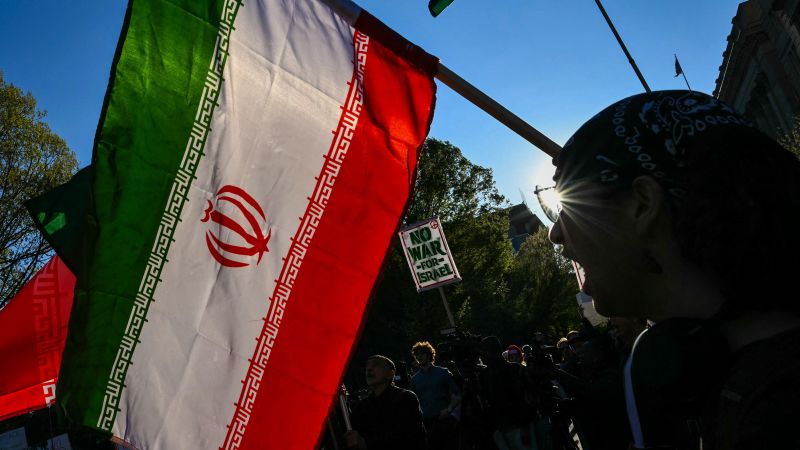
Six months into the Iran war, the physical, financial, and emotional repercussions of the conflict continue to reverberate across the globe, profoundly impacting the Iranian diaspora, a complex and multifaceted community extending across multiple generations and waves of exile. The United States and Israel launched the initial strikes, triggering a cascade of events that have dramatically altered the landscape of Iranian life, particularly within the US, a region characterized by a significant and deeply divided population regarding the war’s trajectory and its ultimate outcome. The Iranian diaspora, spanning from those who fled the 1979 revolution to recent arrivals, has been shaped by distinct experiences of exile, repression, and differing visions for the future of Iran.
The initial wave of welcoming sentiment among anti-regime activists, particularly among those aligned with Crown Prince Reza Pahlavi, who helped organize protests in Los Angeles, highlights a shift in perception. At the start of the war, CNN interviewed Arezo Rashidian, a longtime monarchist activist connected to Crown Prince Pahlavi, who welcomed military action against the Islamic Republic and advocated for targeted strikes on Iranian military bases to dismantle the regime. He stated he hoped the United States and Israel would conduct ‘targeted attacks on bases to bring down that regime.’
However, as the conflict progressed, Rashidian expressed disappointment among many anti-regime activists, describing a growing sense of frustration and uncertainty. The divide reflects not only differing political views, but also competing experiences of exile, repression, and a fundamental disagreement about the future of Iran. Rashidian underscored that the community is increasingly reluctant to discuss politics or their involvement in January’s protests, fearing surveillance and retaliation.
According to Rashidian, family members and contacts inside Iran see a renewed climate of fear within the months since the height of the fighting. People are increasingly reluctant to discuss politics or their involvement in the protests, fearing surveillance and retaliation. The police are mobilizing, as he stated, suggesting that the secret police are starting to mobilize.
This sentiment has been echoed by other Iranian Americans, including Aria Rostami, a 38-year-old museum professional in New York, who grew up in Southern California’s Iranian community. Rostami said the past six months have fundamentally changed the way he relates to other Iranian Americans, being at odds with how enthusiastically some embraced the military intervention.
“I was really disheartened by the community when they were on the streets cheering the war,” he told CNN. “It’s changed to suspicion or an uncertainty. I don’t know where their politics are. I don’t know what they believe.”
The conflict has exposed divisions within the diaspora – a time when supporters of intervention often argued that ‘Iran is different’ – and has prompted a re-evaluation of assumptions that were once taken for granted. Before the conflict, supporters often advocated for intervention, frequently framing it as a case of Iranian exceptionalism.
CNN’s Mostafa Salem contributed reporting on the situation.
Despite his disappointment, Rashidian said she continues to support tougher sanctions against Tehran, which she hopes will ‘tighten the rope’ around the regime.
This week, Washington threatened further measures, which Treasury Secretary Scott Bessent said will target a complex network built by Iran that allows its entities to evade the wide-ranging sanctions.
However, the much-anticipated announcement of Trump’s ‘economic D-Day’ measures left many underwhelmed, following Washington to hold off on imposing major new measures, instead focusing largely on expanding and stepping up enforcement of existing sanctions.
Iran has stated it can inflict reciprocal pain, warning of expanded strikes on regional oil producers and European countries, and even teasing the weaponization of its nuclear program.
Rostami, a 38-year-old Iranian American museum professional in New York, who grew up in Southern California’s Iranian community, acknowledged that the past six months have fundamentally changed the way he relates to other Iranian Americans, being at odds with how enthusiastically some embraced the military intervention.
“I was really disheartened by the community when they were on the streets cheering the war,” he told CNN. “There was a time where if I met somebody who was Iranian, or I’d hear people speaking Persian on the street, I had a specific feeling about it. Now it’s changed to suspicion or an uncertainty. I don’t know where their politics are. I don’t know what they believe.”
Rostami says he rejects a simplistic caricature of those who backed the war. ‘There’s real pain there,’ he said. ‘I do think people have been taken advantage of and manipulated.’
Still, he rejects a simplistic caricature of those who backed the war. ‘People are being lied to, manipulated, played for a fool,’ he said. The conflict has exposed divisions within the diaspora that have left him questioning assumptions he once took for granted. ‘There was a time where if I met somebody who was Iranian, or I’d hear people speaking Persian on the street, I had a specific feeling about it. Now it’s changed to suspicion or an uncertainty. I don’t know where their politics are. I don’t know what they believe.’
CNN’s Mostafa Salem contributed reporting.
Source: CNN