





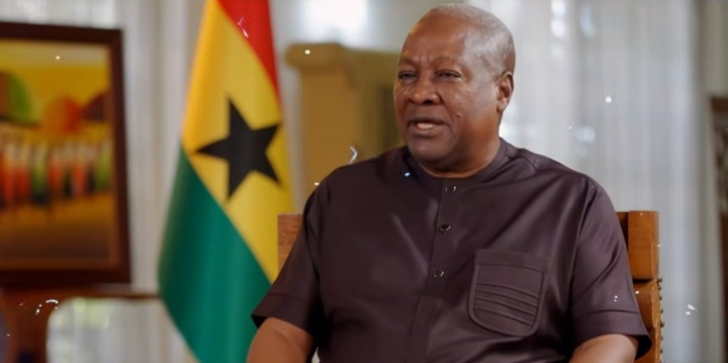
President John Mahama’s recent interview with TRT’s Bigger Than Five programme has ignited a crucial conversation about the future of Africa – a conversation centered on the persistent issue of economic dependency and the potential for a fundamental shift in the continent’s strategic positioning within the global arena. The President’s remarks, delivered with a measured tone, suggest a deliberate restructuring of Africa’s relationship with the world, moving away from a posture of passive reliance on external forces towards a model of greater self-reliance and increased influence on international decision-making processes. This ambition represents a significant departure from the historical trajectory of many African nations, a trajectory marked by a considerable degree of economic dependence.
Mr. Mahama’s ‘Accra Reset’ agenda, as he articulated, isn’t simply about fostering economic growth; it’s about fundamentally altering the dynamics of power within the continent. He envisions a paradigm shift where African nations actively control and manage their own resources, rather than being subject to the dictates of global capital and geopolitical influence. This ambition is rooted in a deep-seated belief that Africa’s true potential – its intellectual capital, its natural wealth, and its burgeoning innovation – cannot be adequately realized through prolonged dependence on developed nations.
Specifically, the President outlined a crucial component of this ‘Accra Reset’ – a renewed emphasis on African sovereignty over resource extraction and control. He stated, ‘We don’t reject partnerships, but those partnerships must be on our terms.’ This phrase encapsulates a core tenet of his strategy; it’s not about abandoning all forms of collaboration, but rather about establishing a framework where African nations have the agency to determine how their resources are utilized and where they exert their influence.
The core of his argument rests on the notion that the current system, characterized by decades of exploitation and unequal distribution of benefits, has fostered a cycle of dependency. Mr. Mahama argues that Africa must actively cultivate a sense of self-sufficiency, moving beyond simply ‘absorbing’ resources from the outside. He proposes a move toward a more robust and independent economic model, one where African businesses and institutions are empowered to drive innovation and entrepreneurship, fostering a competitive environment that benefits the continent as a whole.
The context of the interview itself underscores the gravity of this vision. Mr. Mahama emphasizes the need to reclaim control of the narrative on the global stage, a point that resonates deeply with a growing number of African leaders and policymakers. He calls for a re-evaluation of existing power structures and a prioritization of African priorities within international forums. The emphasis on ‘Africa’s prosperity is not’ is a carefully constructed phrase designed to elicit a response acknowledging the significant challenges facing the continent.
Looking ahead, the implications of this ‘Accra Reset’ are profound. It suggests a potential challenge to established international norms and institutions, particularly those that have historically favored Western dominance. African nations are increasingly asserting their own voices and demanding greater representation in global governance. Mr. Mahama’s stance aligns with a broader trend toward a more multipolar world, where the influence of individual nations, including Africa, is growing.
Furthermore, the emphasis on resource independence isn’t solely about extracting raw materials. It speaks to a broader desire to build industries that can create jobs, generate revenue, and contribute significantly to the continent’s economic diversification. He highlights the importance of fostering local manufacturing and technological advancement as vital components of this transformation. Mr. Mahama envisions a future where Africa becomes a hub for innovation and entrepreneurship, attracting investment and talent.
The implementation of this ‘Accra Reset’ will undoubtedly be a complex and multifaceted undertaking. However, the underlying message – that Africa’s future hinges on its ability to take greater control of its destiny – is undeniably powerful. It is a call for a fundamental shift in the relationship between Africa and the world, one that prioritizes self-determination and sustainable development. The challenge for Mr. Mahama and his administration will be to translate this ambitious vision into tangible policy changes and to demonstrate that Africa can indeed forge a path towards greater economic and political influence on the global stage.
This move is about moving beyond simply surviving as a dependent nation and actively engaging in shaping its own future, which is a critical step toward long-term prosperity and stability. The focus on resource management, economic diversification, and strategic influence represents a vital shift in priorities for the continent.
Source: Graphic Online