





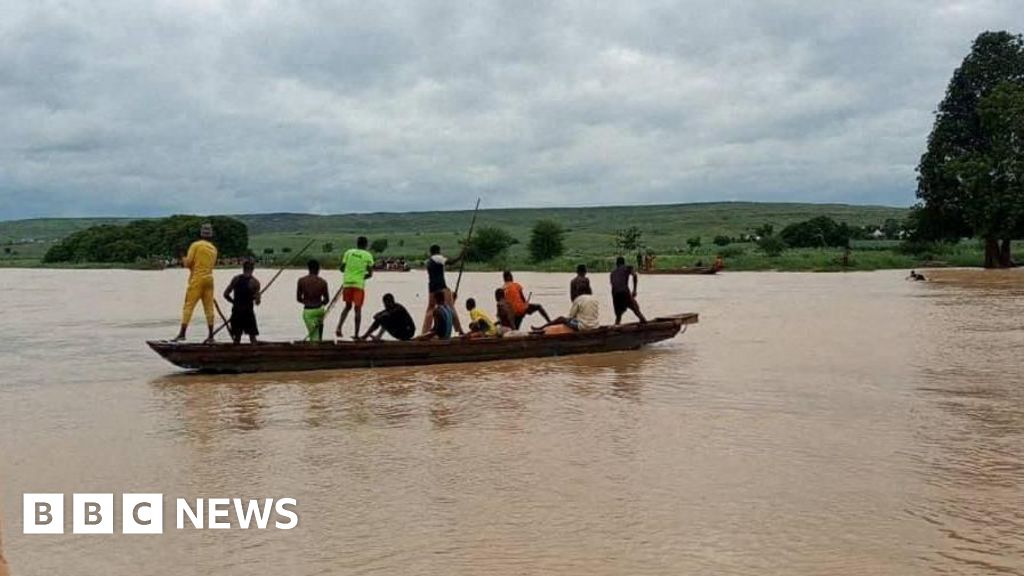
At least 46 people have tragically perished in Nigeria following a catastrophic boat capsize in the northern Sokoto state, a devastating incident that has ignited a fierce investigation into safety regulations and inadequate oversight. The incident, which occurred near Gorau in Gorony, has already left dozens missing, prompting a massive search operation by authorities and emergency services. Police spokesperson Ahmad Rufai confirmed that 46 bodies have been recovered, with 16 safely recovered and 15 still missing, highlighting the scale of the tragedy.
The boat, believed to have carried over 70 people, was reportedly travelling towards work on a rice harvest, prompting concerns about overcrowding and inadequate safety measures. Witness accounts paint a grim picture, describing the scene as a mass burial of bodies, with many wrapped in traditional cloths and mats, lying in the front of a community mosque. The Reuters news agency reported that 50 bodies were seen, many seemingly drowned, lying in the immediate vicinity of the mosque. The area is challenging to access, with security agencies and emergency services deploying to the site, according to Rufai.
The incident comes at a time when Nigeria’s emergency management agency (Nema) has emphasized the need for stricter safety protocols. In a statement, Ezekiel Manzo, Nema spokesperson, stated that Gorau is a remote and difficult-to-reach location, necessitating a shift to a remote operation. The tragedy is not unique; at least five people died when a boat overturned in Jigawa state last month, and a boat carrying farmers and fishermen from Jigawa to Yobe state capsized in January, with at least 26 people drowning. Furthermore, in December 2024, 54 bodies were recovered from the River Niger after a boat carrying over 200 passengers capsized, further emphasizing the vulnerability of river transport in the region. Authorities have urged the implementation of measures such as providing safer boats, dredging waterways, deploying water guards, and ensuring proper training for boat operators. However, the extent to which these measures have been effectively enforced remains a significant concern, particularly for millions of Nigerians, particularly in rural communities, who rely on rivers for transportation and livelihood.
This event underscores the persistent risk of boat accidents in Nigeria, where overcrowding, inadequate boat maintenance, and a lack of stringent safety regulations have contributed to a high number of fatalities. The incident also highlights the urgent need for a comprehensive review of safety standards and increased accountability within the maritime sector.
**Tags:** Nigeria, Boat Accident, Safety, Emergency, Rural Transport, Water Security
Watch Related Video
Source: BBC Africa