





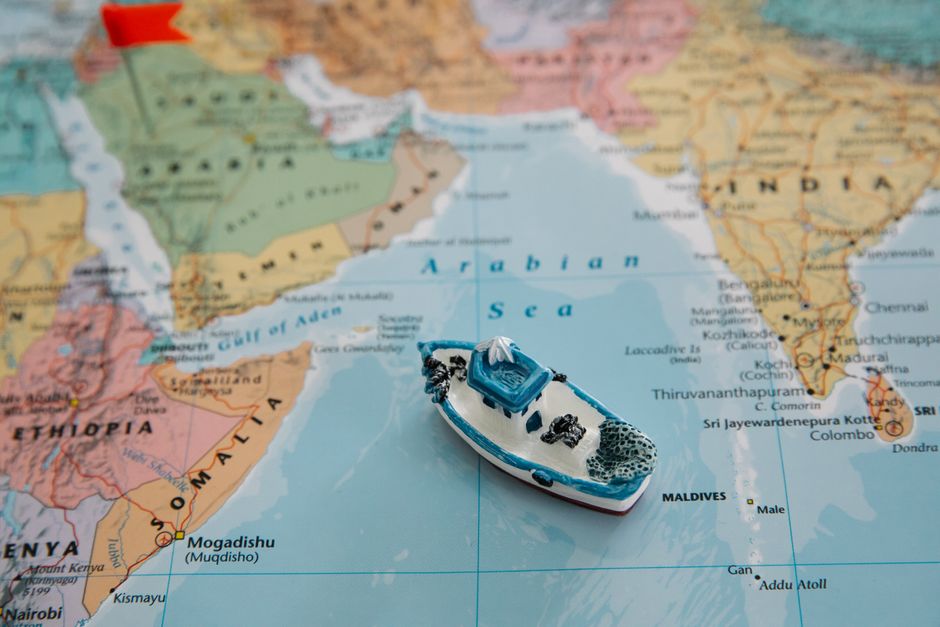
President Donald Trump’s recent remarks regarding the Strait of Hormuz have ignited intense debate, with some analysts suggesting a potential pathway towards the United States establishing a territorial claim within the waterway. This assertion, delivered during a New York police academy speech, has profound implications for global geopolitics and the future of the region, raising fundamental questions about sovereignty and international law. The situation began with Iran’s retaliatory measures, dubbed ‘nonsense’ by Tehran, and escalated with the expiration of a June memorandum of understanding between the two nations, effectively halting the passage of vessels through the strait. While Iran maintains control of the waterway, data indicates that some vessels have nonetheless traversed the passage despite the blockade, a maneuver that complicates the situation considerably. Trump’s rhetoric has mirrored the ongoing military and diplomatic deadlock, with repeated threats to attack Iran, even pulling back at the last moment, adding to the sense of uncertainty. His statement, ‘After we finish defeating Iran, which is being very badly defeated, pretty soon I’ll be declaring the Hormuz Strait a territory of the United States,’ underscores this ambitious vision. He then suggested the Strait is already a US territory, stating, ‘Essentially, that’s what it is.’ Furthermore, Trump has repeatedly referenced the naval blockade, which effectively restricts Iranian shipping, and has threatened to deploy US boots to take over Iranian oil export hubs, further escalating tensions. Iran has responded with a sharp crackdown, holding talks with Oman, the sole other coastal nation, to negotiate a resolution concerning maritime traffic. However, the reopening of the Strait remains a separate issue, with Washington’s commitments to the June memorandum of understanding – which includes removing the blockade and sanctions – being a key factor. Several Iranian officials have expressed outrage, with the judiciary issuing furious rhetoric, calling Trump’s claim ‘criminal and feather-headed.’ Kazem Gharibabadi, Iran’s deputy foreign minister, declared the Strait ‘cannot be seized by tweet, nor by aircraft carrier, nor by issuing an order, nor by an election speech.’ The United States’ legal framework dictates that annexation requires military control, which is unlikely to occur in this scenario, given the existing status of the Strait under international law, including the UN Convention on the Law of the Sea (UNCLOS). This convention recognizes coastal-state sovereignty over territorial waters, but limits that territorial sea to 12 nautical miles and allows ships to pass through without impediment. Bruce Fein, a deputy attorney general under President Reagan, warns that Trump’s claim could be constitutionally challenged, potentially constituting aggressive war under international law. Fein argues that Trump is not constitutionally empowered to annex the Strait, suggesting a treaty ratification is required for annexation. The UNCLOS acknowledges coastal-state sovereignty, but limits that sovereignty to 12 nautical miles, and notes that ships enjoy a right of passage that ‘shall not be impeded’. The Strait of Hormuz is currently situated in international waters, sandwiched between Iran and Oman. The UNCLOS recognizes coastal-state sovereignty over territorial waters, but limits that territorial sea to 12 nautical miles, and notes that ships enjoy a right of passage that ‘shall not be impeded’. The UNCLOS recognizes coastal-state sovereignty over territorial waters, but limits that sovereignty to 12 nautical miles, and notes that ships enjoy a right of passage that ‘shall not be impeded’. While the US and Iran have not ratified UNCLOS, the convention’s rules on international straits are widely regarded as customary law. Paul Musgrave, a Georgetown University professor, cautioned that Trump usually makes such statements primarily to speak to a US audience, emphasizing that Trump is a product of US reality TV and is, at the end of the day, a ‘showman.’ He added that Trump cannot be taken seriously, especially in this case, because making the strait US territory is physically and legally impossible, he said. The current situation involves significant political and strategic implications, including dwindling US munitions supplies and rising petrol prices. The US Navy has also expressed concerns about the potential for increased Iranian naval activity in the region, while analysts suggest Iran is attempting to force the US into a corner at the negotiating table. The situation is complicated by the fact that neither the US nor Iran has ratified UNCLOS, but the convention’s rules on international straits are widely regarded as customary law. The US Vice President, Vance, stated that Trump’s administration’s top priority is to control petrol prices, while stopping Iran’s race to a nuclear weapon now comes second. The situation is also politically sensitive, as Trump’s statements are viewed as a significant challenge to US credibility and potentially influence the upcoming November midterm elections. Musgrave further warned that Trump is a product of US reality TV and is, at the end of the day, a ‘showman’.
Source: Al Jazeera