





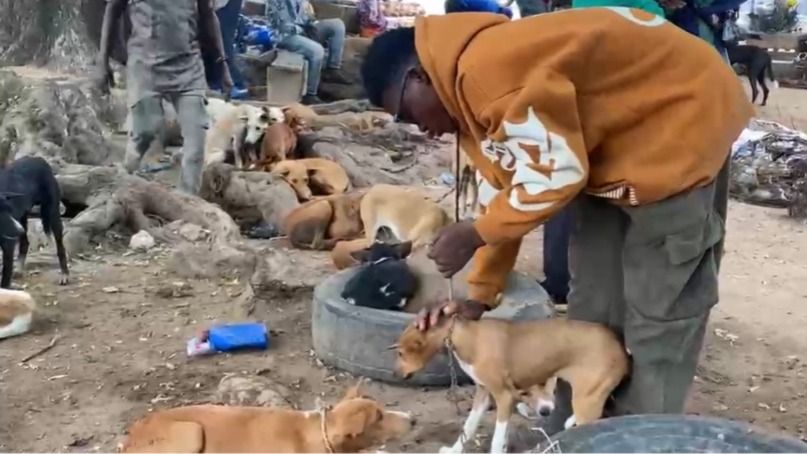
The simmering tensions within Ghanaian society are intensifying with a significant escalation in the debate surrounding the potential implementation of a nationwide ban on the consumption of dog and cat meat. A coalition of individuals, often referred to as ‘The Purists,’ have issued a formal warning, signaling a potential legal challenge to the government’s plans, which are currently under consideration by lawmakers. The move, which has been gaining traction across various social media platforms and local news outlets, reflects a deeply rooted cultural and ethical conflict concerning animal welfare and traditional practices.
The core of the controversy centers around the perceived degradation of these animals – specifically, dogs and cats – by the government’s proposed legislation. The Purists argue that the consumption of their remains constitutes a barbaric practice, inflicting unnecessary suffering and violating fundamental animal rights. They contend that the government’s actions are a direct assault on Ghanaian cultural heritage, a tradition that has been maintained for centuries.
This isn’t a sudden, isolated incident. For years, whispers of resistance to any form of animal slaughter have circulated within specific communities. However, the current level of urgency and coordinated action suggests a more deliberate and potentially legally driven approach. The government, led by Minister of Agriculture, Samuel Asante, has consistently maintained that the proposed ban is a necessary measure to address concerns regarding public health and animal welfare. They point to rising rates of zoonotic diseases – diseases that can be transmitted from animals to humans – as a primary justification, citing the potential for increased risk with the continued availability of dog and cat meat.
Initial reports indicate that the Purists have been actively disseminating information through online forums, social media groups, and even traditional community gatherings. They’ve employed a carefully crafted narrative, emphasizing the historical significance of dog and cat hunting within Ghanaian society and portraying the government’s proposal as a violation of cultural taboos. Their messaging is largely focused on raising public awareness and mobilizing support amongst those who hold traditional values.
Detailed analysis reveals a complex interplay of religious beliefs, historical narratives, and evolving social norms. Many members of the Purists believe that the consumption of dog and cat meat is intrinsically linked to spiritual practices and ceremonies, viewing it as a sacred act that must be preserved. These beliefs, while often presented as conservative, represent a significant part of the cultural landscape.
The government, however, dismisses these concerns as unfounded and based on misinformation. Minister Asante has emphasized the government’s commitment to responsible animal management and the implementation of strict regulations to prevent the spread of disease. He has stated that the proposed ban is a pragmatic solution aimed at protecting public health and ensuring the safety of the population. He has also emphasized the importance of establishing a system of controlled hunting and slaughter, ensuring that animals are handled humanely and that the meat is processed safely.
Legal experts are divided on the potential ramifications of the proposed ban. Professor Beatrice Adedipe, a specialist in animal rights law at the University of Cape Town, warns that the government’s approach risks undermining existing legal protections for animals. “The legal framework surrounding animal slaughter in Ghana is complex and nuanced,” she explains, “This ban could potentially challenge established jurisprudence and create uncertainty for animal welfare organizations.” She further suggests that the legal challenges could escalate, potentially leading to protracted legal battles.
Furthermore, the potential for public outcry and social unrest is a significant concern. The government has acknowledged this risk and has pledged to engage in dialogue with the community to address their concerns. However, the intensity of the Purists’ mobilization suggests a willingness to pursue a more confrontational approach. The upcoming weeks will be critical as the legal process unfolds, and the potential for a protracted public debate about the future of dog and cat hunting in Ghana becomes increasingly apparent.
The legal implications extend beyond Ghana’s borders as well, given the relatively close historical and cultural ties between the region and neighboring West African nations. The government’s actions could trigger diplomatic tensions and complicate existing trade relationships. The situation underscores a broader challenge for the nation to balance its desire for public health with the preservation of its cultural heritage.
Several prominent community leaders have expressed cautious optimism about the potential for a peaceful resolution, emphasizing the importance of dialogue and understanding. However, the underlying tensions remain deeply rooted, and the path forward remains uncertain. The upcoming legal proceedings will undoubtedly be closely watched, not only within Ghana but also by observers across the region and internationally. The debate highlights a fundamental conflict between traditional values and modern governance, and its outcome will have significant consequences for both Ghanaian society and the international legal landscape.
Watch Related Video
Source: TV3