





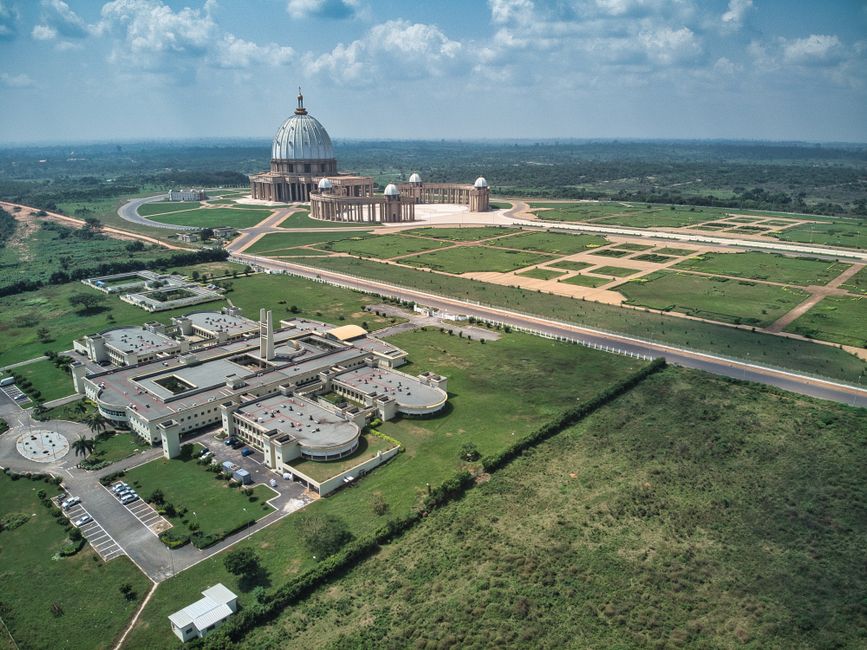
Attorney General and Minister for Justice, Dr Dominic Ayine, has issued a sharp critique of the current approach to the construction of the National Cathedral, suggesting that the project’s prioritization and execution deviate significantly from established best practices and potentially represent a misallocation of resources. The criticism, delivered during a public address at the district launch of the Free Primary Health Care programme in Bolga East, underscores a growing concern amongst officials regarding the project’s financial implications and strategic alignment with broader national priorities. Dr Ayine’s assessment, reportedly stemming from a PwC report presented to him last Friday, has prompted a significant reflection on the project’s trajectory and its impact on Ghana’s overall development strategy. The complexity of the project itself, coupled with the substantial expenditure allocated to it, has become a focal point of scrutiny.
His comments came amidst a broader debate about the utilization of funds, with Dr Ayine specifically highlighting the potential for diverting resources from crucial initiatives like the completion of existing hospitals under the Agenda 111 programme. The contentious nature of the National Cathedral project stems from its ambitious scale and the substantial financial investment made. The project, which has been the subject of considerable controversy, is slated to be a landmark structure, representing a significant investment in religious architecture and a symbol of national pride. However, the initial budget and the rationale behind the project’s construction – particularly given the challenges of securing funding and navigating complex logistical considerations – have raised questions about fiscal responsibility and efficiency.
Dr Ayine’s assertion that the funds earmarked for the National Cathedral could have been channeled towards the completion of existing hospitals, a program known as the Agenda 111 initiative, is a particularly pointed criticism. The Agenda 111 program, launched in 2013, aims to address critical healthcare needs across Ghana through a multi-pronged approach, including the establishment of new hospitals and the refurbishment of existing ones. The project’s initial budget was substantial, estimated to be over 1.5 billion dollars, which has sparked considerable debate about its value and the potential for alternative allocation of funds.
He emphasized that the PwC report, which detailed the project’s expenditures, revealed a considerable amount of money was allocated to the National Cathedral. “The monies spent on the National Cathedral from that Report could have been used to complete some Agenda 111 Hospitals,” Dr Ayine stated, clearly suggesting a prioritization of healthcare infrastructure. This perspective is consistent with broader discussions within the government regarding a shift in focus towards bolstering Ghana’s healthcare system, a goal that is arguably vital for long-term national development. The government has consistently expressed a commitment to improving healthcare access and affordability across the country, and this critique underscores a potential disconnect between the project’s objectives and its operational execution.
Furthermore, Dr Ayine’s remarks reflect a growing sentiment within the administration regarding the need for a more rigorous evaluation of government spending. He stressed that the focus should not be solely on the aesthetic or symbolic value of the National Cathedral, but rather on its tangible benefits to the Ghanaian people. The project’s location, particularly in a district with limited resources, has also been noted as a potential challenge to its long-term sustainability. The ongoing debate surrounding the National Cathedral project highlights a fundamental tension between ambitious development goals and the practical considerations of fiscal management and resource allocation within the Ghanaian government.
The context of the President’s two-day ‘Resetting Ghana Tour’ adds another layer to the discussion. Mr. Mahama’s visit to the Upper East Region underscores the importance of ensuring that public investment aligns with the priorities of the nation’s citizens. Dr Ayine’s critique serves as a stark reminder of the need for a transparent and accountable approach to government spending, emphasizing the importance of prioritizing essential services and ensuring that resources are used effectively to address critical needs. The debate surrounding the National Cathedral project is expected to continue, with various stakeholders weighing in on the optimal path forward for the project’s future.
“You don’t build a house of God in the manner in which they went about it,” Dr Ayine concluded, reinforcing his criticism and advocating for a more strategic and fiscally responsible approach to the project’s development. The controversy surrounding the National Cathedral underscores the challenges facing Ghana in balancing ambitious infrastructure projects with the imperative of prioritizing public health and economic development.”
Watch Related Video
Source: Adom Online