





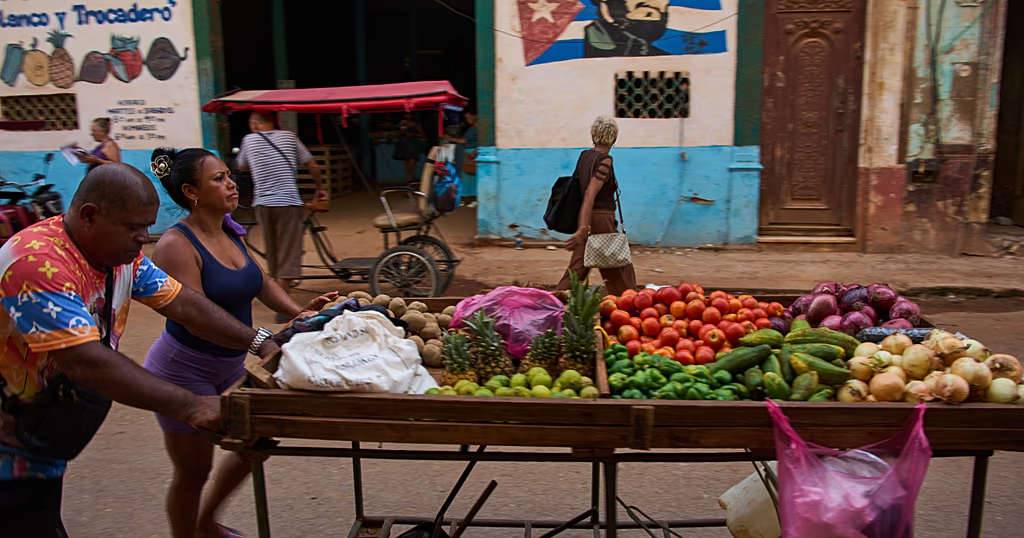
Cuba commemorated the 100th anniversary of Fidel Castro’s birth on Thursday, marking a pivotal moment amidst a deepening crisis in the nation’s history. The anniversary, traditionally a time of celebration, has been overshadowed by acute shortages of food, water, and power, exacerbated by the United States’ ongoing oil embargo and sanctions.
Fidel Castro, who died in 2016 at the age of 90, remains a central figure in Cuban identity and history, and his legacy continues to dominate Cuban life. This year’s commemoration, however, reflects a period of significant hardship for the country, with widespread reports of food and water scarcity and chronic power outages.
The Cuban Communist Party has intensified celebrations, with exhibitions, concerts, and conferences showcasing the revolutionary leader. The current crisis is a stark contrast to the decades of socialist progress that Castro initially promised.
Despite widespread criticism of the revolution’s promises, some Cuban citizens express a lingering sense of disappointment regarding the direction of the country. For many, particularly those who experienced the benefits of free healthcare and education during the revolutionary era, the current situation feels like a regression from those ideals.
Leonel Suarez, a 54-year-old repairman, offers a poignant perspective, stating that ‘Fidel would have a strategy at a time like this.’ He describes himself as a ‘Fidelista,’ a term used to refer to those who have dedicated their lives to the revolutionary cause.
In a workshop in Old Havana, 54-year-old Rogelio Valdivia describes his role as a ‘bonafide Fidelista,’ emphasizing his participation in the Revolution’s early years. He laments the loss of Castro’s leadership and the absence of a guiding hand in Cuba’s current circumstances.
For many Cubans, including 86-year-old Angela Gutierrez, the hardship is deeply unsettling. She expresses disappointment over the direction Cuba has taken, citing the worsening living conditions and the perceived erosion of the Revolution’s original promises.
Manuel Cuesta, a 63-year-old historian and opposition activist, recalls witnessing Castro as a ‘redeemer’ during his youth, and suggests that the image of his leadership faded over time.
Cuesta acknowledges that the centenary is occurring under particularly challenging conditions, including the consequences of the oil embargo and the subsequent economic and political reforms that have reshaped Cuba.
The social contract forged by the Revolution – a trade-off of political freedom for strict control – has been challenged in recent years. Many Cubans now question whether the old bargain still holds true.
However, for many, affection for Castro persists, even as daily life becomes increasingly difficult. Mildred Barreto, a 66-year-old cleaner, continues to call him ‘comandante,’ a term of respect and affection, although she admits that life in Cuba today is a struggle.
Hassan Perez, a 63-year-old historian and former student leader, acknowledged that the centenary was arriving under ‘the most complex conditions that could have been imagined’.
The government of Washington is hopeful that the oil embargo will lead to substantial change in Cuba, including economic and political reform.
This event highlights Cuba’s complex history and the enduring legacy of Fidel Castro, a figure whose impact continues to shape the nation’s present and future.
Watch Related Video
Source: AfricaNews